
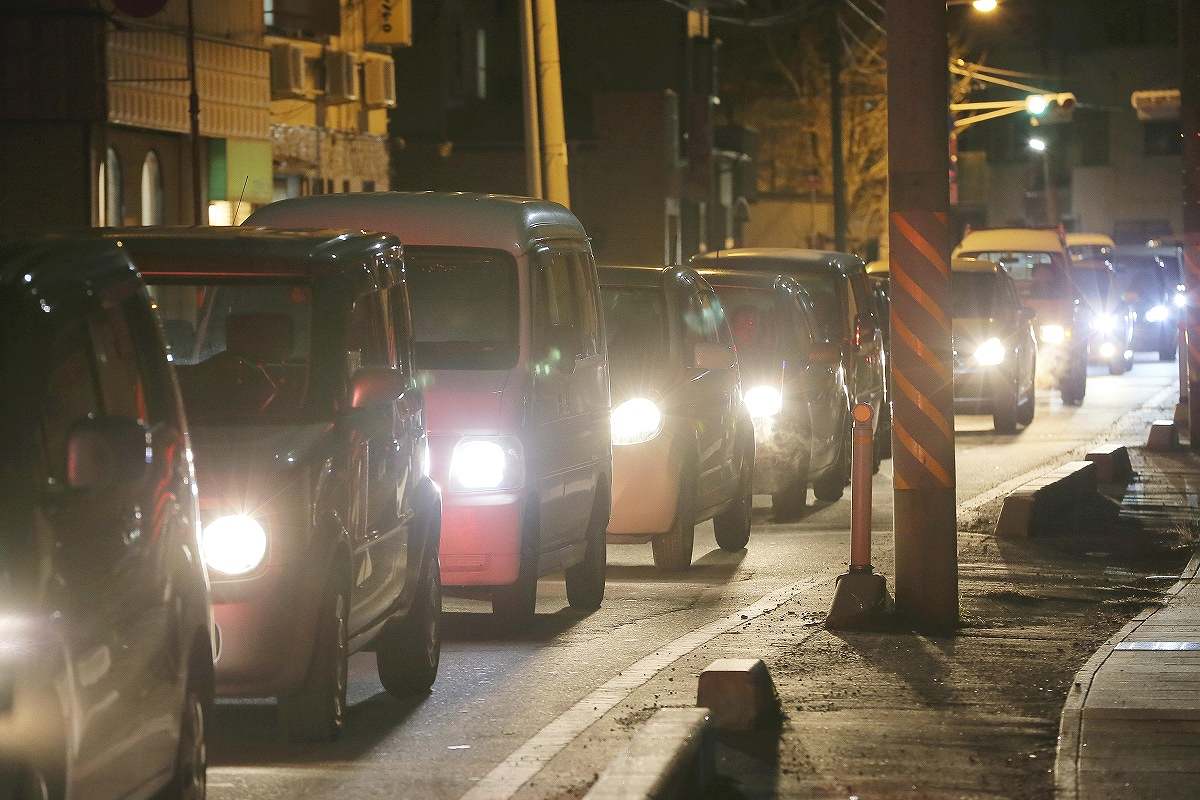
A line of cars evacuate from the coastal area in Ishinomaki, Miyagi Prefecture, on Dec. 7, 2012, when an earthquake measuring lower 5 on the Japanese seismic intensity scale of 7 hit the Tohoku region in the evening.
12:36 JST, January 28, 2021
This is the second installment of a series that looks at points to remember in the event of a tsunami, based on lessons learned from the 2011 Great East Japan Earthquake.
Quick evacuation is a basic principle in the event of a tsunami.
Atsushi Tanaka, a project professor at the University of Tokyo, advises to “take the initiative to evacuate immediately, because that can motivate others to evacuate as well.”
You should head to higher ground for safety when you feel a strong tremor near the sea, or when you feel a relatively small but long-lasting tremor, or when you hear a tsunami warning on the news or through a smartphone disaster prevention app.
If the epicenter is near land, a warning may not be issued before the tsunami hits. On the other hand, if the epicenter is far away, you may not feel a tremor.
Do not use only warnings and large tremors as a guide.
The Japan Meteorological Agency advises the public to evacuate immediately to higher ground or other safer places when tsunami warnings are issued, or to head away from the coast immediately if at sea.
“Never judge that a tremor like this would be OK based on your past experiences, but be brave enough to evacuate assuming the worst,” said Tanaka, who specializes in disaster information theory.
Walking is the basic means of evacuation. Evacuation by car may cause traffic congestions and hinder on-foot evacuation. Use of cars was said to have created chaos during the 2011 Great East Japan Earthquake.
“Avoid driving as much as possible unless you are with elderly or disabled family members who cannot escape on foot, or if the evacuation site is too far to make it in time,” said Takayoshi Iwata, a specially appointed professor at Shizuoka University’s Center for Integrated Research and Education of Natural Hazards.
Iwata, who studies disaster prevention, suggests that local communities discuss ways to prevent traffic jams in advance, such as preparing wheelchairs or talking about car pooling among nearby residents.
If a tsunami occurs while you are driving, get out of the car if you can and evacuate on foot.
You should pull your car over on the roadside so that it would not block passage of emergency vehicles. Turn off the engine, leave the key inside the car and leave the door unlocked.
If you have no choice but evacuate by car, you should drive carefully.
“You have to be aware that you are exposed to a high risk of accidents because traffic lights and railroad crossings may not be working, roads may be damaged or blocked by fallen electric poles,” Iwata said.
You may be hit by the tsunami if you go back home to pick up your disaster bags or try to join your family on the way. It is important for each person to evacuate individually. It is best to decide on a meeting point at an evacuation site in advance.
Tsunami can surge repeatedly, and the first wave is not always the highest. Yoshiaki Kawata, director of the Societal Safety Sciences Center at Kansai University, advises to “stay at an evacuation site until the waves recede and the warning is lifted.”
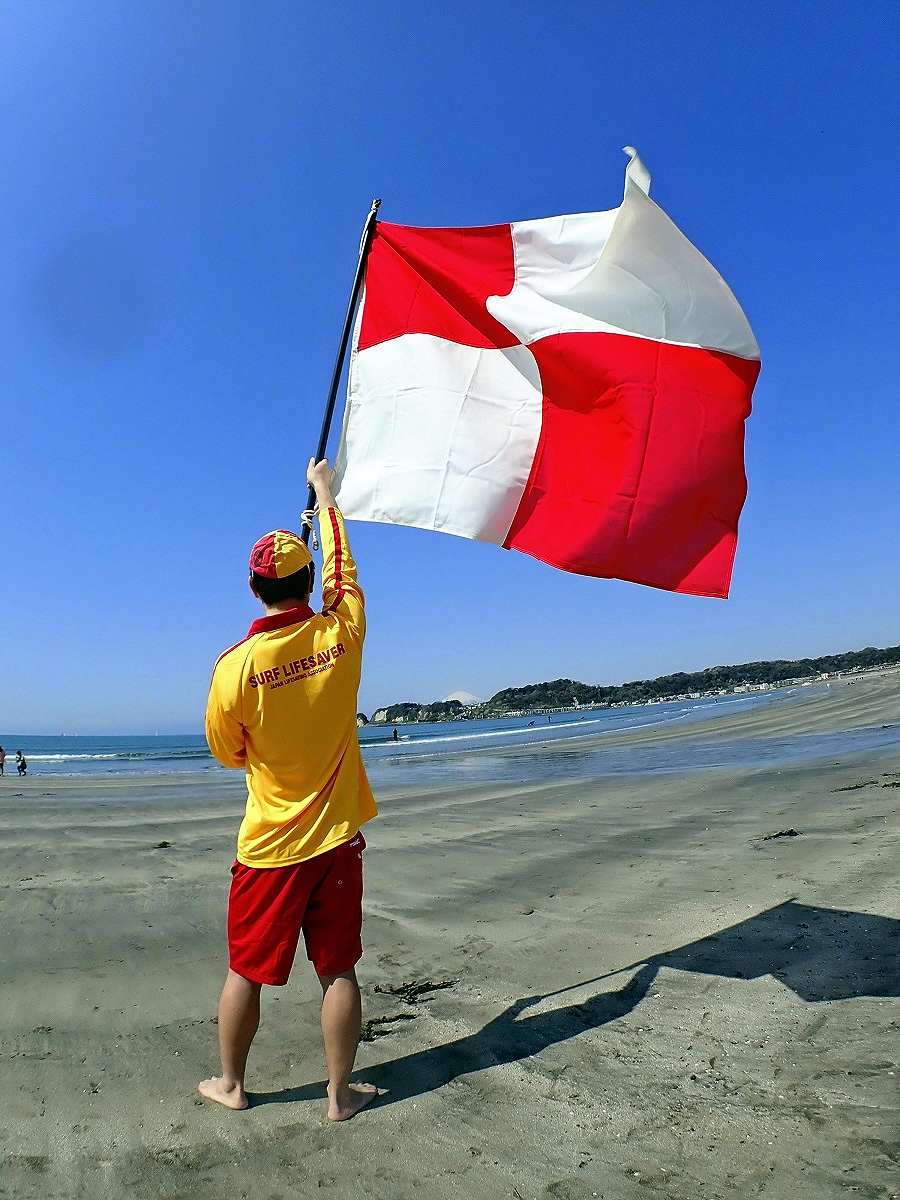
A tsunami flag




Most Read
Most read in the last 24 hours
-

Japanese Govt to Set Up Panel on Widening Access to Sports Broadc...
-

New Budget Framework for Investments: Work to Achieve Both Growth...
-
Toyota Unveils New Development Hub in Woven City Repurposed from ...
-
Elegant Weeping Cherry Blossoms on Display at Water Purification ...
-
Fukui: Dinosaur Faculty Building Unveiled in Japanese University'...
-
Man Admits to Abandoning Wife's Body in Zoo Incinerator in Hokkai...
-

Japan Govt Panel Says Blocking of Illegal Online Casinos Effectiv...
-

Online Casinos: Blocking is an Option Should Widespread Use Conti...
Most read in the last 7 days
-
Earthquake Hits Japan's Tohoku Region; 3-meter Tsunami Warning Is...
-

China, South Korea Object to Japanese PM Takaichi's Ritual Offeri...
-

Trump Extends the Ceasefire with Iran but Keeps the Blockade
-

India's Arms Indigenization Quest for Self-Reliance / New Delhi S...
-
Japan to Ban Use of Portable Chargers on Airplanes from April 24,...
-
¥1,000 Coins to Be Issued to Mark Anniversary of Beginning of Jap...
-

Most Serious Cyberattacks against the UK Now from Russia, Iran an...
-

Trump Opposes United–American Merger, Signals Support for Spirit
Most read in the last 30 days
-
Earthquake Hits Japan's Tohoku Region; 3-meter Tsunami Warning Is...
-
Police Find Child's Shoe During Search for Missing Boy in Nantan,...
-
Body Found in Nantan, Kyoto Prefecture, During Search for 11-Year...
-
Cherry Blossoms, Rapeseed Flowers Perform Colorful ‘Duet’ in Niig...
-
China, South Korea Object to Japanese PM Takaichi's Ritual Offeri...
-
Trump Extends the Ceasefire with Iran but Keeps the Blockade
-

Olympic Gold Medal-Winning Figure Skaters Riku-Ryu Announce Retir...
-

Japanese Prime Minister Takaichi Speaks to Pakistani Prime Minist...
Top Articles in Society
-
Earthquake Hits Japan’s Tohoku Region; 3-meter Tsunami Warning Issued (Update 1)
-
Police Find Child’s Shoe During Search for Missing Boy in Nantan, Kyoto Prefecture
-
Body Found in Nantan, Kyoto Prefecture, During Search for 11-Year-Old Boy in Area (Update 1)
-
Cherry Blossoms, Rapeseed Flowers Perform Colorful ‘Duet’ in Niigata
-
Japan to Ban Use of Portable Chargers on Airplanes from April 24, Number of Regular Chargers To Be Limited to 2
JN ACCESS RANKING
-
Earthquake Hits Japan’s Tohoku Region; 3-meter Tsunami Warning Issued (Update 1)
-
Police Find Child’s Shoe During Search for Missing Boy in Nantan, Kyoto Prefecture
-
Body Found in Nantan, Kyoto Prefecture, During Search for 11-Year-Old Boy in Area (Update 1)
-
Cherry Blossoms, Rapeseed Flowers Perform Colorful ‘Duet’ in Niigata
-
China, South Korea Object to Japanese PM Takaichi’s Ritual Offering to Yasukuni Shrine
Most read in the last 24 hours
-
Japanese Govt to Set Up Panel on Widening Access to Sports Broadc...
-
New Budget Framework for Investments: Work to Achieve Both Growth...
-
Toyota Unveils New Development Hub in Woven City Repurposed from ...
-
Elegant Weeping Cherry Blossoms on Display at Water Purification ...
-
Fukui: Dinosaur Faculty Building Unveiled in Japanese University'...
Most read in the last 7 days
-
Earthquake Hits Japan's Tohoku Region; 3-meter Tsunami Warning Is...
-
China, South Korea Object to Japanese PM Takaichi's Ritual Offeri...
-
Trump Extends the Ceasefire with Iran but Keeps the Blockade
-
India's Arms Indigenization Quest for Self-Reliance / New Delhi S...
-
Japan to Ban Use of Portable Chargers on Airplanes from April 24,...
Most read in the last 30 days
-
Earthquake Hits Japan's Tohoku Region; 3-meter Tsunami Warning Is...
-
Police Find Child's Shoe During Search for Missing Boy in Nantan,...
-
Body Found in Nantan, Kyoto Prefecture, During Search for 11-Year...
-
Cherry Blossoms, Rapeseed Flowers Perform Colorful ‘Duet’ in Niig...
-
China, South Korea Object to Japanese PM Takaichi's Ritual Offeri...