
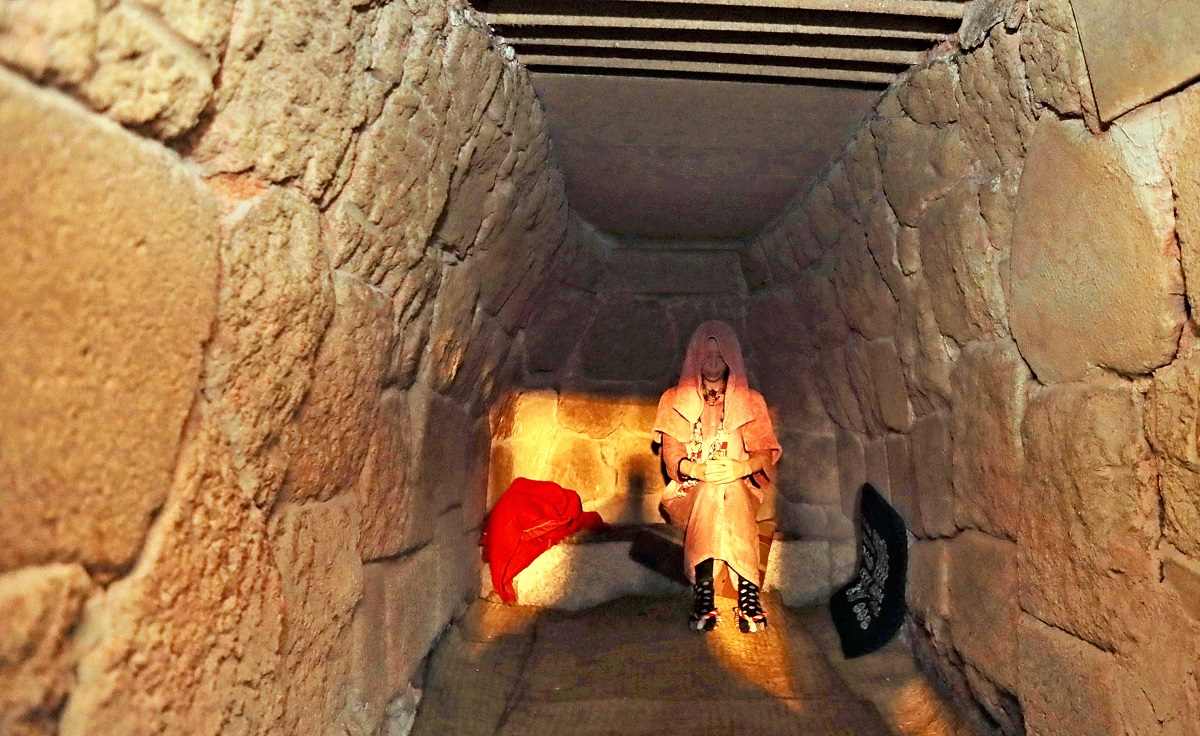
A visitor sits in an ancient sauna in Sanuki, Kagawa Prefecture.
11:25 JST, April 15, 2023
TAKAMATSU — An ancient stone-built sauna believed to have been constructed in the Nara period (710-784) is gaining popularity among fans of high-heat perspiration sessions.
The rural facility in Sanuki, Kagawa Prefecture, comprises a domed “bathhouse” that is filled with steam capable of reaching temperatures of almost 150 C.
Tsukahara no Karafuro is thought to have been built by Gyoki, a high priest, to help “heal” people.
The facility is said to have been particularly popular during the Edo period (1603-1867).
The domed structure houses two stone “karafuro” chambers, measuring 1.2 meters wide and 2.7 meters deep.
Despite being referred to as a “bathhouse,” no hot water is used. Rather, about 120 kilograms of firewood is burned in each chamber for about an hour a day. The burned firewood is then covered with a wet straw mat and doused with salt water, giving rise to room-filling steam.
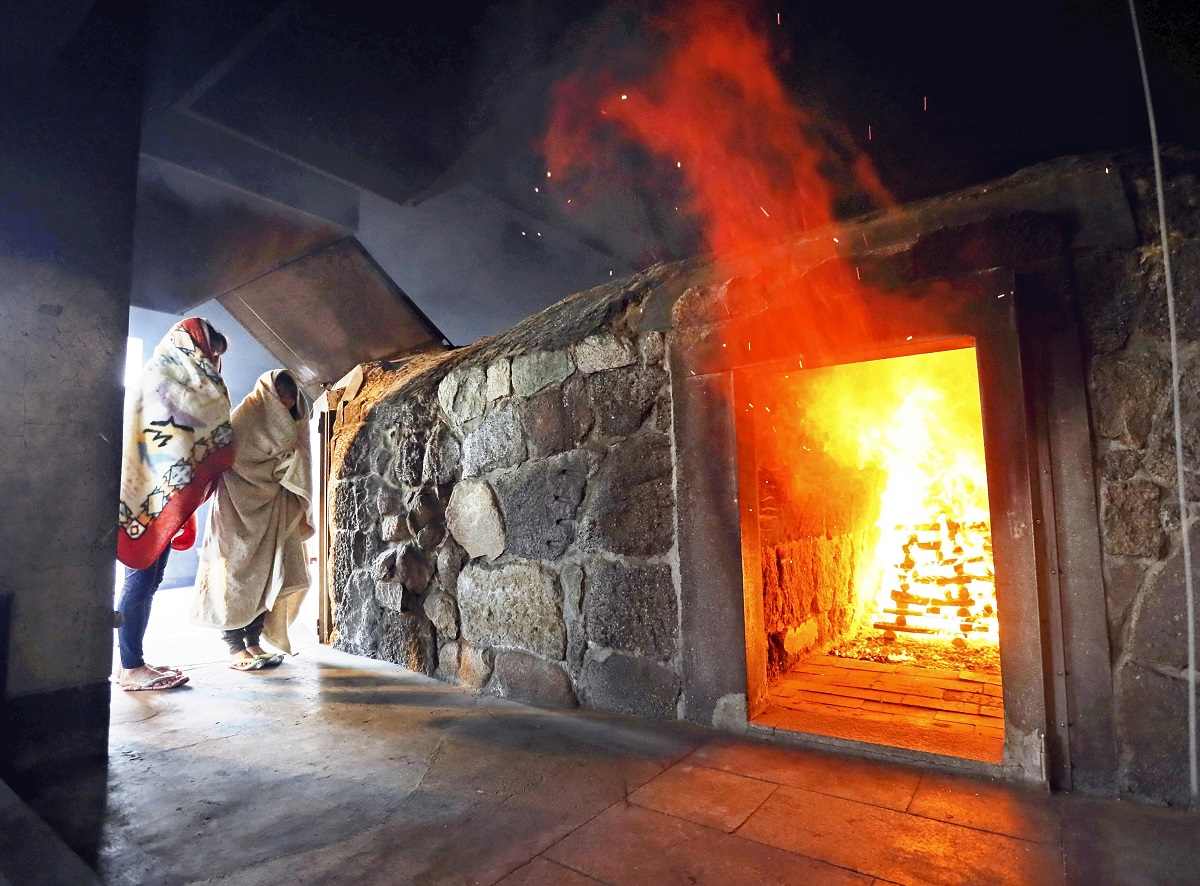
Firewood is burned in an ancient sauna in Sanuki, Kagawa Prefecture.
The temperature inside the stone-built structure surpasses that of regular saunas, which typically log heats of about 70 C to 110 C. To avoid burns, users of the Sanuki facility wear clothes and sandals and cover themselves with a blanket.
The sauna’s heat-factor has become something of a talking point and has featured in books and social media, helping attract people from across Japan. In fiscal 2022, 4,030 people visited the sauna — about 50% more than in fiscal 2018.
The facility is operated by the Karafuro Hozonkai preservation society, made up of local residents. “We never thought we’d see the day when people from all over the country would visit,” said society representative Kenichi Kobayashi, who explained that the sauna formerly was only patronized by local regulars.
According to Toshihide Innami, professor emeritus of folklore at Aichi University, similar stone bathhouses were introduced from continental China in ancient times and spread throughout Japan along with Buddhism.
In the past, there were many similar bathhouses around the Seto Inland Sea where hot springs were scarce, but by the end of the Showa era, they had mostly closed due to depopulation and a lack of firewood, Innami explained.
“It’s a miracle that the [Sanuki] bathhouse is still in business,” Innami added.
Tsukahara no Karafuro is open from Thursday through Sunday, noon to 9 p.m. Admission is ¥500.


Related Tags



Most Read
Most read in the last 24 hours
-

Japan Monitoring Situation Surrounding Revocation of Taiwan Presi...
-
Promote Support, Respect to Help Prevent Harassment of Athletes
-
Japan Should Serve as Bridge between Nuclear, Non-nuclear States,...
-
Yamato Museum Reopens in Hiroshima Pref. Following Extensive Reno...
-
Toyota Unveils New Development Hub in Woven City Repurposed from ...
-
Elegant Weeping Cherry Blossoms on Display at Water Purification ...
-
Fukui: Dinosaur Faculty Building Unveiled in Japanese University'...
-
Man Admits to Abandoning Wife's Body in Zoo Incinerator in Hokkai...
Most read in the last 7 days
-
Earthquake Hits Japan's Tohoku Region; 3-meter Tsunami Warning Is...
-

Trump Extends the Ceasefire with Iran but Keeps the Blockade
-

China, South Korea Object to Japanese PM Takaichi's Ritual Offeri...
-

India's Arms Indigenization Quest for Self-Reliance / New Delhi S...
-
Japan to Ban Use of Portable Chargers on Airplanes from April 24,...
-

¥1,000 Coins to Be Issued to Mark Anniversary of Beginning of Jap...
-

Most Serious Cyberattacks against the UK Now from Russia, Iran an...
-

Trump Opposes United–American Merger, Signals Support for Spirit
Most read in the last 30 days
-
Earthquake Hits Japan's Tohoku Region; 3-meter Tsunami Warning Is...
-
Police Find Child's Shoe During Search for Missing Boy in Nantan,...
-
Body Found in Nantan, Kyoto Prefecture, During Search for 11-Year...
-
Cherry Blossoms, Rapeseed Flowers Perform Colorful ‘Duet’ in Niig...
-
Trump Extends the Ceasefire with Iran but Keeps the Blockade
-
China, South Korea Object to Japanese PM Takaichi's Ritual Offeri...
-

Olympic Gold Medal-Winning Figure Skaters Riku-Ryu Announce Retir...
-
Japanese Prime Minister Takaichi Speaks to Pakistani Prime Minist...
Top Articles in Features
-
Cherry Blossoms in Full Bloom Draw Crowds in Sendai, Miyagi Pref.; Aquarium Creates Underwater ‘Cherry Blossom Viewing’ Show
-
Cherry Blossom Viewing Season at Peak in Japan’s Kanazawa
-
Cherry Blossoms, Tulips, Snow-Capped Peaks Create Picturesque Scene in Toyama Pref., Japan
-
Cherry Blossoms Reach Peak in Fukushima Pref., Including Trees Planted to Commemorate Birth of Princess Aiko
-
Cherry Blossom Viewers Enjoy Picnic Under the Trees in Full Bloom in Famous Osaka Spot
JN ACCESS RANKING
-
Earthquake Hits Japan’s Tohoku Region; 3-meter Tsunami Warning Issued (Update 1)
-
Police Find Child’s Shoe During Search for Missing Boy in Nantan, Kyoto Prefecture
-
Body Found in Nantan, Kyoto Prefecture, During Search for 11-Year-Old Boy in Area (Update 1)
-
Cherry Blossoms, Rapeseed Flowers Perform Colorful ‘Duet’ in Niigata
-
Trump Extends the Ceasefire with Iran but Keeps the Blockade
Most read in the last 24 hours
-
Japan Monitoring Situation Surrounding Revocation of Taiwan Presi...
-
Promote Support, Respect to Help Prevent Harassment of Athletes
-
Japan Should Serve as Bridge between Nuclear, Non-nuclear States,...
-
Yamato Museum Reopens in Hiroshima Pref. Following Extensive Reno...
-
Toyota Unveils New Development Hub in Woven City Repurposed from ...
Most read in the last 7 days
-
Earthquake Hits Japan's Tohoku Region; 3-meter Tsunami Warning Is...
-
Trump Extends the Ceasefire with Iran but Keeps the Blockade
-
China, South Korea Object to Japanese PM Takaichi's Ritual Offeri...
-
India's Arms Indigenization Quest for Self-Reliance / New Delhi S...
-
Japan to Ban Use of Portable Chargers on Airplanes from April 24,...
Most read in the last 30 days
-
Earthquake Hits Japan's Tohoku Region; 3-meter Tsunami Warning Is...
-
Police Find Child's Shoe During Search for Missing Boy in Nantan,...
-
Body Found in Nantan, Kyoto Prefecture, During Search for 11-Year...
-
Cherry Blossoms, Rapeseed Flowers Perform Colorful ‘Duet’ in Niig...
-
Trump Extends the Ceasefire with Iran but Keeps the Blockade