
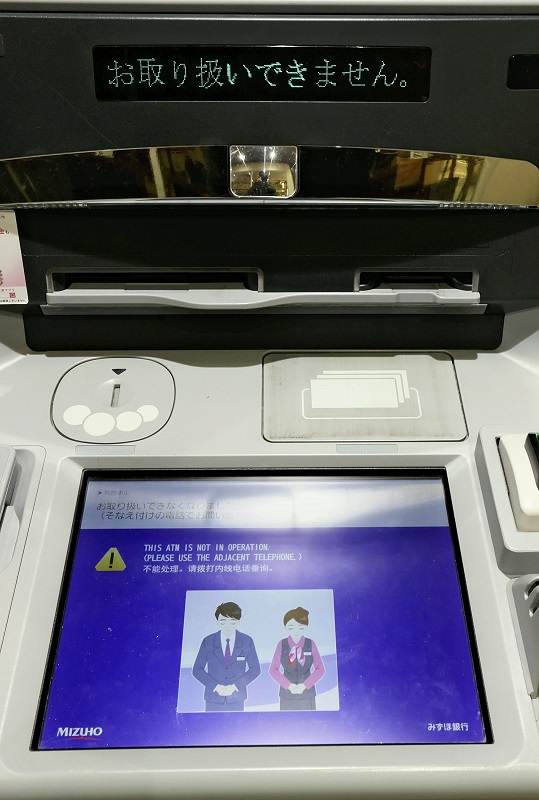
An ATM screen indicates a halted transaction in Kita Ward, Osaka, on Feb. 28.
17:34 JST, March 12, 2021
Lack of management foresight added to confusion after a system failure hit Mizuho Bank Ltd.’s ATMs on Feb. 28.
The bank will outline a new set of preventive measures to the Financial Services Agency as early as the end of this month. The focus will be on how thoroughly the bank can describe its drastic reform efforts to prevent similar incidents in the report.
Lack of common sense
“I can’t believe this kind of mistake on such an elementary thing,” said an executive at a regional bank, who looked appalled at Mizuho’s blunder.
Banks usually get busier toward the end of each month with activities such as the automatic renewal of fixed deposits, a burden that puts stress on their systems. Therefore, holding off on maintenance work on those days is common sense in the bank industry.
Mizuho, however, has been different. In January, it launched a digital account service that does not use paper passbooks. For accounts that had not been updated for more than a year as of the end of January, Mizuho planned to divide them into six batches and convert them to the new digital form one batch at a time.
The system became overloaded on the last weekend of February amid an unprecedented amount of data transferred for the conversions.
Banks must pay a stamp tax of ¥200 per paper passbook for the number of books they have issued as of April.
“We rushed the data transfer, trying to reduce the number of paper passbooks as much as possible by the end of March,” a Mizuho representative confessed.
Mizuho made a complete transition to its current computing system in the summer of 2019. The system as a whole is designed to be protected by isolating the defective parts.
In this instance, most of the bank’s ATMs were rendered useless because irregularities were detected in fixed-deposit transactions.
Although the glitch was corrected a lot faster than the past two major malfunctions, it still caused considerable trouble for many customers.
Further confusion
The most painful blow came when 5,244 customers saw ATMs swallow their cash cards or passbooks — or both — and not immediately return them.
To prevent the use of bogus cards and other forms of fraud, ATMs are programmed not to return them if fraud is suspected.
This function is not widely known, and panicked customers tried to contact call centers using the special phones attached to ATMs. However, because it was happening nationwide, it was impossible for all of the calls to go through.
In fact, according to sources, more than 90% of the calls went unanswered, and many customers were kept waiting in front of ATMs for several hours.
In the event of a system failure, each bank has its own rules regarding ATM card usage. Sumitomo Mitsui Banking Corp. ATMs, for example, are programmed to eject cash cards, but there are instances in which those of MUFG Bank Ltd. may not.
“It is difficult to say which is right,” Toyo University Prof. Hironari Nozaki said. “How to cope with the problem was a rather important step. The bank should have been ready with an adequate number of operators at its call center and an alternative communication system.”
In 2018 and 2019, when Mizuho was making the transition to its current system, it took a cautious approach, suspending ATM operations on nine weekends and having staff members standing by at branches in case of problems. However, the bank did not adopt such measures in the latest case, assuming the data transition would be “not that difficult.”
The system failed at around 9:50 a.m. on Feb. 28. At about noon, Mizuho’s ATM problem started to flood Twitter feeds, but Mizuho executives were unaware of the total scope of the issue.
As a result, it was 2:30 p.m. when management finally dispatched workers to its branches to handle the problem.





Most Read
Most read in the last 24 hours
-

India’s Arms Indigenization Quest for Self-Reliance / Big Firms, ...
-
Shifts Startup Focus to Nurturing Global Winners
-

Princess Aiko Enjoys Imperial Court Music, Dance; Production, Cos...
-

Bibimbap with Spring Vegetables and Asari Clam Miso a Rich Taste ...
-

Mother Supports My Sister Too Much, Gives Her Kids Much More Than...
-

Umami History: Kyoto Chef Murata Worked to Share Japan’s Scientif...
-

Appeal of Japanese Food: Make Good Use of ‘Discoveries’ by People...
-
Official App to Help Startups Meet Other Participants
Most read in the last 7 days
-
Earthquake Hits Japan's Tohoku Region; 3-meter Tsunami Warning Is...
-

China, South Korea Object to Japanese PM Takaichi's Ritual Offeri...
-

Trump Extends the Ceasefire with Iran but Keeps the Blockade
-

India's Arms Indigenization Quest for Self-Reliance / New Delhi S...
-
¥1,000 Coins to Be Issued to Mark Anniversary of Beginning of Jap...
-

Most Serious Cyberattacks against the UK Now from Russia, Iran an...
-

Trump Opposes United–American Merger, Signals Support for Spirit
-
System Malfunction in Haneda Airport Causes 83 Flight Cancelation...
Most read in the last 30 days
-
Earthquake Hits Japan's Tohoku Region; 3-meter Tsunami Warning Is...
-
Police Find Child's Shoe During Search for Missing Boy in Nantan,...
-

Body Found in Nantan, Kyoto Prefecture, During Search for 11-Year...
-
China, South Korea Object to Japanese PM Takaichi's Ritual Offeri...
-

Cherry Blossoms, Rapeseed Flowers Perform Colorful ‘Duet’ in Niig...
-
Trump Extends the Ceasefire with Iran but Keeps the Blockade
-

Olympic Gold Medal-Winning Figure Skaters Riku-Ryu Announce Retir...
-

Japanese Prime Minister Takaichi Speaks to Pakistani Prime Minist...
Top Articles in Business
-
Foreign Tourists Set New Record in March; 30% Drop in Visitors from Middle East
-

Japan’s ANA to Introduce Fuel Surcharges to Domestic Flights from Fy27, Driven by Rising Fuel Costs, Declining Profits
-
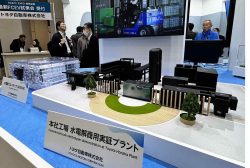
Toyota Motor to Begin Full-Scale Hydrogen Production in May; Mass Production and Sales of Equipment Planned to Start in 2029
-
Middle Powers Should Create Alternative to WTO, Says Research Group
-
Airborne Cellular Stations to Be Tested in Ishikawa, Miyagi; Aim to Ensure Communication During Disasters
JN ACCESS RANKING
-
Earthquake Hits Japan’s Tohoku Region; 3-meter Tsunami Warning Issued (Update 1)
-
Police Find Child’s Shoe During Search for Missing Boy in Nantan, Kyoto Prefecture
-
Body Found in Nantan, Kyoto Prefecture, During Search for 11-Year-Old Boy in Area (Update 1)
-
China, South Korea Object to Japanese PM Takaichi’s Ritual Offering to Yasukuni Shrine
-
Cherry Blossoms, Rapeseed Flowers Perform Colorful ‘Duet’ in Niigata
Most read in the last 24 hours
-
India’s Arms Indigenization Quest for Self-Reliance / Big Firms, ...
-
Shifts Startup Focus to Nurturing Global Winners
-
Princess Aiko Enjoys Imperial Court Music, Dance; Production, Cos...
-
Bibimbap with Spring Vegetables and Asari Clam Miso a Rich Taste ...
-
Mother Supports My Sister Too Much, Gives Her Kids Much More Than...
Most read in the last 7 days
-
Earthquake Hits Japan's Tohoku Region; 3-meter Tsunami Warning Is...
-
China, South Korea Object to Japanese PM Takaichi's Ritual Offeri...
-
Trump Extends the Ceasefire with Iran but Keeps the Blockade
-
India's Arms Indigenization Quest for Self-Reliance / New Delhi S...
-
¥1,000 Coins to Be Issued to Mark Anniversary of Beginning of Jap...
Most read in the last 30 days
-
Earthquake Hits Japan's Tohoku Region; 3-meter Tsunami Warning Is...
-
Police Find Child's Shoe During Search for Missing Boy in Nantan,...
-
Body Found in Nantan, Kyoto Prefecture, During Search for 11-Year...
-
China, South Korea Object to Japanese PM Takaichi's Ritual Offeri...
-
Cherry Blossoms, Rapeseed Flowers Perform Colorful ‘Duet’ in Niig...