
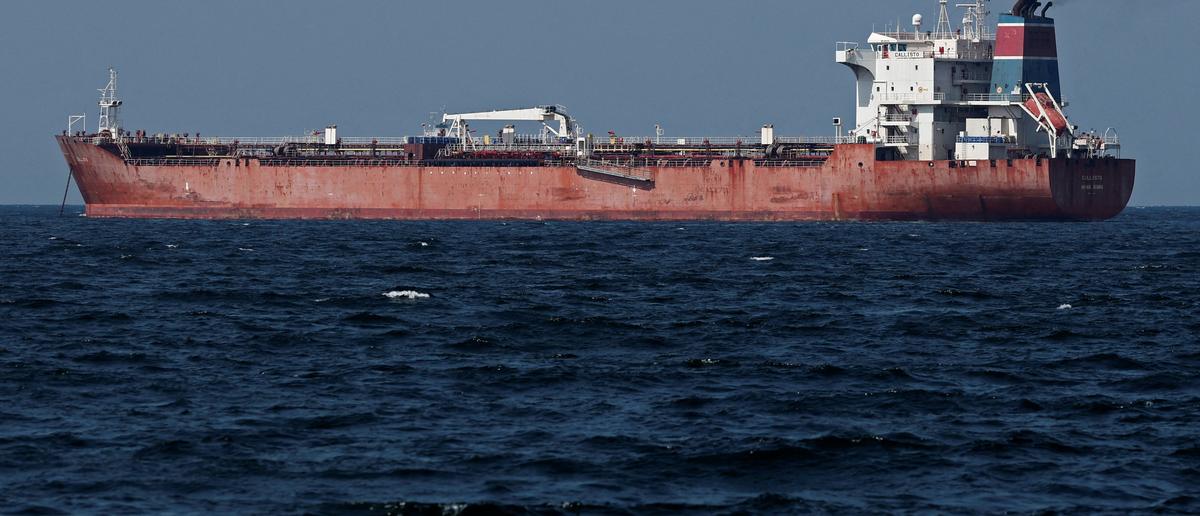
Tanker Callisto sits anchored in Muscat, amid the U.S.-Israeli conflict with Iran, in Muscat, Oman, on Friday.
19:01 JST, March 10, 2026
NEW YORK — With speculation rife that the Iran conflict could drag on, crude oil prices have surged.
Since the Strait of Hormuz — a key route for shipping oil — was effectively blocked, concerns about a stable crude supply have grown daily. A prolonged conflict in Iran could cause prices to increase further and a downturn in the global economy.
‘Short-term’ rise
“Short term oil prices, which will drop rapidly when the destruction of the Iran nuclear threat is over, is a very small price to pay for U.S.A., and World, Safety and Peace,” U.S. President Donald Trump posted on his social media account on Sunday evening.
As Trump’s Republican Party is facing midterm elections this autumn, the president wants to avoid high oil prices. The public is already upset about rising prices.
The Trump administration is also on edge. U.S. Energy Secretary Chris Wright said Sunday in an interview with CBS News that the price increase was due to “emotional reactions and fear that this is a long-term war” and suggested prices would ease within weeks.
Optimism fades
Aboard Air Force One on Saturday, Trump touched on the possibility of deploying ground troops in Iran. The U.S. State Department on Sunday ordered government personnel stationed in Saudi Arabia to evacuate the country.
Iran announced Sunday that anti-American hardliner Mojtaba Khamenei, the son of the late Ayatollah Ali Khamenei, would be the country’s new supreme leader.
Hope faded that the conflict would end soon, and crude oil prices surged over 30% on the New York futures market. Prices show little sign of stabilizing.
You may also like to read
Rising Crude Oil Prices Impact Daily Necessities; Costs for Fuel, Electricity, Household Goods All Linked to PetroleumWith the de facto blockade of the Strait of Hormuz, tanks for storing crude oil temporarily are also nearing their limit. Gulf oil producers such as Kuwait have begun reducing output.
Reuters reported Sunday that Iraq’s oil production in its main southern oilfields has fallen by 70%, citing industry sources. Some analysts suggest that if the conflict escalates, oil prices could surpass the all-time high of $147 per barrel recorded in July 2008.
Release of strategic reserves
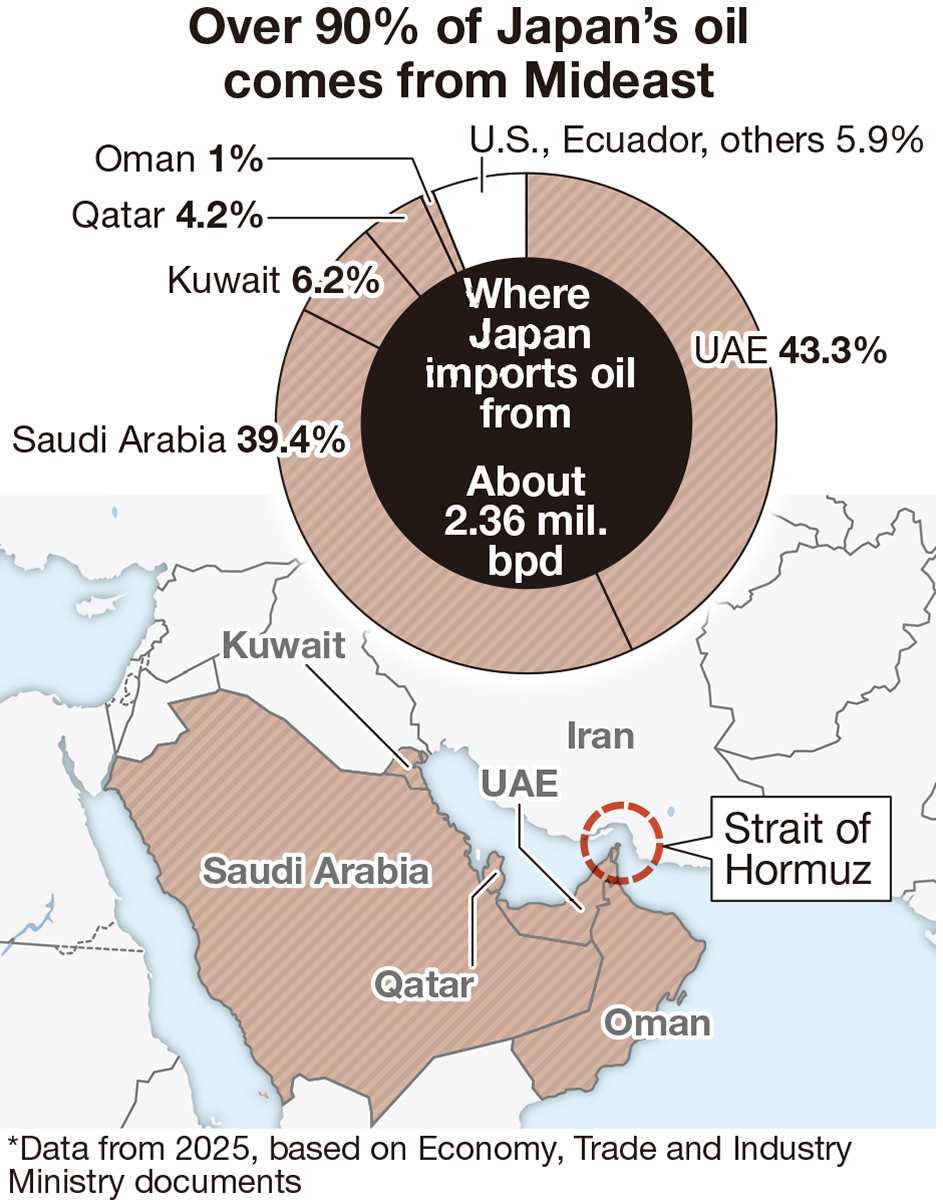
Japan relies on the Middle East for over 90% of its crude oil imports, though as of the end of December it held domestic oil reserves equivalent to 254 days of consumption.
“We have not received reports indicating an immediate impact on Japan’s oil demand,” said Chief Cabinet Secretary Minoru Kihara at a press conference on Monday.
However, high crude prices could accelerate inflation, which had been subsiding. An Economy, Trade and Industry Ministry official said the government “may decide to release oil reserves to prevent price increases,” and the government appears to have checked with oil wholesalers about how to transport the oil from storage to prepare for such a release.
“The surge in crude oil prices will cause gasoline prices and the cost of all petroleum products to rise, significantly impacting the Japanese economy and people’s lives,” said Ken Koyama, senior managing director of the Institute of Energy Economics, Japan.







Most Read
Most read in the last 24 hours
-

Shifts Startup Focus to Nurturing Global Winners
-

Princess Aiko Enjoys Imperial Court Music, Dance; Production, Cos...
-

Bibimbap with Spring Vegetables and Asari Clam Miso a Rich Taste ...
-

Mother Supports My Sister Too Much, Gives Her Kids Much More Than...
-

Umami History: Kyoto Chef Murata Worked to Share Japan’s Scientif...
-

Appeal of Japanese Food: Make Good Use of ‘Discoveries’ by People...
-

Official App to Help Startups Meet Other Participants
-

Okinawa Gubernatorial Election: Candidates Should Advocate Realis...
Most read in the last 7 days
-
Earthquake Hits Japan's Tohoku Region; 3-meter Tsunami Warning Is...
-

China, South Korea Object to Japanese PM Takaichi's Ritual Offeri...
-

Trump Extends the Ceasefire with Iran but Keeps the Blockade
-

India's Arms Indigenization Quest for Self-Reliance / New Delhi S...
-

¥1,000 Coins to Be Issued to Mark Anniversary of Beginning of Jap...
-

Most Serious Cyberattacks against the UK Now from Russia, Iran an...
-

Trump Opposes United–American Merger, Signals Support for Spirit
-

System Malfunction in Haneda Airport Causes 83 Flight Cancelation...
Most read in the last 30 days
-
Earthquake Hits Japan's Tohoku Region; 3-meter Tsunami Warning Is...
-
Police Find Child's Shoe During Search for Missing Boy in Nantan,...
-
Body Found in Nantan, Kyoto Prefecture, During Search for 11-Year...
-
China, South Korea Object to Japanese PM Takaichi's Ritual Offeri...
-

Cherry Blossoms, Rapeseed Flowers Perform Colorful ‘Duet’ in Niig...
-
Trump Extends the Ceasefire with Iran but Keeps the Blockade
-

Olympic Gold Medal-Winning Figure Skaters Riku-Ryu Announce Retir...
-

Japanese Prime Minister Takaichi Speaks to Pakistani Prime Minist...
Top Articles in Business
-

Foreign Tourists Set New Record in March; 30% Drop in Visitors from Middle East
-

Japan’s ANA to Introduce Fuel Surcharges to Domestic Flights from Fy27, Driven by Rising Fuel Costs, Declining Profits
-

Toyota Motor to Begin Full-Scale Hydrogen Production in May; Mass Production and Sales of Equipment Planned to Start in 2029
-

Middle Powers Should Create Alternative to WTO, Says Research Group
-

Airborne Cellular Stations to Be Tested in Ishikawa, Miyagi; Aim to Ensure Communication During Disasters
JN ACCESS RANKING
-
Earthquake Hits Japan’s Tohoku Region; 3-meter Tsunami Warning Issued (Update 1)
-
Police Find Child’s Shoe During Search for Missing Boy in Nantan, Kyoto Prefecture
-
Body Found in Nantan, Kyoto Prefecture, During Search for 11-Year-Old Boy in Area (Update 1)
-
China, South Korea Object to Japanese PM Takaichi’s Ritual Offering to Yasukuni Shrine
-
Cherry Blossoms, Rapeseed Flowers Perform Colorful ‘Duet’ in Niigata
Most read in the last 24 hours
-
Shifts Startup Focus to Nurturing Global Winners
-
Princess Aiko Enjoys Imperial Court Music, Dance; Production, Cos...
-
Bibimbap with Spring Vegetables and Asari Clam Miso a Rich Taste ...
-
Mother Supports My Sister Too Much, Gives Her Kids Much More Than...
-
Umami History: Kyoto Chef Murata Worked to Share Japan’s Scientif...
Most read in the last 7 days
-
Earthquake Hits Japan's Tohoku Region; 3-meter Tsunami Warning Is...
-
China, South Korea Object to Japanese PM Takaichi's Ritual Offeri...
-
Trump Extends the Ceasefire with Iran but Keeps the Blockade
-
India's Arms Indigenization Quest for Self-Reliance / New Delhi S...
-
¥1,000 Coins to Be Issued to Mark Anniversary of Beginning of Jap...
Most read in the last 30 days
-
Earthquake Hits Japan's Tohoku Region; 3-meter Tsunami Warning Is...
-
Police Find Child's Shoe During Search for Missing Boy in Nantan,...
-
Body Found in Nantan, Kyoto Prefecture, During Search for 11-Year...
-
China, South Korea Object to Japanese PM Takaichi's Ritual Offeri...
-
Cherry Blossoms, Rapeseed Flowers Perform Colorful ‘Duet’ in Niig...