
Record Heat, Drought Threaten Japan’s Rice Harvest; Dams in Tohoku, Hokuriku at Critically Low Levels
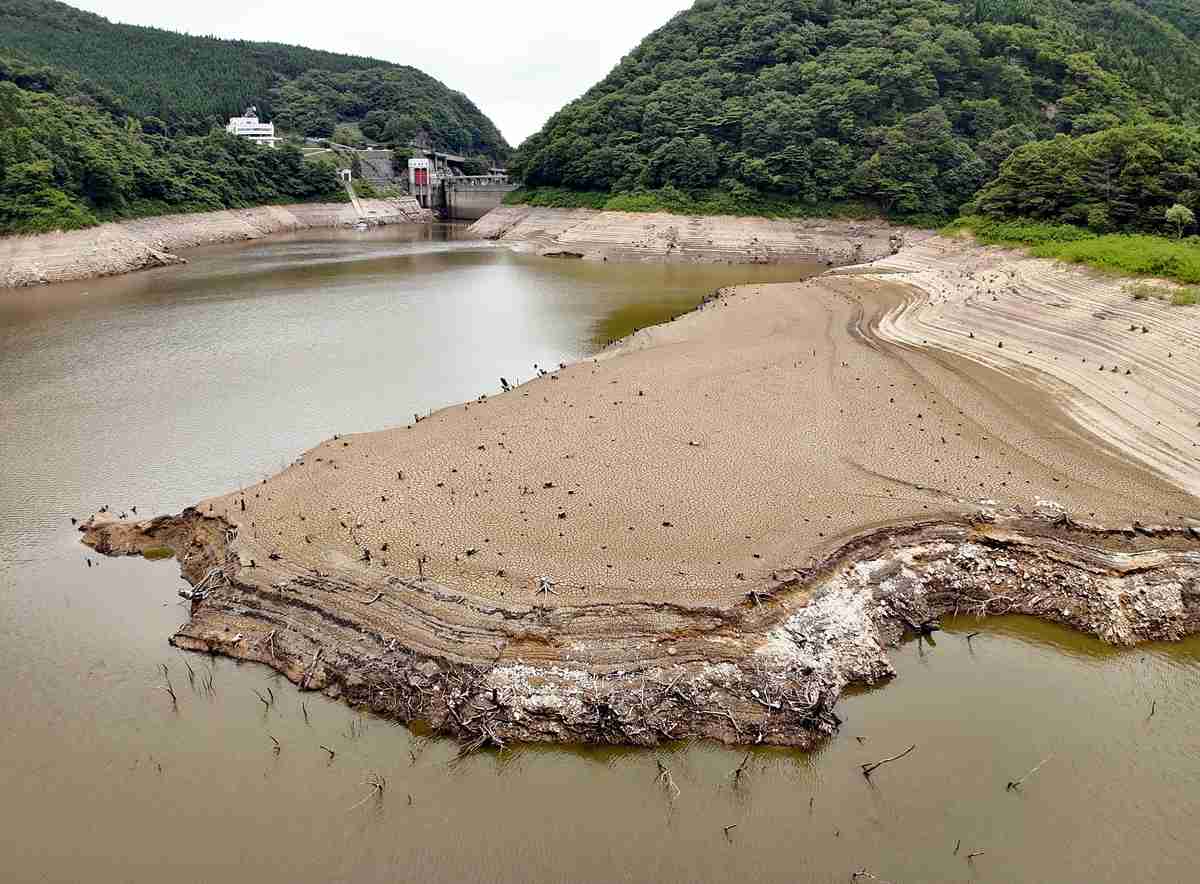
The water level at Naruko Dam in Osaki, Miyagi Prefecture, is below the stated minimum level, as seen on Friday.
16:04 JST, August 2, 2025
The record-breaking heat and droughts this summer have raised concerns about the impact on crops, and high temperatures and low rainfall are expected to persist in August.
New average temperature records for June and July were set this year, according to the Japan Meteorological Agency, and there has been a surge in heatstroke patients in hospitals. Exacerbated by a lack of rain, crop growth is now being affected in key rice-producing areas such as the Tohoku and Hokuriku regions.
The data for the average monthly temperatures goes back over three decades.
The water level in some dams has fallen dramatically, and central and local governments are issuing urgent calls for water conservation.
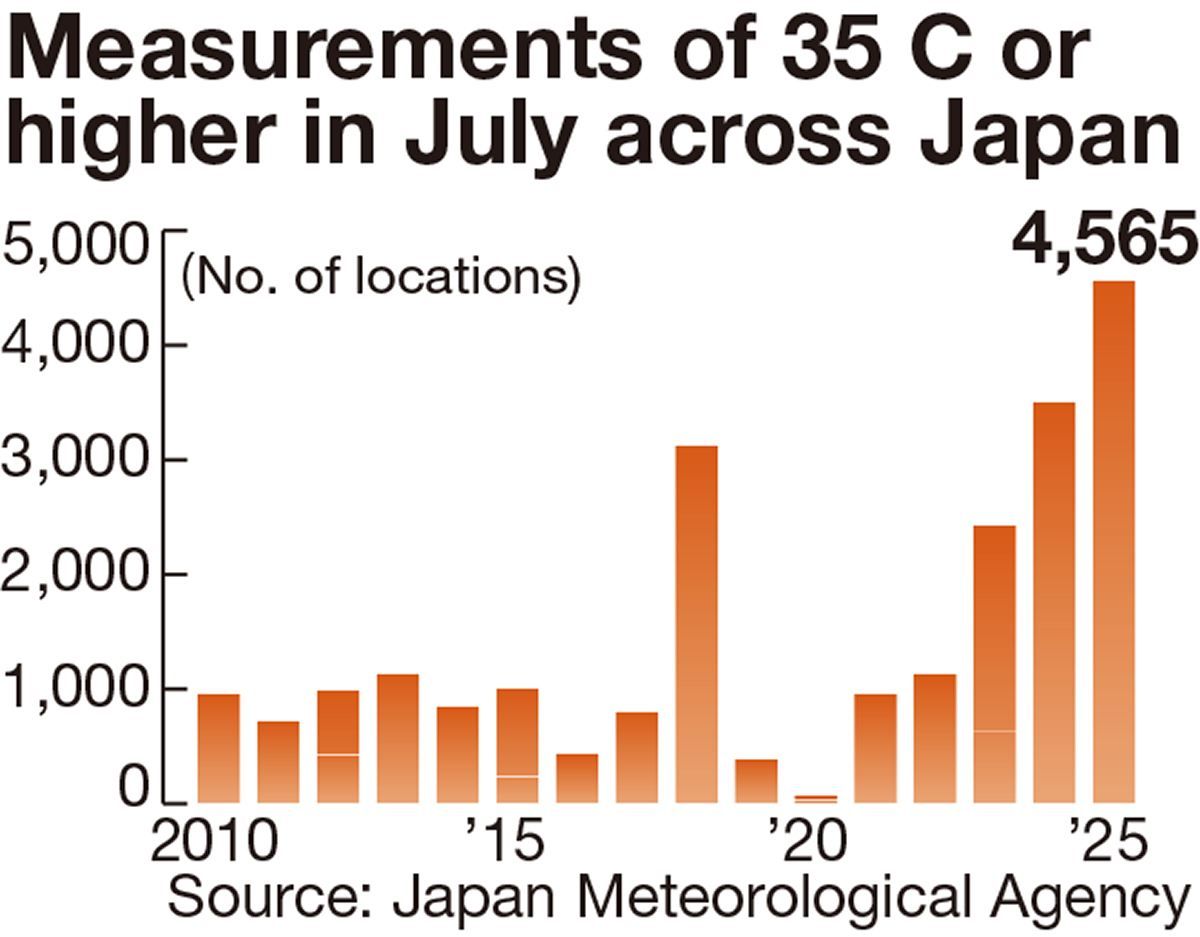
In July, the number of locations which recorded a maximum temperature of 35 C or higher totaled 4,565, the most since comparable data became available in 2010.
Cases of heatstroke have also soared, with the Fire and Disaster Management Agency reporting a record 17,229 were transported by ambulance in June — the most in a month since it started collecting the data in 2010.
While the heat has been relentless, rainfall has been at record lows. The agency attributes this to a strong high-pressure system that has prevented rain clouds from developing.
As a result, many regions received less than half of their average rainfall in July, with the Sea of Japan side of the Tohoku and Hokuriku regions receiving only 13% and 8%, respectively.
Drought-stricken dams
“This year’s harvest will probably be smaller,” said a rice farmer from Asahi, Yamagata Prefecture, as he looked at his cracked paddy field.
He cultivates a local variety of rice on about seven hectares of land. However, there has been almost no rain since mid-July, causing a water shortage and prompting the tips of some of his rice plants to turn brown and wither.
The farmer move water in plastic tanks from a waterway located about 1.5 kilometers away. “How much longer can I hold out?” he wonders.
In response to concerns about the impact on rice plant growth, the Agriculture, Forestry and Fisheries Ministry plans to begin subsidizing the cost of installing pumps and other necessary equipment.
The drought is creating a critical situation in dams in the Tohoku and Hokuriku regions. According to the Land, Infrastructure, Transport and Tourism Ministry, as of Thursday, Gosho Dam in Morioka and Naruko Dam in Osaki, Miyagi Prefecture, were at 0% storage capacity, indicating that they were below their minimum water levels. Shozenji Dam in Joetsu, Niigata Prefecture, was down at just 12%.
Naruko Dam supplies water for agricultural purposes. Its remaining water is being released as an emergency measure during the crucial rice heading season.
“If it doesn’t rain, the water in this dam will be completely depleted in about two weeks,” an official at the dam’s management office said.
In response to the water shortage, the ministry has imposed restrictions on water intake from 19 rivers across the Tohoku and other regions. The ministry is urging residents in affected areas to conserve water.
“[This summer’s heat] is the result of a combination of factors, including the effects of global warming,” said Hisashi Nakamura, a professor emeritus at the University of Tokyo and an expert on global climate dynamics.
He explained that a strengthened Pacific high-pressure system is pushing the prevailing westerlies northward, resulting in notably high temperatures in northern Japan. Based on this, he stated that “the situation is unlikely to change significantly throughout the summer.” The agency’s forecast concurs, predicting further severe heat in August.
The agency anticipates that rainfall in some of the drier regions may return to average or above-average levels in August. However, it cautions that “it may not be enough to fully resolve the ongoing water shortage.”





Most Read
Most read in the last 24 hours
-

India’s Arms Indigenization Quest for Self-Reliance / Big Firms, ...
-
Shifts Startup Focus to Nurturing Global Winners
-

Princess Aiko Enjoys Imperial Court Music, Dance; Production, Cos...
-

Bibimbap with Spring Vegetables and Asari Clam Miso a Rich Taste ...
-

Mother Supports My Sister Too Much, Gives Her Kids Much More Than...
-

Official App to Help Startups Meet Other Participants
-
Umami History: Kyoto Chef Murata Worked to Share Japan’s Scientif...
-

Appeal of Japanese Food: Make Good Use of ‘Discoveries’ by People...
Most read in the last 7 days
-
Earthquake Hits Japan's Tohoku Region; 3-meter Tsunami Warning Is...
-

China, South Korea Object to Japanese PM Takaichi's Ritual Offeri...
-

Trump Extends the Ceasefire with Iran but Keeps the Blockade
-

India's Arms Indigenization Quest for Self-Reliance / New Delhi S...
-
¥1,000 Coins to Be Issued to Mark Anniversary of Beginning of Jap...
-

Most Serious Cyberattacks against the UK Now from Russia, Iran an...
-

Trump Opposes United–American Merger, Signals Support for Spirit
-
System Malfunction in Haneda Airport Causes 83 Flight Cancelation...
Most read in the last 30 days
-
Earthquake Hits Japan's Tohoku Region; 3-meter Tsunami Warning Is...
-
Police Find Child's Shoe During Search for Missing Boy in Nantan,...
-
Body Found in Nantan, Kyoto Prefecture, During Search for 11-Year...
-
Cherry Blossoms, Rapeseed Flowers Perform Colorful ‘Duet’ in Niig...
-
China, South Korea Object to Japanese PM Takaichi's Ritual Offeri...
-
Trump Extends the Ceasefire with Iran but Keeps the Blockade
-

Olympic Gold Medal-Winning Figure Skaters Riku-Ryu Announce Retir...
-

Japanese Prime Minister Takaichi Speaks to Pakistani Prime Minist...
Top Articles in Science & Nature
-

Govt Aims to Establish Bear Population Control by FY30, Hopes to Achieve ‘Coexistence’ with Bears
-
Japan’s Panasonic Develops Automated System to Produce Ips Cells from Patient’s Blood
-
Punch The Monkey Getting Used to Life Without Stuffed ‘Mother’
-

‘Electric Aircraft’ to Begin Test Flights from Kitakyushu Airport, Aiming for Practical Use in Cargo Transport Route
-
New Robotics Center to Conduct Experiments Around the Clock; New Facility Aims to Accelerate Research Efforts
JN ACCESS RANKING
-
Earthquake Hits Japan’s Tohoku Region; 3-meter Tsunami Warning Issued (Update 1)
-
Police Find Child’s Shoe During Search for Missing Boy in Nantan, Kyoto Prefecture
-
Body Found in Nantan, Kyoto Prefecture, During Search for 11-Year-Old Boy in Area (Update 1)
-
Cherry Blossoms, Rapeseed Flowers Perform Colorful ‘Duet’ in Niigata
-
China, South Korea Object to Japanese PM Takaichi’s Ritual Offering to Yasukuni Shrine
Most read in the last 24 hours
-
India’s Arms Indigenization Quest for Self-Reliance / Big Firms, ...
-
Shifts Startup Focus to Nurturing Global Winners
-
Princess Aiko Enjoys Imperial Court Music, Dance; Production, Cos...
-
Bibimbap with Spring Vegetables and Asari Clam Miso a Rich Taste ...
-
Mother Supports My Sister Too Much, Gives Her Kids Much More Than...
Most read in the last 7 days
-
Earthquake Hits Japan's Tohoku Region; 3-meter Tsunami Warning Is...
-
China, South Korea Object to Japanese PM Takaichi's Ritual Offeri...
-
Trump Extends the Ceasefire with Iran but Keeps the Blockade
-
India's Arms Indigenization Quest for Self-Reliance / New Delhi S...
-
¥1,000 Coins to Be Issued to Mark Anniversary of Beginning of Jap...
Most read in the last 30 days
-
Earthquake Hits Japan's Tohoku Region; 3-meter Tsunami Warning Is...
-
Police Find Child's Shoe During Search for Missing Boy in Nantan,...
-
Body Found in Nantan, Kyoto Prefecture, During Search for 11-Year...
-
Cherry Blossoms, Rapeseed Flowers Perform Colorful ‘Duet’ in Niig...
-
China, South Korea Object to Japanese PM Takaichi's Ritual Offeri...