
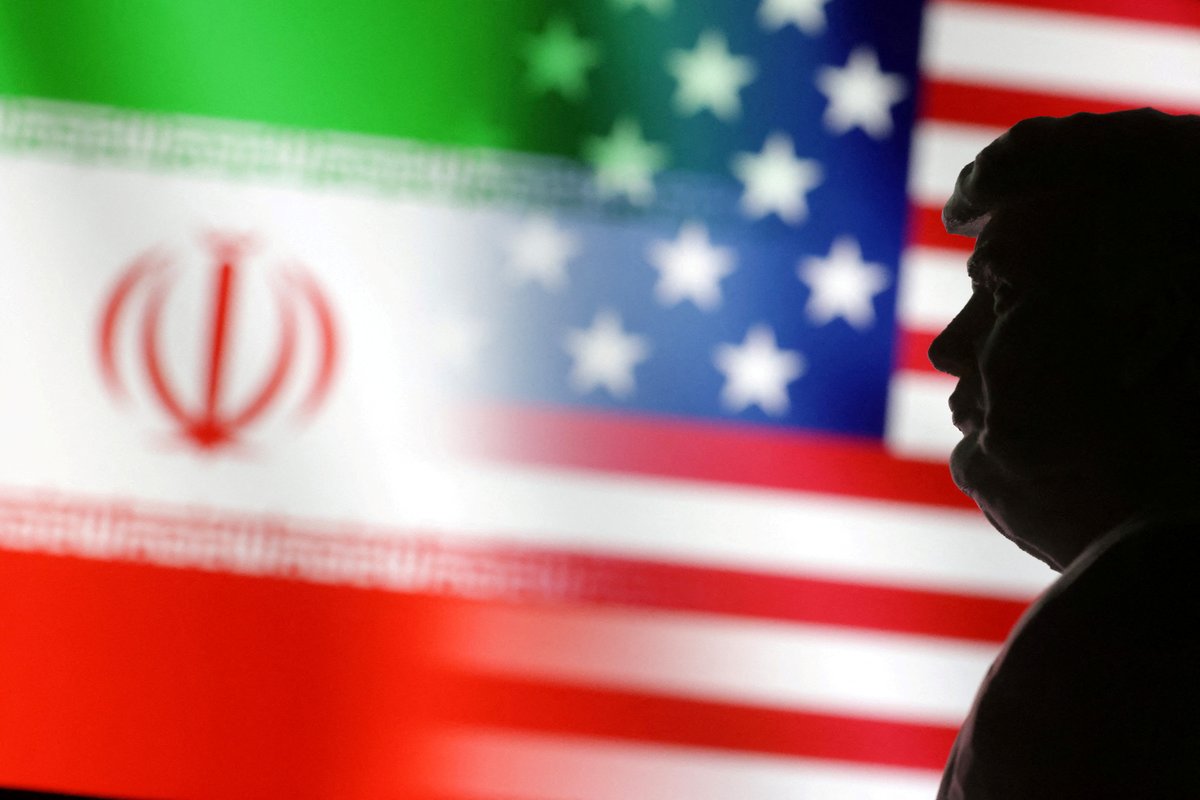
A 3D-printed miniature model of Donald Trump and the U.S. and Iran flags are seen in this illustration taken January 15, 2025.
14:13 JST, April 19, 2025
DUBAI, April 19 (Reuters) – Iran and the United States will hold a new round of nuclear talks in Rome on Saturday to resolve their decades-long standoff over Tehran’s atomic aims, under the shadow of President Donald Trump’s threat to unleash military action if diplomacy fails.
Iran’s Foreign Minister Abbas Araqchi and Trump’s Middle East envoy Steve Witkoff will negotiate indirectly through mediators from Oman, a week after a first round in Muscat that both sides described as constructive.
Tehran has sought to tamp down expectations of a quick deal, after some Iranian officials speculated that sanctions could be lifted soon. Iran’s utmost authority, Supreme Leader Ayatollah Ali Khamenei, said this week he was “neither overly optimistic nor pessimistic”.
For his part, Trump told reporters on Friday: “I’m for stopping Iran, very simply, from having a nuclear weapon. They can’t have a nuclear weapon. I want Iran to be great and prosperous and terrific.”
Trump, who ditched a 2015 nuclear pact between Iran and six powers during his first term in 2018 and reimposed crippling sanctions on Tehran, has revived his “maximum pressure” campaign on Iran since returning to the White House in January.
Washington wants Iran to halt production of highly enriched uranium, which it believes is aimed at building an atomic bomb.
Tehran, which has always said its nuclear programme is peaceful, says it is willing to negotiate some curbs in return for the lifting of sanctions, but wants watertight guarantees that Washington will not renege again as Trump did in 2018.
Since 2019, Iran has breached and far surpassed the 2015 deal’s limits on its uranium enrichment, producing stocks far above what the West says is necessary for a civilian energy programme.
A senior Iranian official, who described Iran’s negotiating position on condition of anonymity, listed Iran’s red lines as never agreeing to dismantle its uranium enriching centrifuges, halt enrichment altogether or reduce its enriched uranium stockpile below levels agreed in the 2015 deal. Iran also rejects negotiating about defence capabilities such as missiles.
While both Tehran and Washington have said they are set on pursuing diplomacy, there is still a wide gap between them on the dispute that has rumbled on for more than two decades.
Witkoff and Araqchi interacted briefly at the end of the first round last week, but officials from the two countries have not held direct negotiations since 2015, and Iran said the Rome talks would also be held indirectly through the Omani mediators.
Russia, a party to Iran’s 2015 nuclear agreement, has offered “to assist, mediate, and play any role” that will be beneficial to Iran and the United States.






Most Read
Most read in the last 24 hours
-
Tokyo Vice Governor: SusHi Tech Tokyo Garners Tangible Business O...
-
Iran's Top Diplomat Briefly Returns to Pakistan but Trump Says th...
-
Japan to Host Leaders from Major Cities from Around the World for...
-

DC Gala Shooting Suspect Aired Grievances against Trump in Writin...
-

Sabastian Sawe of Kenya Becomes First Person to Run a Sub-2-hour ...
-
M6.1 Earthquake Hits Hokkaido, Japan; No Tsunami Expected
-

Students’ ‘ITAMAE’ Project Boosts Interest in Starting Small Busi...
-

Japanese Police Storm Bus to Arrest Man with Knife; No Injuries R...
Most read in the last 7 days
-
China, South Korea Object to Japanese PM Takaichi's Ritual Offeri...
-

Trump Extends the Ceasefire with Iran but Keeps the Blockade
-

India's Arms Indigenization Quest for Self-Reliance / New Delhi S...
-

¥1,000 Coins to Be Issued to Mark Anniversary of Beginning of Jap...
-

Most Serious Cyberattacks against the UK Now from Russia, Iran an...
-

Trump Opposes United–American Merger, Signals Support for Spirit
-

System Malfunction in Haneda Airport Causes 83 Flight Cancelation...
-

Florida Launches Criminal Probe into OpenAI and ChatGPT over Dead...
Most read in the last 30 days
-
Earthquake Hits Japan's Tohoku Region; 3-meter Tsunami Warning Is...
-
Police Find Child's Shoe During Search for Missing Boy in Nantan,...
-
Body Found in Nantan, Kyoto Prefecture, During Search for 11-Year...
-
China, South Korea Object to Japanese PM Takaichi's Ritual Offeri...
-

Cherry Blossoms, Rapeseed Flowers Perform Colorful ‘Duet’ in Niig...
-
Trump Extends the Ceasefire with Iran but Keeps the Blockade
-

Olympic Gold Medal-Winning Figure Skaters Riku-Ryu Announce Retir...
-

Japanese Prime Minister Takaichi Speaks to Pakistani Prime Minist...
Top Articles in News Services
-
Trump Extends the Ceasefire with Iran but Keeps the Blockade
-
Most Serious Cyberattacks against the UK Now from Russia, Iran and China, Cyber Chief Says
-
Trump Opposes United–American Merger, Signals Support for Spirit
-
Florida Launches Criminal Probe into OpenAI and ChatGPT over Deadly Shooting
-

Trump Picks a University of Minnesota Professor to Lead His Economic Council
JN ACCESS RANKING
-
Earthquake Hits Japan’s Tohoku Region; 3-meter Tsunami Warning Issued (Update 1)
-
Police Find Child’s Shoe During Search for Missing Boy in Nantan, Kyoto Prefecture
-
Body Found in Nantan, Kyoto Prefecture, During Search for 11-Year-Old Boy in Area (Update 1)
-
China, South Korea Object to Japanese PM Takaichi’s Ritual Offering to Yasukuni Shrine
-
Cherry Blossoms, Rapeseed Flowers Perform Colorful ‘Duet’ in Niigata
Most read in the last 24 hours
-
Tokyo Vice Governor: SusHi Tech Tokyo Garners Tangible Business O...
-
Iran's Top Diplomat Briefly Returns to Pakistan but Trump Says th...
-
Japan to Host Leaders from Major Cities from Around the World for...
-
DC Gala Shooting Suspect Aired Grievances against Trump in Writin...
-
Sabastian Sawe of Kenya Becomes First Person to Run a Sub-2-hour ...
Most read in the last 7 days
-
China, South Korea Object to Japanese PM Takaichi's Ritual Offeri...
-
Trump Extends the Ceasefire with Iran but Keeps the Blockade
-
India's Arms Indigenization Quest for Self-Reliance / New Delhi S...
-
¥1,000 Coins to Be Issued to Mark Anniversary of Beginning of Jap...
-
Most Serious Cyberattacks against the UK Now from Russia, Iran an...
Most read in the last 30 days
-
Earthquake Hits Japan's Tohoku Region; 3-meter Tsunami Warning Is...
-
Police Find Child's Shoe During Search for Missing Boy in Nantan,...
-
Body Found in Nantan, Kyoto Prefecture, During Search for 11-Year...
-
China, South Korea Object to Japanese PM Takaichi's Ritual Offeri...
-
Cherry Blossoms, Rapeseed Flowers Perform Colorful ‘Duet’ in Niig...