
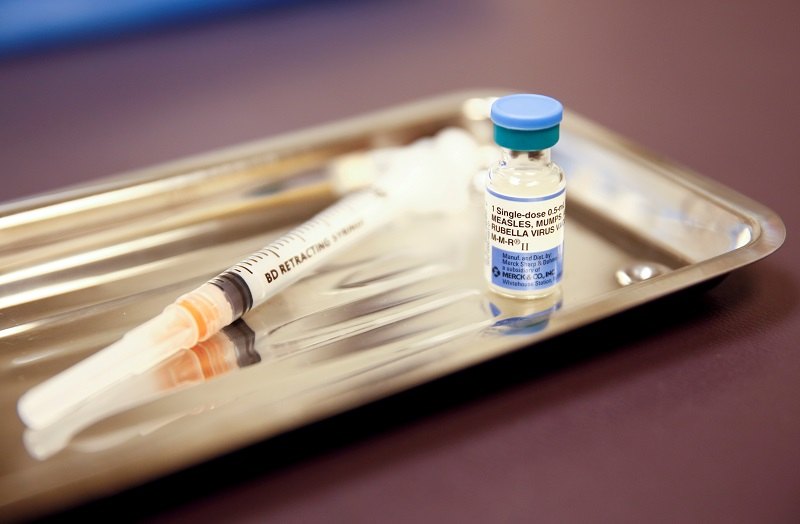
A vial of the measles, mumps, and rubella (MMR) vaccine
14:13 JST, April 19, 2021
A disruption in the supply of mumps vaccines has caused pediatricians and other medical institutions around the country to halt vaccinations, The Yomiuri Shimbun learned recently.
Because of trouble at a manufacturing plant of Takeda Pharmaceutical Co., one of two producers of the vaccine in Japan, medical experts have expressed concern that shortages could continue until autumn.
The mumps vaccination is not among the routine inoculations recommended by the government, and is given only to those who want to receive it.
The Japan Pediatric Society, however, recommends that children receive the vaccination twice, when they are 1 year old and just before they begin elementary school. In 2019, about 1.6 million people were inoculated.
According to Takeda, defects were detected in filters of equipment used to produce the undiluted solution of the vaccine during regular inspections conducted between January and April at its Yamaguchi Prefecture plant that manufactures the vaccine.
The company disposed of vaccines scheduled to be shipped following the inspections, with a company official saying, “It cannot be ruled out that [the filter problem] may have affected product quality.”
The company did not disclose how many doses of the vaccine was discarded, but said it expects stocks to run out by the end of this month. It said shipments will resume from late October.
Daiichi Sankyo Co.,, the other manufacturer of the vaccine, said it will look to pick up the slack.
“To lessen the impact of the vaccine shortages, we will try to make adjustments to the pace of shipping and our distribution areas.”
Regarding the situation, Tadashi Kataoka, a director of the nonprofit organization “Know VPD (vaccine preventable diseases)! Protect our Children,” said, “We will gather information and transmit it to parents via our website and other means.”
The Japan Pediatric Society has also begun considering a response to the situation.
Outbreaks of mumps infections occur every four or five years, mainly among children, and one out of every 1,000 people infected suffers serious hearing impairment.
The vaccine is believed to be 90% effective in preventing infection.






Most Read
Most read in the last 24 hours
-

Tokyo Vice Governor: SusHi Tech Tokyo Garners Tangible Business O...
-
Japan to Host Leaders from Major Cities from Around the World for...
-

Govt to Support Universities in 17 Strategic Fields to Boost Huma...
-

Sabastian Sawe of Kenya Becomes First Person to Run a Sub-2-hour ...
-
M6.1 Earthquake Hits Hokkaido, Japan; No Tsunami Expected
-

Iran's Top Diplomat Briefly Returns to Pakistan but Trump Says th...
-

DC Gala Shooting Suspect Aired Grievances against Trump in Writin...
-

Students’ ‘ITAMAE’ Project Boosts Interest in Starting Small Busi...
Most read in the last 7 days
-

China, South Korea Object to Japanese PM Takaichi's Ritual Offeri...
-

Trump Extends the Ceasefire with Iran but Keeps the Blockade
-

India's Arms Indigenization Quest for Self-Reliance / New Delhi S...
-
¥1,000 Coins to Be Issued to Mark Anniversary of Beginning of Jap...
-

Most Serious Cyberattacks against the UK Now from Russia, Iran an...
-

Trump Opposes United–American Merger, Signals Support for Spirit
-

System Malfunction in Haneda Airport Causes 83 Flight Cancelation...
-

Florida Launches Criminal Probe into OpenAI and ChatGPT over Dead...
Most read in the last 30 days
-
Earthquake Hits Japan's Tohoku Region; 3-meter Tsunami Warning Is...
-
Police Find Child's Shoe During Search for Missing Boy in Nantan,...
-
Body Found in Nantan, Kyoto Prefecture, During Search for 11-Year...
-
China, South Korea Object to Japanese PM Takaichi's Ritual Offeri...
-
Cherry Blossoms, Rapeseed Flowers Perform Colorful ‘Duet’ in Niig...
-
Trump Extends the Ceasefire with Iran but Keeps the Blockade
-

Olympic Gold Medal-Winning Figure Skaters Riku-Ryu Announce Retir...
-

Japanese Prime Minister Takaichi Speaks to Pakistani Prime Minist...
Top Articles in Society
-
Earthquake Hits Japan’s Tohoku Region; 3-meter Tsunami Warning Issued (Update 1)
-
Police Find Child’s Shoe During Search for Missing Boy in Nantan, Kyoto Prefecture
-
Body Found in Nantan, Kyoto Prefecture, During Search for 11-Year-Old Boy in Area (Update 1)
-
Cherry Blossoms, Rapeseed Flowers Perform Colorful ‘Duet’ in Niigata
-
Japan to Ban Use of Portable Chargers on Airplanes from April 24, Number of Regular Chargers To Be Limited to 2
JN ACCESS RANKING
-
Earthquake Hits Japan’s Tohoku Region; 3-meter Tsunami Warning Issued (Update 1)
-
Police Find Child’s Shoe During Search for Missing Boy in Nantan, Kyoto Prefecture
-
Body Found in Nantan, Kyoto Prefecture, During Search for 11-Year-Old Boy in Area (Update 1)
-
China, South Korea Object to Japanese PM Takaichi’s Ritual Offering to Yasukuni Shrine
-
Cherry Blossoms, Rapeseed Flowers Perform Colorful ‘Duet’ in Niigata
Most read in the last 24 hours
-
Tokyo Vice Governor: SusHi Tech Tokyo Garners Tangible Business O...
-
Japan to Host Leaders from Major Cities from Around the World for...
-
Govt to Support Universities in 17 Strategic Fields to Boost Huma...
-
Sabastian Sawe of Kenya Becomes First Person to Run a Sub-2-hour ...
-
M6.1 Earthquake Hits Hokkaido, Japan; No Tsunami Expected
Most read in the last 7 days
-
China, South Korea Object to Japanese PM Takaichi's Ritual Offeri...
-
Trump Extends the Ceasefire with Iran but Keeps the Blockade
-
India's Arms Indigenization Quest for Self-Reliance / New Delhi S...
-
¥1,000 Coins to Be Issued to Mark Anniversary of Beginning of Jap...
-
Most Serious Cyberattacks against the UK Now from Russia, Iran an...
Most read in the last 30 days
-
Earthquake Hits Japan's Tohoku Region; 3-meter Tsunami Warning Is...
-
Police Find Child's Shoe During Search for Missing Boy in Nantan,...
-
Body Found in Nantan, Kyoto Prefecture, During Search for 11-Year...
-
China, South Korea Object to Japanese PM Takaichi's Ritual Offeri...
-
Cherry Blossoms, Rapeseed Flowers Perform Colorful ‘Duet’ in Niig...