
Japan’s shipping industry reenters ammonia transport market, eyes its potential as marine fuel
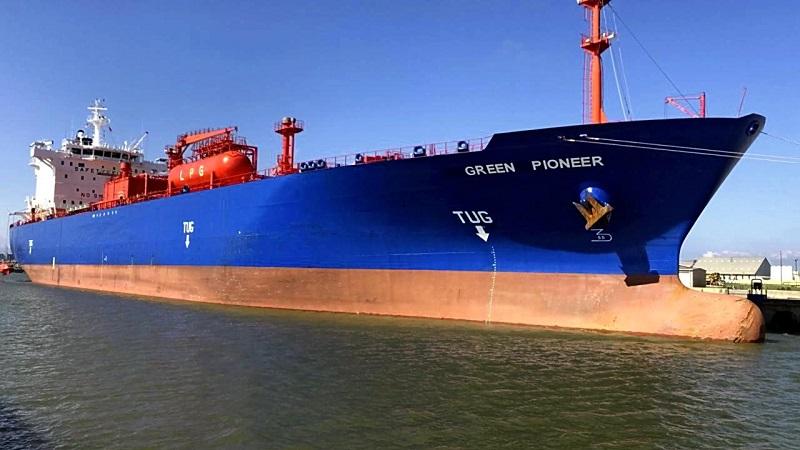
MOL’s ammonia carrier
12:10 JST, June 21, 2021
Ammonia is expected to become a next-generation fuel that will be a boon for the global trend of decarbonization, with the shipping industry also pinning its hopes on this commodity.
Emitting no carbon dioxide when burned, ammonia’s use as fuel for thermal power plants is expected to expand. The Japanese shipping industry is not only looking to reenter the market of transporting the commodity from ammonia-producing countries overseas, but also aiming to reduce CO2 emissions by expanding the use of ammonia as ship fuel.
Mitsui O.S.K. Lines, Ltd. (MOL) will reenter the ammonia transport business as early as this year. MOL used to transport ammonia for use as fertilizer, but withdrew from the business in 2016 due to deteriorating profitability.
MOL will lease a transport vessel to a U.S. ammonia trading firm and will be responsible for the operation and management of the ammonia carrier.
In the electric power industry, there is a growing trend to replace the fuel used in thermal power plants with ammonia, and MOL expects demand for the clean fuel to grow.
Kawasaki Kisen Kaisha, Ltd. (“K” Line), together with 22 domestic and foreign companies including Itochu Corp. and shipbuilder Nihon Shipyard Co., established a council this month to promote the use of ammonia as marine fuel. They will study the purity and safety of ammonia suitable for marine use, aiming for its early commercialization.
This month, Nippon Yusen Kaisha (NYK Line) invested in a Japanese start-up that is researching and developing an ammonia synthesis system using catalyst technology. NYK Line sees this investment as a stepping-stone toward procuring proprietary marine fuel.
Hydrogen is also seen as a promising next-generation fuel, but hydrogen needs to be liquefied and transported at a temperature below minus 253 C, making it relatively expensive to store and transport.
“Research and development of ammonia is accelerating,” said Takaya Soga, senior managing executive officer of NYK Line. The company moved up its target for the introduction of ammonia as marine fuel by five years, to fiscal 2029.
Since last year, the company has also been working with Japan Marine United Corp. and others to develop ammonia-fueled ships.
According to the Economy, Trade and Industry Ministry, the annual global production of ammonia is 200 million tons. Most of it is consumed in producing countries such as China, Russia and the United States, with only 10% of total production exported. There is a concern that expanding global demand will cause prices to soar, so it will be a challenge to ensure a stable, secure supply of ammonia in sufficient quantities.









Most Read
Most read in the last 24 hours
-

Most Serious Cyberattacks against the UK Now from Russia, Iran an...
-

Iran Fires on 3 Ships in the Strait of Hormuz as US Maintains Blo...
-

Trump Envoy Seeks to Replace Iran with Italy in Upcoming World Cu...
-

EU Close to Approving a $106B Loan for Ukraine after Months of De...
-

U.S. Extends Ceasefire: Lifting Blockades on Strait is Urgent for...
-

White Sox Rookie Munetaka Murakami Ties MLB Rookie Record with HR...
-

Navy Secretary John Phelan Is Leaving in Latest Departure of a To...
-

Airline Company Lufthansa Cuts 20,000 Flights as War Squeezes Fue...
Most read in the last 7 days
-
Earthquake Hits Japan's Tohoku Region; 3-meter Tsunami Warning Is...
-

Trump Extends the Ceasefire with Iran but Keeps the Blockade
-

Olympic Gold Medal-Winning Figure Skaters Riku-Ryu Announce Retir...
-

China, South Korea Object to Japanese PM Takaichi's Ritual Offeri...
-

India's Arms Indigenization Quest for Self-Reliance / New Delhi S...
-

Japan to Ban Use of Portable Chargers on Airplanes from April 24,...
-

¥1,000 Coins to Be Issued to Mark Anniversary of Beginning of Jap...
-
Most Serious Cyberattacks against the UK Now from Russia, Iran an...
Most read in the last 30 days
-
Earthquake Hits Japan's Tohoku Region; 3-meter Tsunami Warning Is...
-

Police Find Child's Shoe During Search for Missing Boy in Nantan,...
-

Body Found in Nantan, Kyoto Prefecture, During Search for 11-Year...
-

Cherry Blossoms, Rapeseed Flowers Perform Colorful ‘Duet’ in Niig...
-
Trump Extends the Ceasefire with Iran but Keeps the Blockade
-
Olympic Gold Medal-Winning Figure Skaters Riku-Ryu Announce Retir...
-

Nori Prices Surge in Japan Due to Poor Seaweed Production Amid Ri...
-
Japanese Prime Minister Takaichi Speaks to Pakistani Prime Minist...
Top Articles in Business
-

Foreign Tourists Set New Record in March; 30% Drop in Visitors from Middle East
-

Japan’s ANA to Introduce Fuel Surcharges to Domestic Flights from Fy27, Driven by Rising Fuel Costs, Declining Profits
-
Middle Powers Should Create Alternative to WTO, Says Research Group
-

Airborne Cellular Stations to Be Tested in Ishikawa, Miyagi; Aim to Ensure Communication During Disasters
-
Toyota Motor to Begin Full-Scale Hydrogen Production in May; Mass Production and Sales of Equipment Planned to Start in 2029
JN ACCESS RANKING
-
Earthquake Hits Japan’s Tohoku Region; 3-meter Tsunami Warning Issued (Update 1)
-
Police Find Child’s Shoe During Search for Missing Boy in Nantan, Kyoto Prefecture
-
Body Found in Nantan, Kyoto Prefecture, During Search for 11-Year-Old Boy in Area (Update 1)
-
Cherry Blossoms, Rapeseed Flowers Perform Colorful ‘Duet’ in Niigata
-
Trump Extends the Ceasefire with Iran but Keeps the Blockade
Most read in the last 24 hours
-
Most Serious Cyberattacks against the UK Now from Russia, Iran an...
-
Iran Fires on 3 Ships in the Strait of Hormuz as US Maintains Blo...
-
Trump Envoy Seeks to Replace Iran with Italy in Upcoming World Cu...
-
EU Close to Approving a $106B Loan for Ukraine after Months of De...
-
U.S. Extends Ceasefire: Lifting Blockades on Strait is Urgent for...
Most read in the last 7 days
-
Earthquake Hits Japan's Tohoku Region; 3-meter Tsunami Warning Is...
-
Trump Extends the Ceasefire with Iran but Keeps the Blockade
-
Olympic Gold Medal-Winning Figure Skaters Riku-Ryu Announce Retir...
-
China, South Korea Object to Japanese PM Takaichi's Ritual Offeri...
-
India's Arms Indigenization Quest for Self-Reliance / New Delhi S...
Most read in the last 30 days
-
Earthquake Hits Japan's Tohoku Region; 3-meter Tsunami Warning Is...
-
Police Find Child's Shoe During Search for Missing Boy in Nantan,...
-
Body Found in Nantan, Kyoto Prefecture, During Search for 11-Year...
-
Cherry Blossoms, Rapeseed Flowers Perform Colorful ‘Duet’ in Niig...
-
Trump Extends the Ceasefire with Iran but Keeps the Blockade