
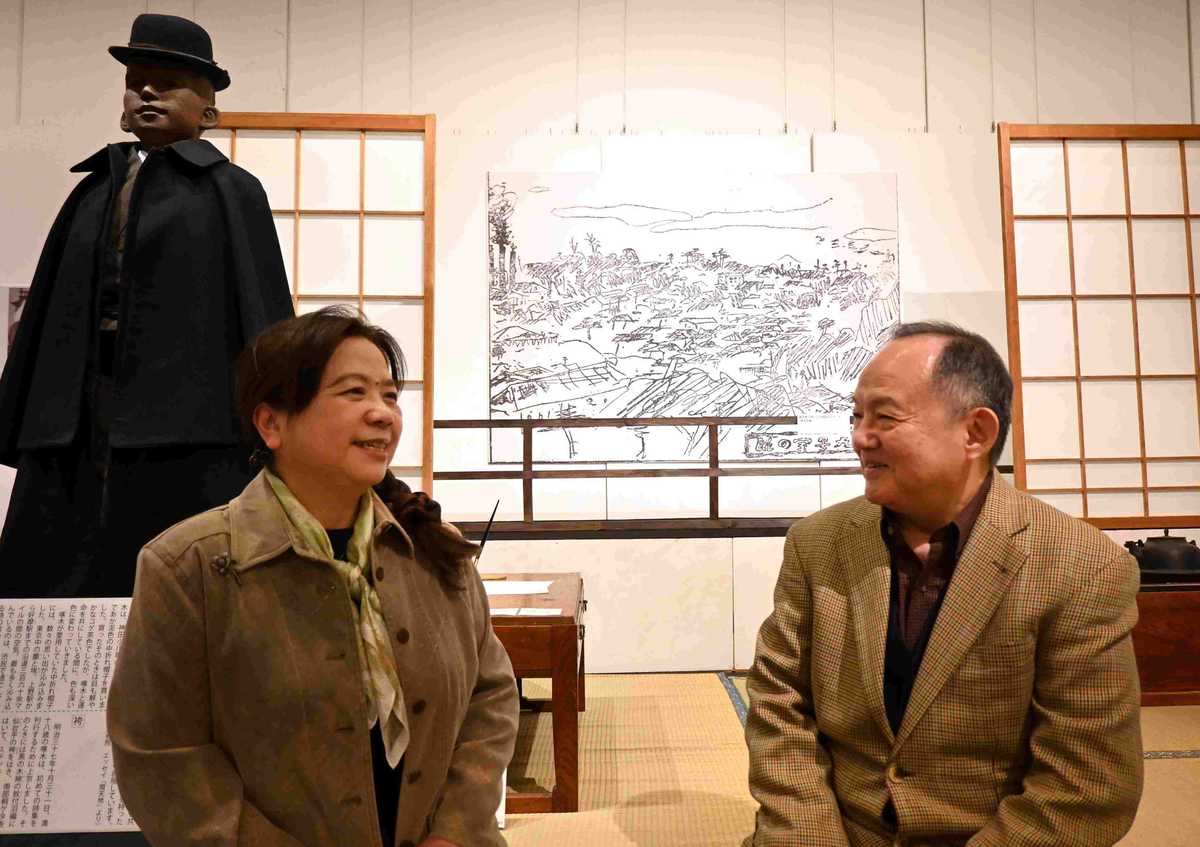
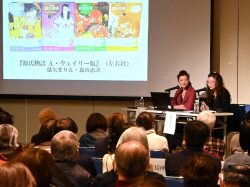
Reiko Yamamoto, left, and Seiki Keene exchange views on Takuboku Ishikawa and Donald Keene in Morioka on Wednesday. An enlarged version of a sketch by Takuboku depicting the view from his Tokyo apartment is displayed on the wall behind them.
15:59 JST, April 24, 2026
An exhibition exploring the appeal of Meiji-era poet Takuboku Ishikawa (1886–1912) from the viewpoint of Japanese literature scholar Donald Keene is currently being held in Morioka, the capital of Iwate Prefecture. The exhibition was updated on Friday.
This year marks the 140th anniversary of Takuboku’s birth. The poet’s charm lies not merely in his works, but also his turbulent 26-year life filled with poverty, setbacks, extravagance and romance. Despite his short life, Takuboku was a prodigious writer, compiling 4,150 tanka poems and 364 other pieces of poetry.
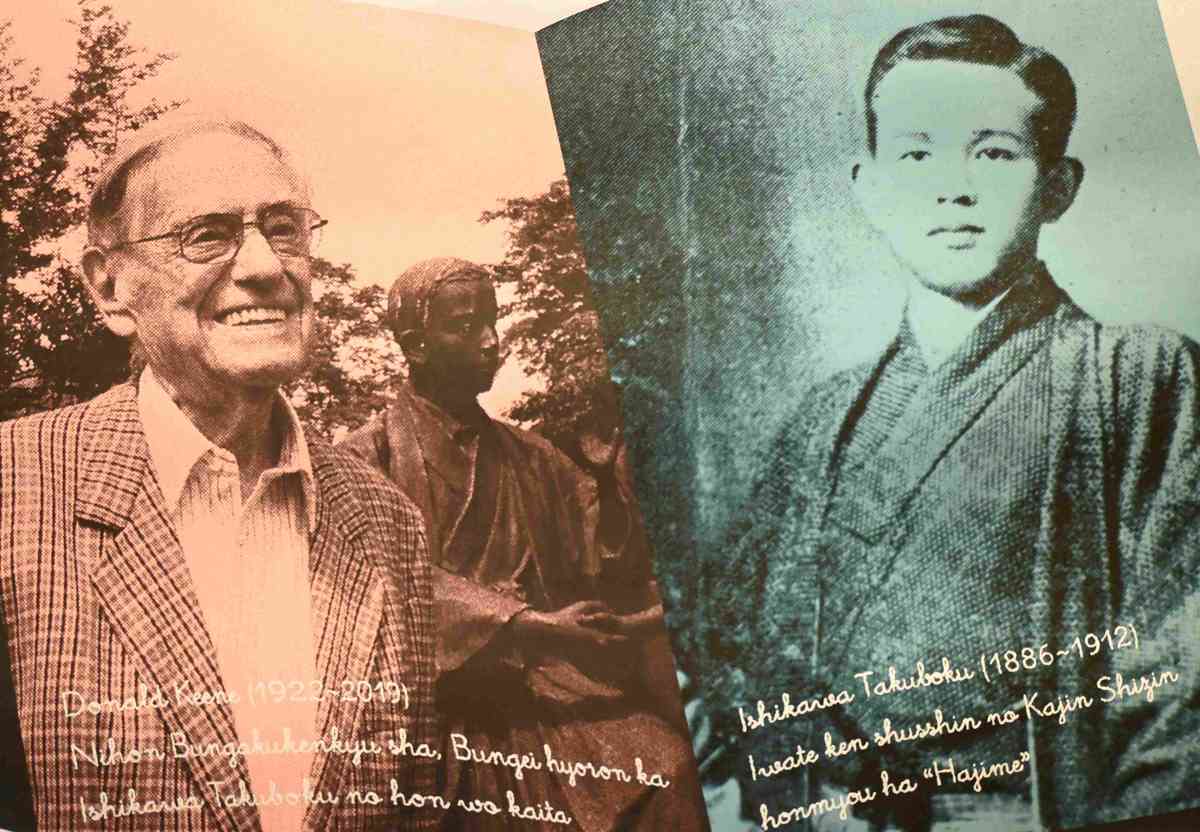
An exhibition poster featuring Donald Keene, left, and Takuboku Ishikawa
Guided by local Takuboku scholar Reiko Yamamoto, Keene’s adopted son, Seiki Keene and I visited Morioka, where Takuboku spent his youth.
Meeting a Takuboku ‘sommelier’
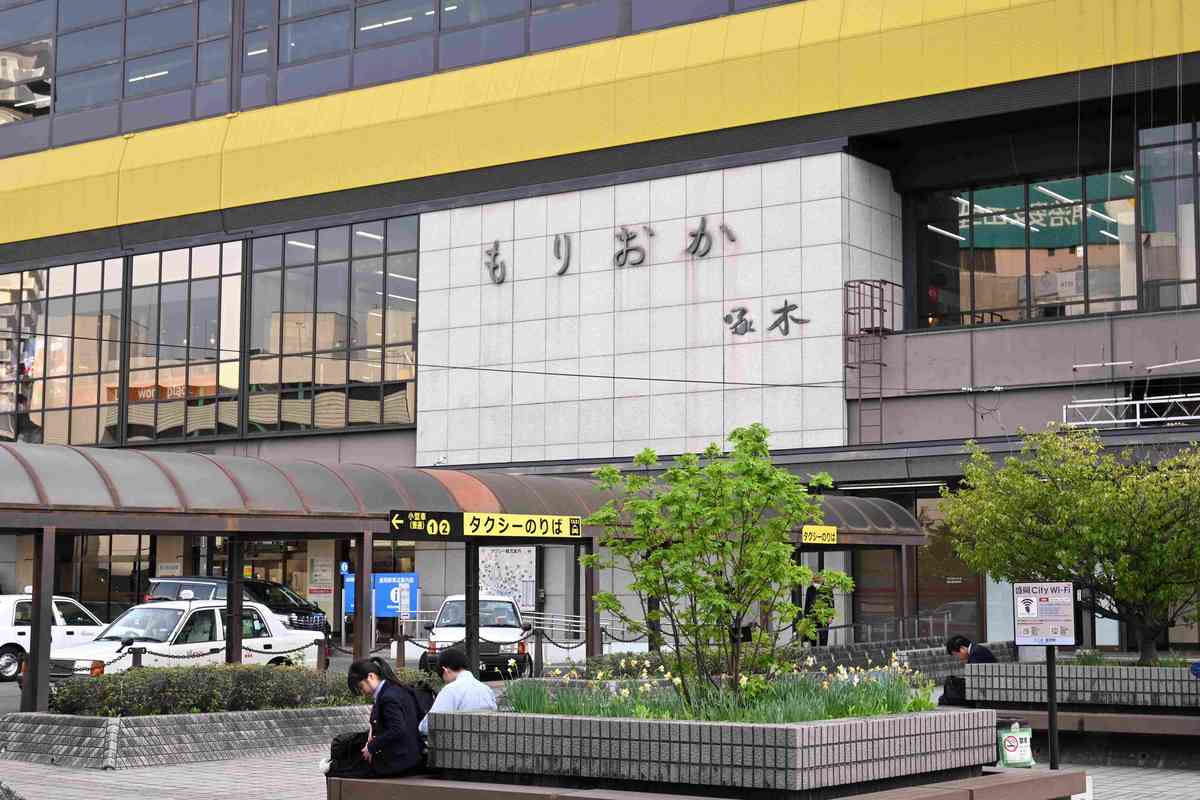
“Morioka” is written in hiragana and “Takuboku” in kanji characters based on the handwriting of Takuboku Ishikawa
When Seiki and I disembarked the Shinkansen train at JR Morioka Station, Yamamoto was there to greet us. In Japan, people with specialized knowledge in specific fields are sometimes called sommelier, and Yamamoto calls herself a “Takuboku sommelier.”
“That’s Takuboku’s handwriting,” said Yamamoto, who has been researching Takuboku for 36 years. I looked up at the station building from the square in front of the station, and I saw the word “Morioka” displayed in large hiragana letters on the exterior wall, with smaller kanji characters for “Takuboku” written underneath. It was created based on handwritten characters from Takuboku’s letters.
Yamamoto, who has long been interested in Meiji-era folklore, once conducted folklore surveys of northern Iwate Prefecture while working at the Iwate Prefectural Museum. Later, when she read Takuboku’s diaries, she found that they contained detailed descriptions of the village life she had been researching, which led her to begin studying Takuboku himself.
In 2014, she held an event with Keene where they discussed Takuboku. She has also been hosting a weekly radio program about the poet on a local station for 16 years.
Using Latin script
-
The Japan News
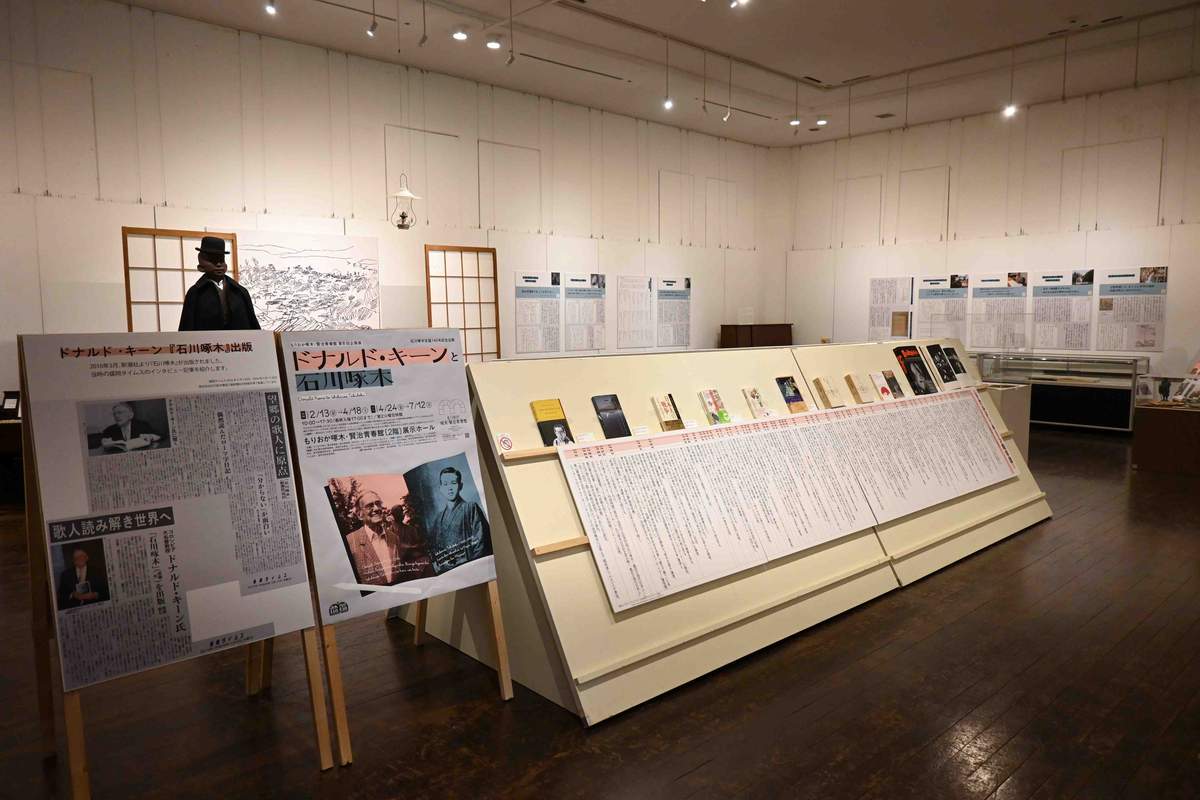
The ongoing “Donald Keene and Takuboku Ishikawa” exhibition in Morioka
-
The Japan News
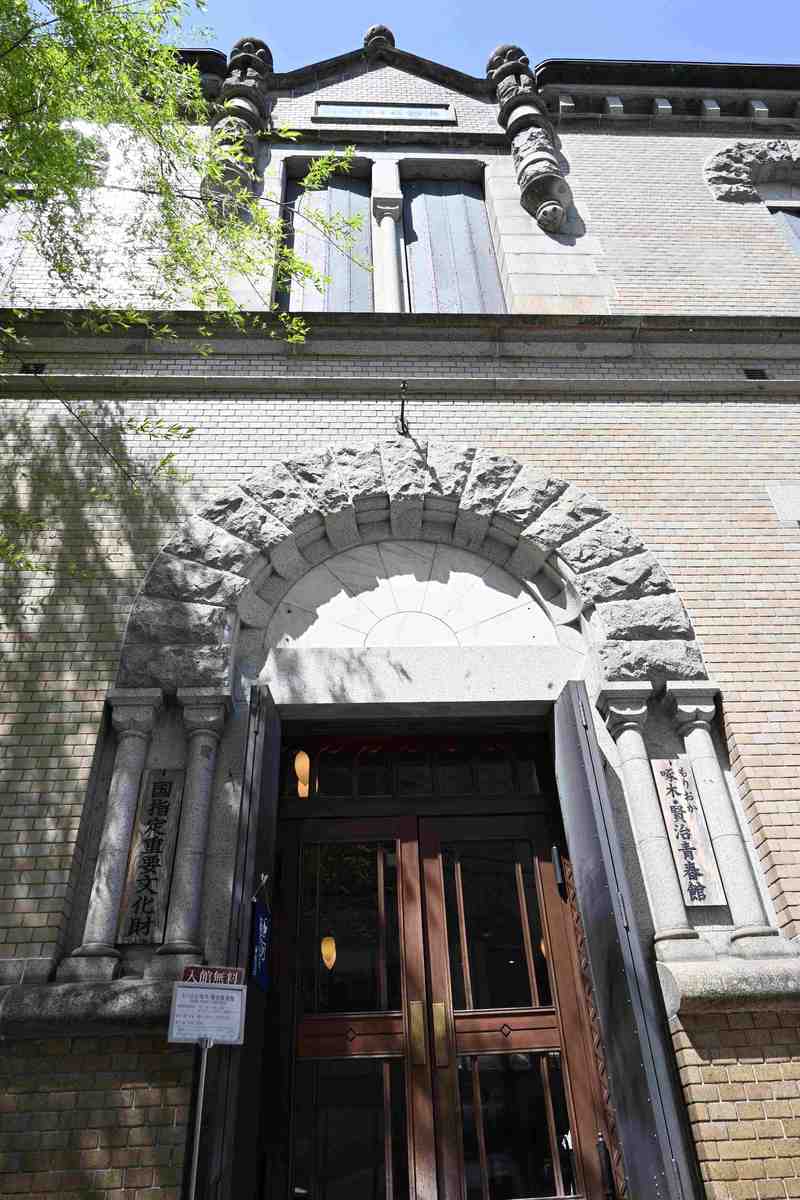
The entrance to the Morioka Takuboku & Kenji Museum
The site of the exhibition, the Morioka Takuboku & Kenji Museum is located in the city center. It is housed in a former bank building constructed during the Meiji era, giving it a dignified atmosphere. The museum’s purpose is to honor Takuboku and Kenji Miyazawa, another literary representative of Iwate.
The exhibition consists of Takuboku’s diaries and other personal materials, explanations of his tanka and other poetry – along with Keene’s perspectives on them – and a section recreating the apartment room where Takuboku lived in the Hongo district of Tokyo. There is also a section tracing Keene’s life.
“By linking Takuboku with Keene, who highly valued him, we wanted to convey the essence of Takuboku to a wider audience,” said museum director Yuichi Sakata.
“My father held Takuboku’s diaries in very high regard,” Seiki recalls. Takuboku kept diaries for ten years, starting when he was 16. “It is none other than Takuboku Ishikawa’s diaries that move me,” Keene once wrote, adding, “I feel as if Takuboku is my very best friend.”
Keene lists two reasons why Takuboku kept diaries. One was that, as his intellectual curiosity grew, he began to feel alienated from those around him and thus needed a diary. The other was that he viewed his diaries as material for literary works. Among these, Keene particularly praised Takuboku’s “Romazi Nikki” (Diary in Romanized Japanese) which he wrote entirely in Latin script.
In this exhibition, a reproduction of the manuscript for the diary, which is kept by the Hakodate Takuboku Kai, a group that preserves materials related to Takuboku, is on display. This marks the second time it has been shown outside of Hakodate, Hokkaido, following a previous exhibition at the Setagaya Literary Museum in Tokyo.
The Romazi Nikki was written from April 7 to June 16, 1909, during Takuboku’s second stay in Tokyo. As Keene notes, “Takuboku’s sole concern was to tell the truth.” Indeed, Takuboku writes freely and vividly about his poverty, debts, dining and entertainment, and his relationships with friends and women.
Keene translated a section into English and included it in the 1956 American publication “Modern Japanese Literature: An Anthology.” Among the works of many Japanese writers introduced in the book, Takuboku’s Romazi Nikki was the most popular.
Regarding his decision to write in Latin script, Takuboku noted in the diary, “It was because I didn’t want my wife, Setsuko, to read it.” However, Keene believed there was more to it than that. “It appears Takuboku had planned in advance how to begin, how to end, and how to weave in interesting details along the way,” he pointed out.
Given that it was written in beautiful handwriting on high-quality manuscript paper, with not a single erasure or alteration, Keene speculated that Takuboku may have intended it as a literary work from the very beginning.
Hometown visit
-
The Japan News
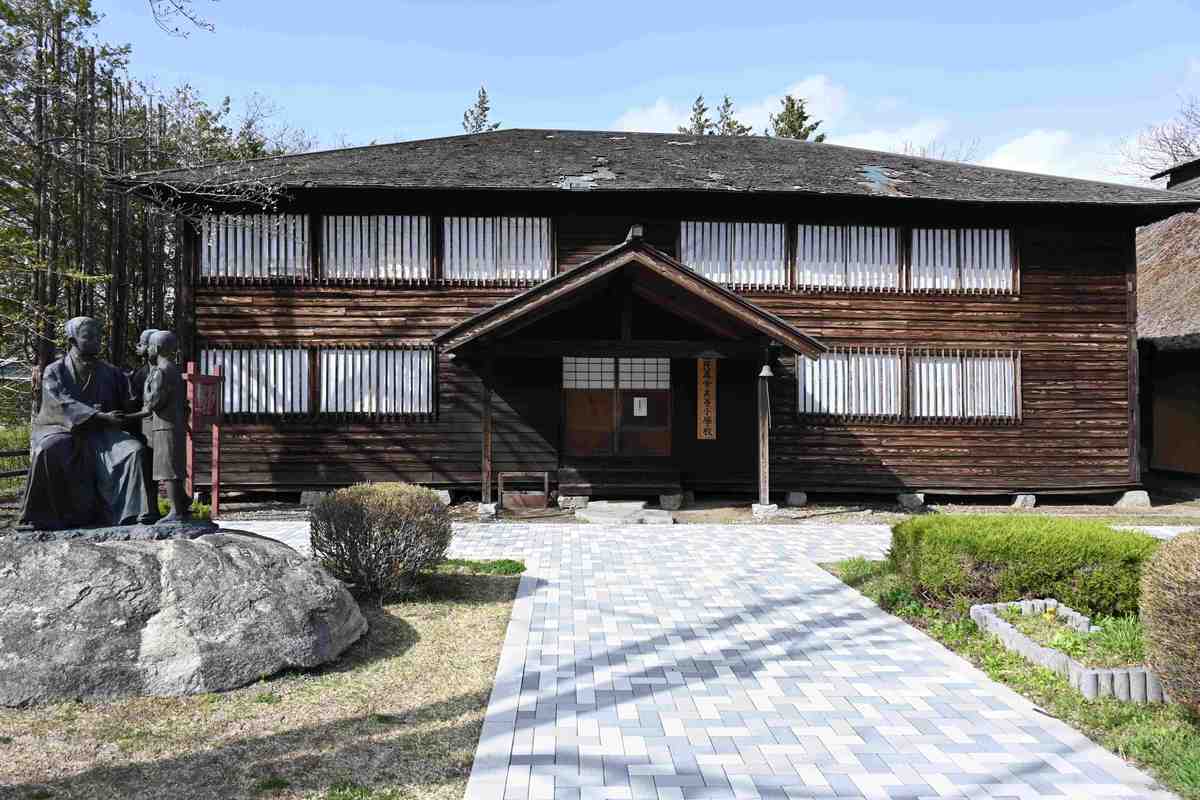
The former Shibutami elementary school building, which has been relocated and preserved on the grounds of the Ishikawa Takuboku Memorial Museum
-
The Japan News
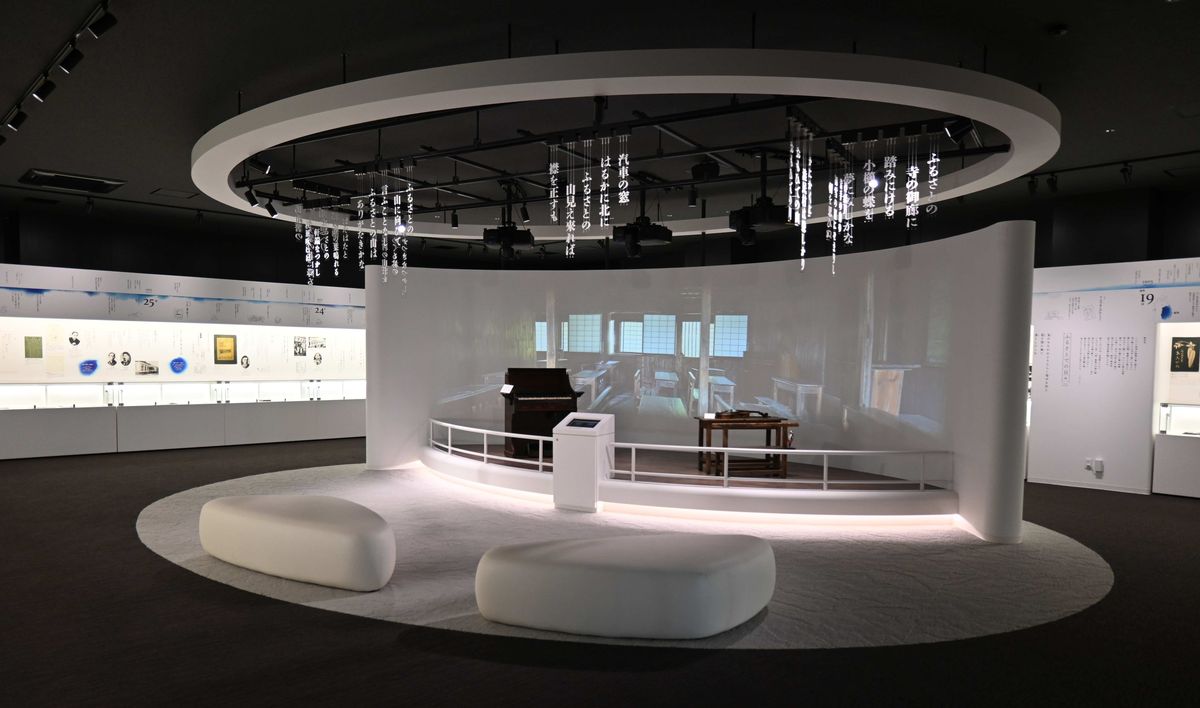
The exhibition room at the renovated Ishikawa Takuboku Memorial Museum in Morioka
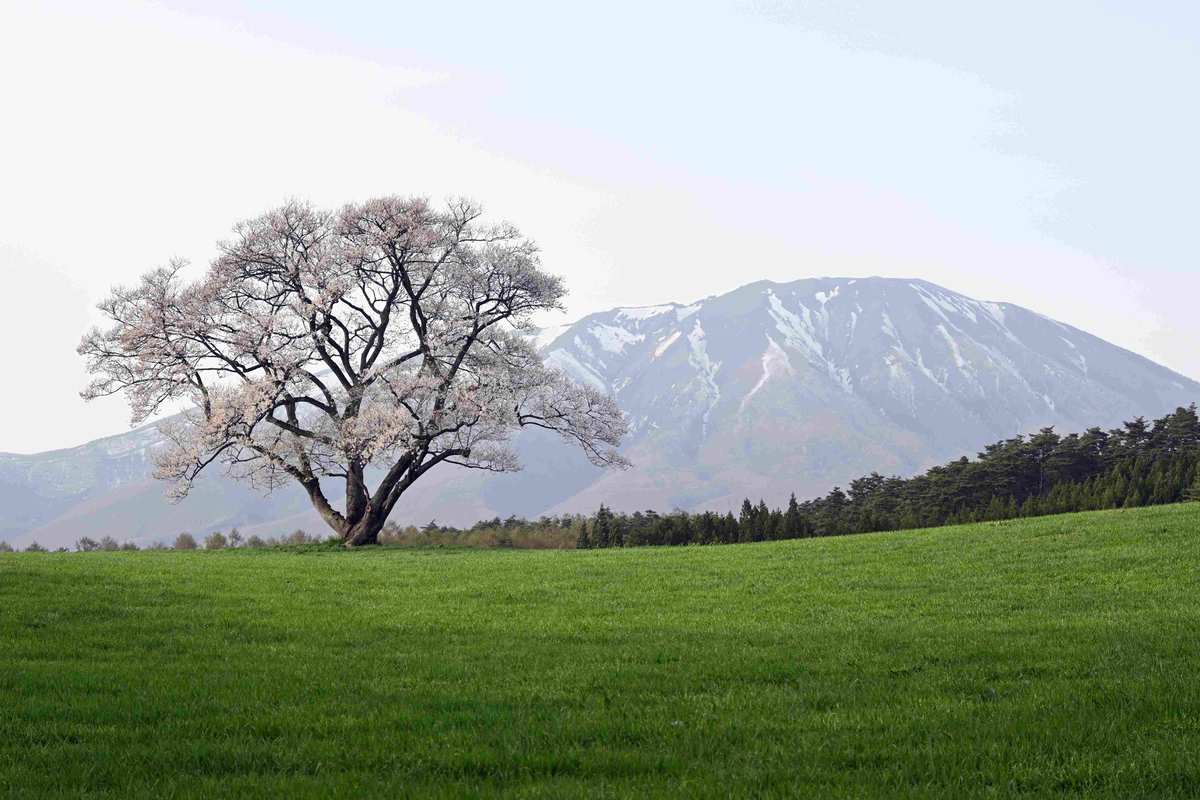
Seiki and I were driven by Yamamoto to the Shibutami area of Morioka, formerly the village of Shibutami, where Takuboku spent his childhood and a period after his marriage. Along the way, the snow-capped Mount Iwate drew nearer and nearer, and I found it beautiful.
Takuboku spent a happy childhood in Shibutami and loved its natural surroundings. He left behind this tanka:
One thing and another
Makes me yearn for
Shibutami Village
The mountains I remember,
The river I recall
(English translation provided by Donald Keene)
-
The Japan News
Mt. Iwate is seen behind a solitary cherry tree popular with tourists in Shizukuishi, Iwate Prefecture, on Wednesday
-
The Japan News
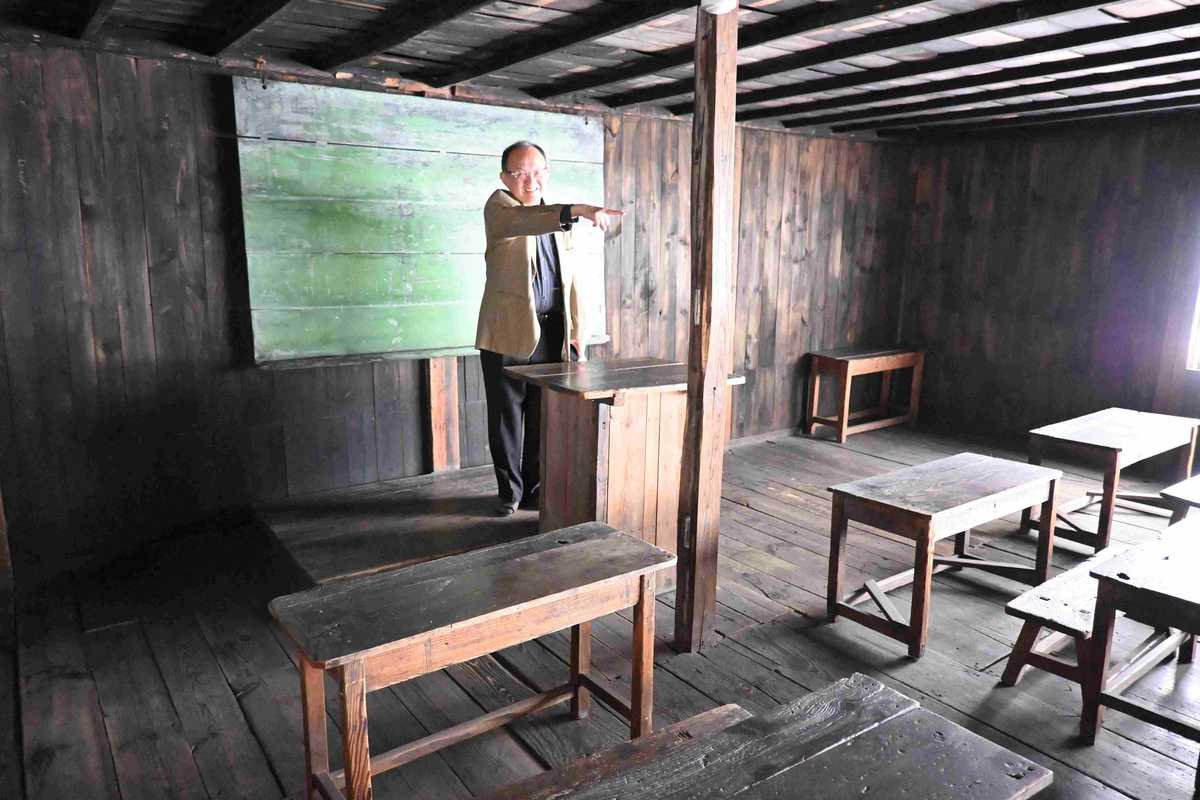
Seiki Keene stands at the lectern in a classroom at Shibutami elementary school
-
The Japan News
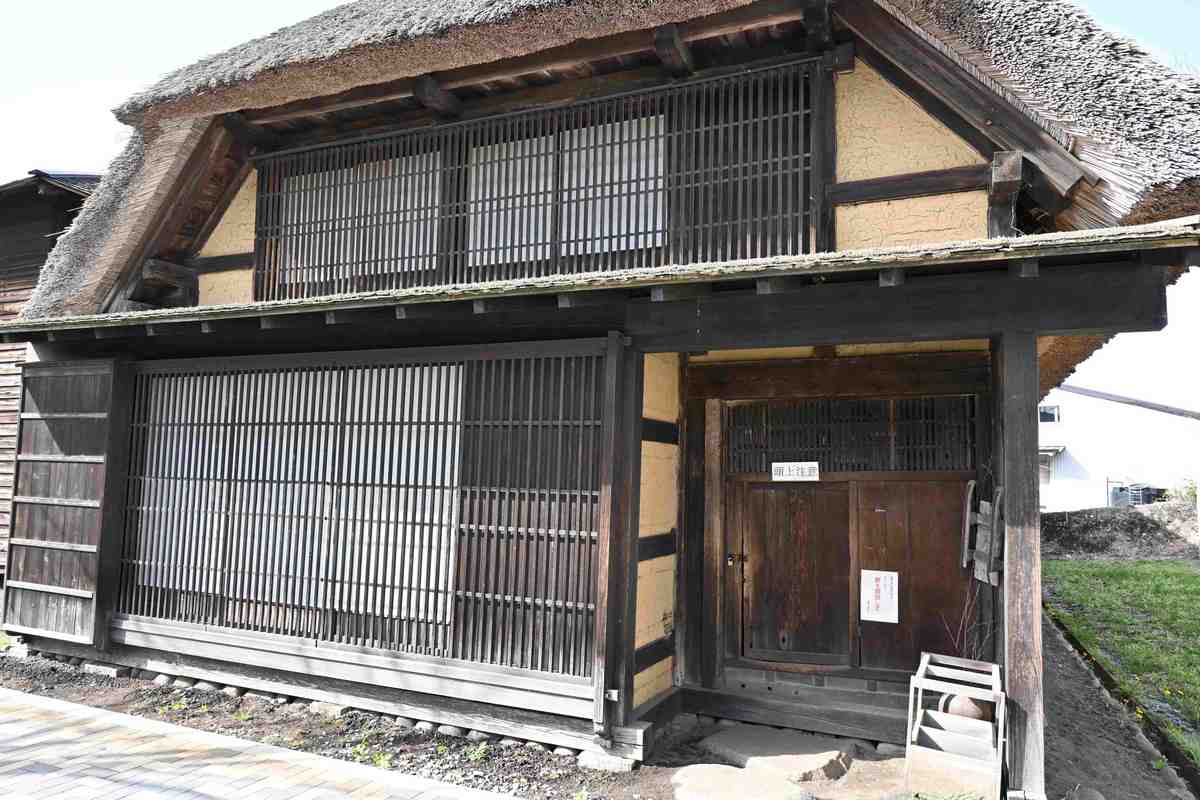
The former Saito family residence where Takuboku lived with his family during his time as a substitute teacher
-
The Japan News
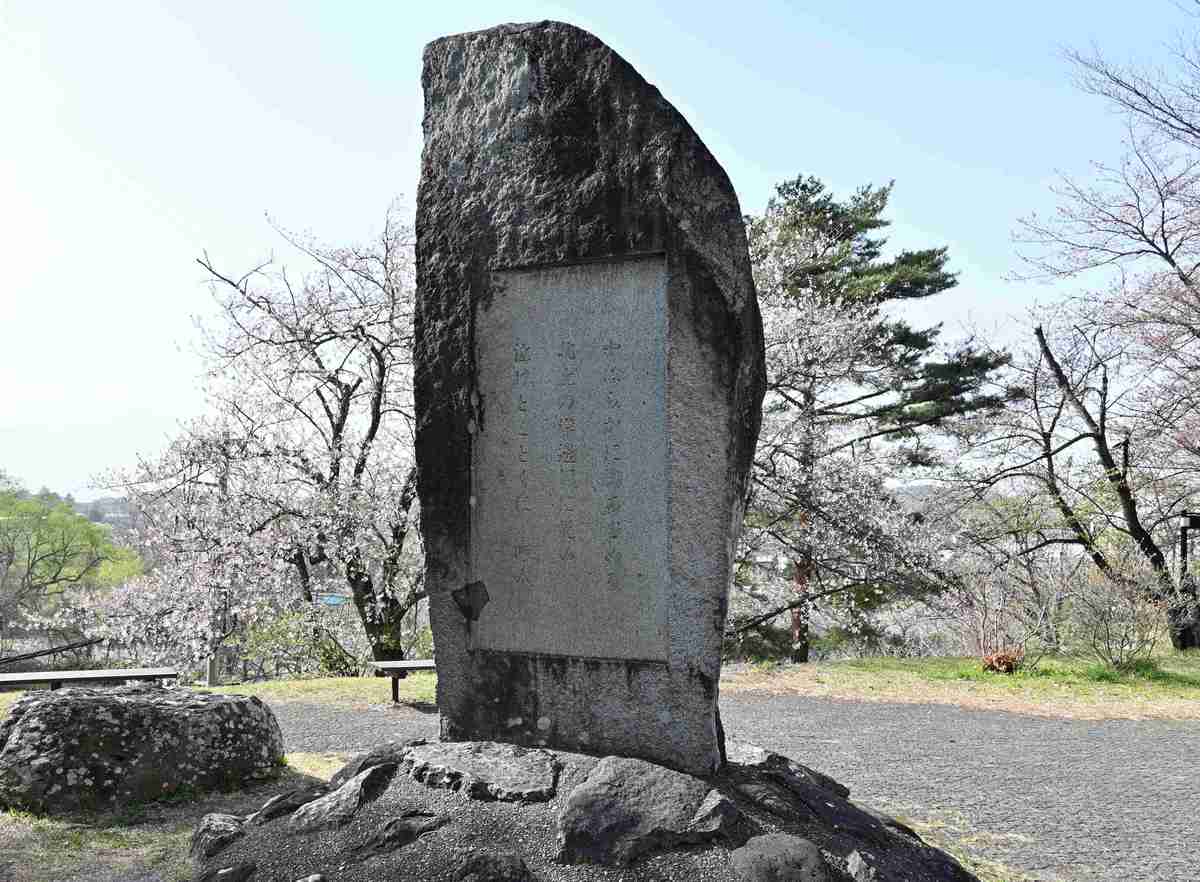
A monument with a tanka poem by Takuboku Ishikawa engraved on it in Shibutami Park. It was erected in April 1922, ten years after Takuboku’s death, and was the first monument depicting the poet’s work.
The Takuboku Ishikawa Memorial Museum, which reopened last April after a complete interior renovation, is located in Shibutami. A Michi no Eki roadside station opened nearby around the same time, contributing to higher visitor numbers. The exhibition room, featuring a large screen at its center, also displays the reed organ that Takuboku played during his time as a substitute teacher.
On the museum grounds, the former school building of Shibutami elementary school — which Takuboku attended — and the former Saito family home, where Takuboku and his family lived as lodgers during his time as a substitute teacher, have been relocated and preserved. The school building is open to the public, and there is a classroom lined with small desks on the second floor.
“I came here with my father thirteen years ago,” Seiki said wistfully.
“He stood right here and did this,” Seiki added, standing at the teacher’s lectern and pointing toward the students’ desks.
Takuboku left Morioka for Tokyo but, unable to make a living, returned to his hometown of Shibutami. He later drifted around various parts of Hokkaido, before returning to Tokyo once again, where he died of tuberculosis at the age of 26.
Speaking of Takuboku, who hated feeling bound and suffered numerous failures, Yamamoto said, “Takuboku sought freedom.” She added with a smile that if Takuboku were alive and appeared before her, she would “like to have a beer with him.”
“The predicament he found himself in may have been brought about by his own self-indulgence rather than by the times or bad luck,” wrote Keene, “Yet, ultimately, we accept it as something inevitable for a poet of genius.”
Morioka Takuboku & Kenji Museum
The “Donald Keene and Takuboku Ishikawa” exhibition runs through July 12. Admission is ¥500 for adults. Open from 10:00 a.m. to 5:30 p.m. Closed on the second Tuesday of each month. On May 30, an event featuring a joruri storytelling performance by Seiki and a discussion on Takuboku and Keene will be held. Admission to the event is ¥1,500. For more details, visit the official website (https://seishunkan.jp/).





Most Read
Most read in the last 24 hours
-
Golden Week Weather Forecast: Rain and Clouds Expected After May ...
-
Tohoku, Hokkaido Tourist Sites Prepare to Evacuate Visitors in Ca...
-

India's Arms Indigenization Quest for Self-Reliance / Desert Dril...
-

26-year-old U.S. National Falls While Climbing Mt. Fuji; Accompan...
-
Japan Passport Fees Going Down to ¥9,000 in July
-

Japanese Side Machida Zelvia Faces Ah-Ahli in Asian Champions Lea...
-

Japan Eyes Trialing Dual-Use Tech Developed by Startups to Promot...
-
Charm of Meiji-Era Poet Takuboku Examined from Viewpoint of Donal...
Most read in the last 7 days
-
Earthquake Hits Japan's Tohoku Region; 3-meter Tsunami Warning Is...
-

Trump Extends the Ceasefire with Iran but Keeps the Blockade
-

China, South Korea Object to Japanese PM Takaichi's Ritual Offeri...
-

India's Arms Indigenization Quest for Self-Reliance / New Delhi S...
-

Japan to Ban Use of Portable Chargers on Airplanes from April 24,...
-

¥1,000 Coins to Be Issued to Mark Anniversary of Beginning of Jap...
-

Most Serious Cyberattacks against the UK Now from Russia, Iran an...
-
New Challenges Await as Miura-Kihara Retires; Blade Maker, Ex-Coa...
Most read in the last 30 days
-
Earthquake Hits Japan's Tohoku Region; 3-meter Tsunami Warning Is...
-
Police Find Child's Shoe During Search for Missing Boy in Nantan,...
-
Body Found in Nantan, Kyoto Prefecture, During Search for 11-Year...
-
Cherry Blossoms, Rapeseed Flowers Perform Colorful ‘Duet’ in Niig...
-
Trump Extends the Ceasefire with Iran but Keeps the Blockade
-

Olympic Gold Medal-Winning Figure Skaters Riku-Ryu Announce Retir...
-
Nori Prices Surge in Japan Due to Poor Seaweed Production Amid Ri...
-

Japanese Prime Minister Takaichi Speaks to Pakistani Prime Minist...
Top Articles in JN Specialities
-

How to Prepare for Power Outages Caused by Natural Disasters
-
Tokyo Wards Train Volunteer Tour Guides for Locals Passionate About Their Area’s Charms
-

Tateyama Soup Curry in Chiba Challenges Its Sapporo Roots, Cafe Owner Looks to Local Area for Best Ingredients
-

Personal History Helps You Look Back, Move Forward; Editor Gives Advice to Those Writing Their Story
-
Japan May Build ‘Rescue City’ in Noto Region to Train Disaster Experts
JN ACCESS RANKING
-
Earthquake Hits Japan’s Tohoku Region; 3-meter Tsunami Warning Issued (Update 1)
-
Police Find Child’s Shoe During Search for Missing Boy in Nantan, Kyoto Prefecture
-
Body Found in Nantan, Kyoto Prefecture, During Search for 11-Year-Old Boy in Area (Update 1)
-
Cherry Blossoms, Rapeseed Flowers Perform Colorful ‘Duet’ in Niigata
-
Trump Extends the Ceasefire with Iran but Keeps the Blockade
Most read in the last 24 hours
-
Golden Week Weather Forecast: Rain and Clouds Expected After May ...
-
Tohoku, Hokkaido Tourist Sites Prepare to Evacuate Visitors in Ca...
-
India's Arms Indigenization Quest for Self-Reliance / Desert Dril...
-
26-year-old U.S. National Falls While Climbing Mt. Fuji; Accompan...
-
Japan Passport Fees Going Down to ¥9,000 in July
Most read in the last 7 days
-
Earthquake Hits Japan's Tohoku Region; 3-meter Tsunami Warning Is...
-
Trump Extends the Ceasefire with Iran but Keeps the Blockade
-
China, South Korea Object to Japanese PM Takaichi's Ritual Offeri...
-
India's Arms Indigenization Quest for Self-Reliance / New Delhi S...
-
Japan to Ban Use of Portable Chargers on Airplanes from April 24,...
Most read in the last 30 days
-
Earthquake Hits Japan's Tohoku Region; 3-meter Tsunami Warning Is...
-
Police Find Child's Shoe During Search for Missing Boy in Nantan,...
-
Body Found in Nantan, Kyoto Prefecture, During Search for 11-Year...
-
Cherry Blossoms, Rapeseed Flowers Perform Colorful ‘Duet’ in Niig...
-
Trump Extends the Ceasefire with Iran but Keeps the Blockade