
Bonds between Iran, Kikaijima Shine as Concerns Rise over Iranians’ Safety During Ongoing Conflict
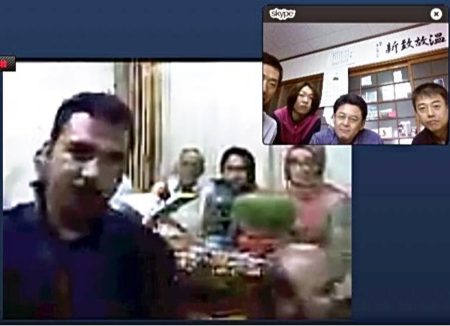
Kalantar, left in the bottom screen, and Kaimi, 2nd from right in top screen, talks via video call on March 21, 2015.
1:00 JST, April 23, 2026
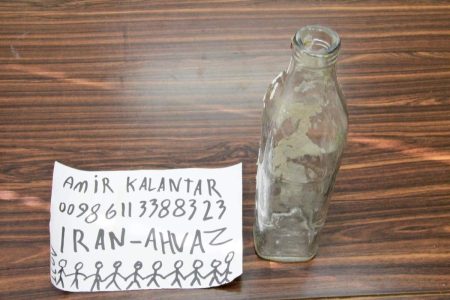
A bottle that washed ashore on Kikaijima and the paper inside it. It depicts people holding hands and a name.
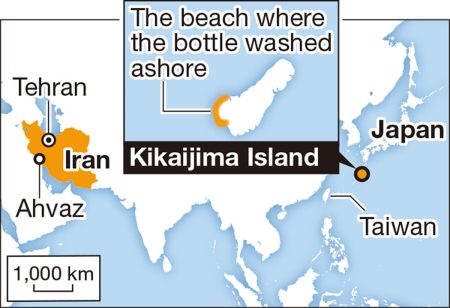
Thirteen years ago, bonds were formed between an island in Kagoshima Prefecture and Iran.
It started when a bottle washed ashore on Kikaijima Island. Inside the bottle, which had been set adrift by an Iranian man, there was a message of peace.
The situation regarding Iran is increasingly volatile, and the island residents are hoping for a quick return to peaceful days.
In May 2013, island resident Yuko Kaimi, 62, found the bottle on the island’s western coast. The paper inside bore the name “Amir Kalantar,” the Iranian city of Ahvaz and a drawing of several people holding hands together.
Ryosuke Azuma, 50, who was working at the island’s tourism and local product association at the time, put Kaimi in contact with someone who might be able to help him find Kalantar: a Japanese man staying on the island who was planing to cycle across the Eurasian continent.
With the cooperation of local media, the author of the message was eventually found, and a video call was held in March 2015. It turned out that Kalantar was a chef on a tanker and had reportedly released the bottle into waters near Taiwan.
“I put my hopes for peace and my desire to get along with people all over the world into it,” Kalantar said. “I’m happy to have made a friend in Japan.”
A group of five people, including Iranian film director Reza Farahmand, visited the island in August 2015 to make a film about the encounter. During their nearly two-week stay, they filmed the island’s banyan trees and air-raid shelters built during the WWII. They also interviewed residents about the island’s culture.
Daichi Tanabe, 42, secretary general of the association, offered to transport the filmmakers between filming locations. The people involved would gather around the dinner table and sing the island’s folk songs together.
It was around the time that Iran had agreed to scale back its nuclear development, and the United States and others had promised to lift economic sanctions. Farahmand reportedly expressed his hope that “Japanese trading companies would expand into Iran, and economic activity would become more vibrant.”
The U.S.-Israeli attacks on Iran began on Feb. 28. Tanabe learned from the news that damage had occurred even in Tehran, where the filmmakers live. He remembered how he had communicated with them in broken English and with gestures, and how they had treated him to curry made with spices they had brought with them.
“Are you all right?” he sent in a message via social media. However, it remains unread.
Kaimi worries. “I can only hope they’re safe and well,” he said.
Tanabe also looks forward to the day they can meet again. “They must also be strongly hoping for peace,” he said. “I want to sing island songs with them again.”
Long-lasting friendship
Japan and Iran established diplomatic relations in 1929 and have maintained friendly ties ever since, with the exception of the period around World War II.
In 1953, the United Kingdom called for a boycott of Iranian crude oil in opposition to Iran’s oil nationalization policy. However, a Japanese oil company secretly dispatched a tanker to purchase the oil. The episode is recounted in Iran as one that deepened the country’s bond with Japan.
Those ties continued even after the 1979 Iranian Revolution.
Exchanges at the civilian level also continue. Since 2004, Hiroshima-based NPO Moct has invited Iranian victims of chemical weapons during the Iran-Iraq War to Japan to exchange views with atomic bomb survivors.
Shizuko Tsuya, 71, a representative of the NPO, “Even though our cultures and religions differ, we can come to understand one another through these exchanges.”






Most Read
Most read in the last 24 hours
-

Trump Extends the Ceasefire with Iran but Keeps the Blockade
-

China, South Korea Object to Japanese PM Takaichi's Ritual Offeri...
-

Florida Launches Criminal Probe into OpenAI and ChatGPT over Dead...
-

Trump Opposes United–American Merger, Signals Support for Spirit
-

Trump Picks a University of Minnesota Professor to Lead His Econo...
-

Taiwan President Cancels Africa Trip Blaming Chinese Pressure
-

Japan's ANA to Introduce Fuel Surcharges to Domestic Flights from...
-

Fired Former UK Official Says He Felt Political Pressure to Appro...
Most read in the last 7 days
-
Earthquake Hits Japan's Tohoku Region; 3-meter Tsunami Warning Is...
-

Olympic Gold Medal-Winning Figure Skaters Riku-Ryu Announce Retir...
-
Trump Extends the Ceasefire with Iran but Keeps the Blockade
-

Japan to Ban Use of Portable Chargers on Airplanes from April 24,...
-

New Challenges Await as Miura-Kihara Retires; Blade Maker, Ex-Coa...
-
China, South Korea Object to Japanese PM Takaichi's Ritual Offeri...
-
Florida Launches Criminal Probe into OpenAI and ChatGPT over Dead...
-
Trump Opposes United–American Merger, Signals Support for Spirit
Most read in the last 30 days
-
Earthquake Hits Japan's Tohoku Region; 3-meter Tsunami Warning Is...
-
Police Find Child's Shoe During Search for Missing Boy in Nantan,...
-
Body Found in Nantan, Kyoto Prefecture, During Search for 11-Year...
-
Cherry Blossoms, Rapeseed Flowers Perform Colorful ‘Duet’ in Niig...
-
Olympic Gold Medal-Winning Figure Skaters Riku-Ryu Announce Retir...
-
Trump Extends the Ceasefire with Iran but Keeps the Blockade
-

Nori Prices Surge in Japan Due to Poor Seaweed Production Amid Ri...
-

Japanese Prime Minister Takaichi Speaks to Pakistani Prime Minist...
Top Articles in Society
-
Earthquake Hits Japan’s Tohoku Region; 3-meter Tsunami Warning Issued (Update 1)
-
Police Find Child’s Shoe During Search for Missing Boy in Nantan, Kyoto Prefecture
-
Body Found in Nantan, Kyoto Prefecture, During Search for 11-Year-Old Boy in Area (Update 1)
-
Cherry Blossoms, Rapeseed Flowers Perform Colorful ‘Duet’ in Niigata
-

Two Women in Osaka Found Lying on Floor Bleeding, Later Pronounced Dead
JN ACCESS RANKING
-
Earthquake Hits Japan’s Tohoku Region; 3-meter Tsunami Warning Issued (Update 1)
-
Police Find Child’s Shoe During Search for Missing Boy in Nantan, Kyoto Prefecture
-
Body Found in Nantan, Kyoto Prefecture, During Search for 11-Year-Old Boy in Area (Update 1)
-
Cherry Blossoms, Rapeseed Flowers Perform Colorful ‘Duet’ in Niigata
-
Olympic Gold Medal-Winning Figure Skaters Riku-Ryu Announce Retirement (Update 1)
Most read in the last 24 hours
-
Trump Extends the Ceasefire with Iran but Keeps the Blockade
-
China, South Korea Object to Japanese PM Takaichi's Ritual Offeri...
-
Florida Launches Criminal Probe into OpenAI and ChatGPT over Dead...
-
Trump Opposes United–American Merger, Signals Support for Spirit
-
Trump Picks a University of Minnesota Professor to Lead His Econo...
Most read in the last 7 days
-
Earthquake Hits Japan's Tohoku Region; 3-meter Tsunami Warning Is...
-
Olympic Gold Medal-Winning Figure Skaters Riku-Ryu Announce Retir...
-
Trump Extends the Ceasefire with Iran but Keeps the Blockade
-
Japan to Ban Use of Portable Chargers on Airplanes from April 24,...
-
New Challenges Await as Miura-Kihara Retires; Blade Maker, Ex-Coa...
Most read in the last 30 days
-
Earthquake Hits Japan's Tohoku Region; 3-meter Tsunami Warning Is...
-
Police Find Child's Shoe During Search for Missing Boy in Nantan,...
-
Body Found in Nantan, Kyoto Prefecture, During Search for 11-Year...
-
Cherry Blossoms, Rapeseed Flowers Perform Colorful ‘Duet’ in Niig...
-
Olympic Gold Medal-Winning Figure Skaters Riku-Ryu Announce Retir...