
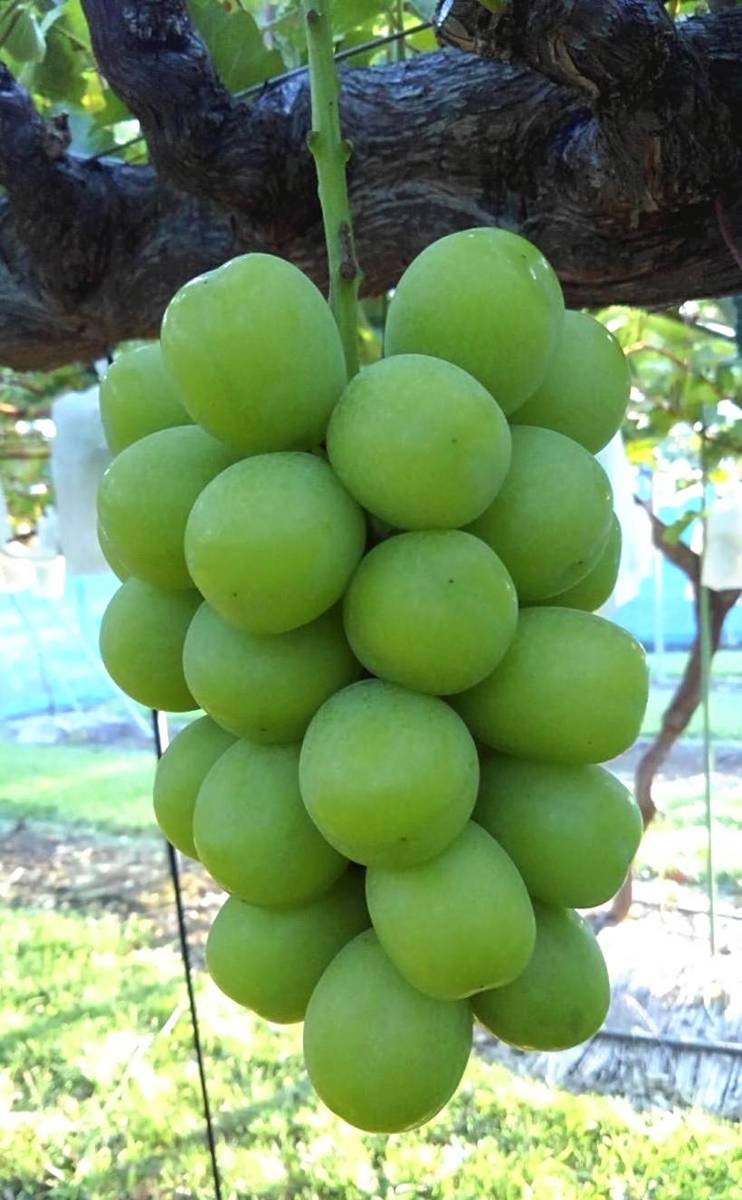
Shine Muscat
14:06 JST, March 30, 2026
Third parties could be banned from exporting fruits and other crops that are developed in Japan even before a variety is registered with the government unless they have permission, according to sources. The Agriculture, Forestry and Fisheries Ministry is considering setting up a system to prevent such exports, keeping new plant varieties from being leaked to other countries.
The ministry intends to revise the Plant Variety Protection and Seed Law. It aims to have the revision take effect in December.
For new plant varieties, once an application is filed with the agriculture ministry and the variety is screened and registered, the applicant is granted “plant breeders’ rights,” allowing them and no one else to produce and sell the variety.
Plant breeders’ rights are a type of intellectual property. Right holders grant permission to seed companies to create more seeds and possibly sell them and seedlings, receiving royalties in return. Those who infringe on these rights can be imprisoned for up to 10 years or fined up to ¥10 million.
As it can take up to six years from applying to get a variety registered, it is believed some varieties have been leaked overseas before they were registered.
The revision to the law will allow an injunction to be sought against unauthorized exports before a variety is registered.
Once an application is made public, it will be possible to halt exports through civil lawsuits and force third parties to dispose of seeds, seedlings and harvested crops. Moreover, storing seeds and seedlings in Japan before a planned export will be viewed as infringing on breeders’ rights, allowing for injunctions and other measures to be taken against export.
In addition, the ministry intends to extend the effective term of breeders’ rights — currently 25 years from the date of registration — to 35 years, in principle.
The period for perennials, such as fruit trees, will be extended from 30 to 40 years. This will be the longest term among the 80 countries party to an international treaty for protecting new varieties.
Developers will be able to receive royalties for longer. By strengthening the protection of new varieties and securing revenue for developers, the bill aims to encourage the development of new varieties.
There is increasing concern that domestic varieties are being taken overseas without permission.
When the agriculture ministry investigated online sales sites run by seed companies and other groups in China and South Korea from July to September last year, it found about 50 varieties being sold under names identical or similar to those of the Shine Muscat premium grape variety and the Beni Madonna premium citrus fruit variety.
The ministry estimates that losses from Shine Muscat being leaked to China amount to over ¥10 billion annually.








Most Read
Most read in the last 24 hours
-

India's Arms Indigenization Quest for Self-Reliance / New Delhi S...
-

Most Serious Cyberattacks against the UK Now from Russia, Iran an...
-

Iran Fires on 3 Ships in the Strait of Hormuz as US Maintains Blo...
-

Trump Envoy Seeks to Replace Iran with Italy in Upcoming World Cu...
-

EU Close to Approving a $106B Loan for Ukraine after Months of De...
-

U.S. Extends Ceasefire: Lifting Blockades on Strait is Urgent for...
-

White Sox Rookie Munetaka Murakami Ties MLB Rookie Record with HR...
-

Navy Secretary John Phelan Is Leaving in Latest Departure of a To...
Most read in the last 7 days
-
Earthquake Hits Japan's Tohoku Region; 3-meter Tsunami Warning Is...
-

Trump Extends the Ceasefire with Iran but Keeps the Blockade
-

Olympic Gold Medal-Winning Figure Skaters Riku-Ryu Announce Retir...
-

China, South Korea Object to Japanese PM Takaichi's Ritual Offeri...
-
India's Arms Indigenization Quest for Self-Reliance / New Delhi S...
-

Japan to Ban Use of Portable Chargers on Airplanes from April 24,...
-
Most Serious Cyberattacks against the UK Now from Russia, Iran an...
-

¥1,000 Coins to Be Issued to Mark Anniversary of Beginning of Jap...
Most read in the last 30 days
-
Earthquake Hits Japan's Tohoku Region; 3-meter Tsunami Warning Is...
-

Police Find Child's Shoe During Search for Missing Boy in Nantan,...
-

Body Found in Nantan, Kyoto Prefecture, During Search for 11-Year...
-
Cherry Blossoms, Rapeseed Flowers Perform Colorful ‘Duet’ in Niig...
-
Trump Extends the Ceasefire with Iran but Keeps the Blockade
-
Olympic Gold Medal-Winning Figure Skaters Riku-Ryu Announce Retir...
-

Nori Prices Surge in Japan Due to Poor Seaweed Production Amid Ri...
-

Japanese Prime Minister Takaichi Speaks to Pakistani Prime Minist...
Top Articles in Politics
-
India’s Arms Indigenization Quest for Self-Reliance / New Delhi Sticks to Its ‘All-Alignment’ Guns Even after Iran Warship Attack
-

Japan Aims to Enhance Deterrence, Defense Industry by Allowing Exports of Weapons
-

Former Japan PM Murayama’s Farewell Ceremony Held; Former Deputy PM Kono Vows to ‘Carry on Path Toward Peace’
-

Ritsumeikan Asia Pacific University Stripped of Certification for Simplified Visa Procedures Due to Document Failure
-

Japan’s PM Takaichi Seeks to Advance Policies Bearing Her Own ‘Color,’ Eyes Amending Constitution, Building Strong Economy
JN ACCESS RANKING
-
Earthquake Hits Japan’s Tohoku Region; 3-meter Tsunami Warning Issued (Update 1)
-
Police Find Child’s Shoe During Search for Missing Boy in Nantan, Kyoto Prefecture
-
Body Found in Nantan, Kyoto Prefecture, During Search for 11-Year-Old Boy in Area (Update 1)
-
Cherry Blossoms, Rapeseed Flowers Perform Colorful ‘Duet’ in Niigata
-
Trump Extends the Ceasefire with Iran but Keeps the Blockade
Most read in the last 24 hours
-
India's Arms Indigenization Quest for Self-Reliance / New Delhi S...
-
Most Serious Cyberattacks against the UK Now from Russia, Iran an...
-
Iran Fires on 3 Ships in the Strait of Hormuz as US Maintains Blo...
-
Trump Envoy Seeks to Replace Iran with Italy in Upcoming World Cu...
-
EU Close to Approving a $106B Loan for Ukraine after Months of De...
Most read in the last 7 days
-
Earthquake Hits Japan's Tohoku Region; 3-meter Tsunami Warning Is...
-
Trump Extends the Ceasefire with Iran but Keeps the Blockade
-
Olympic Gold Medal-Winning Figure Skaters Riku-Ryu Announce Retir...
-
China, South Korea Object to Japanese PM Takaichi's Ritual Offeri...
-
India's Arms Indigenization Quest for Self-Reliance / New Delhi S...
Most read in the last 30 days
-
Earthquake Hits Japan's Tohoku Region; 3-meter Tsunami Warning Is...
-
Police Find Child's Shoe During Search for Missing Boy in Nantan,...
-
Body Found in Nantan, Kyoto Prefecture, During Search for 11-Year...
-
Cherry Blossoms, Rapeseed Flowers Perform Colorful ‘Duet’ in Niig...
-
Trump Extends the Ceasefire with Iran but Keeps the Blockade