
Toyota Advancing Plant-Based Biofuel Development in Fukushima Town That Suffered Nuclear Accident in 2011 in Japan
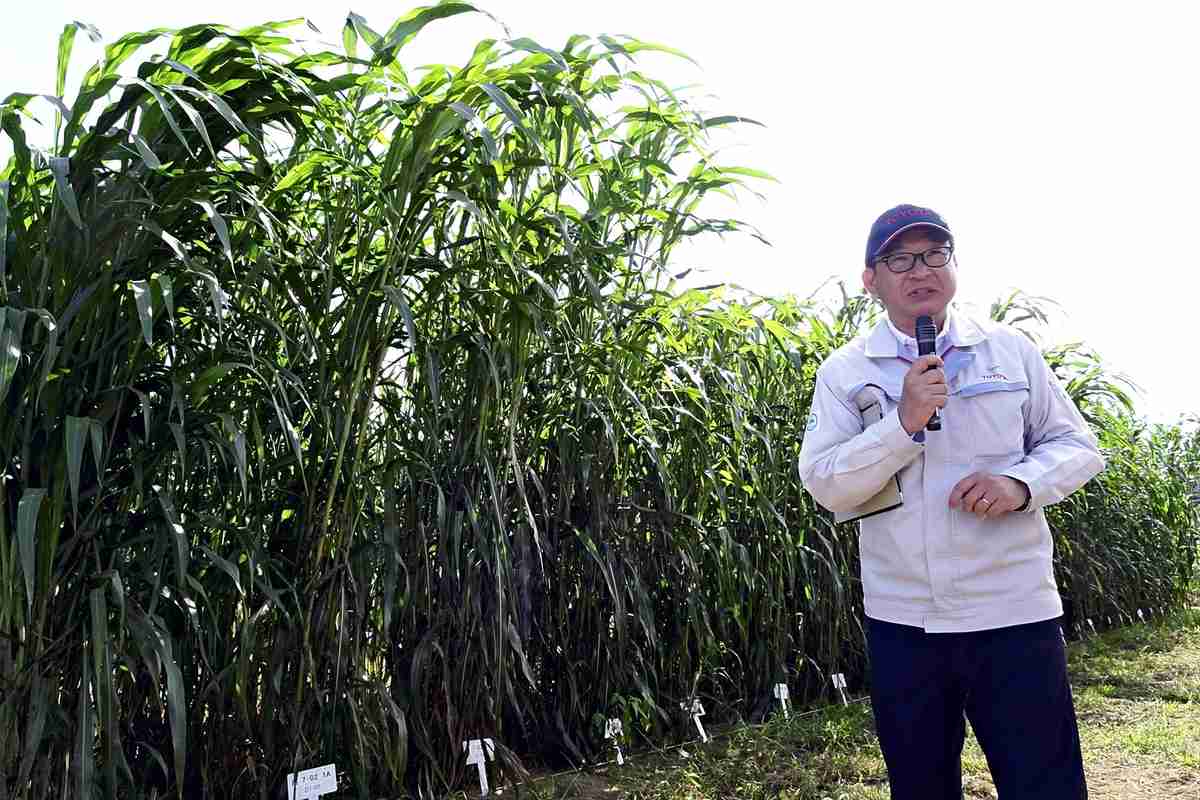
A Toyota Motor Corp. official talks about the different varieties of sorghum in Okuma, Fukushima Prefecture, in August.
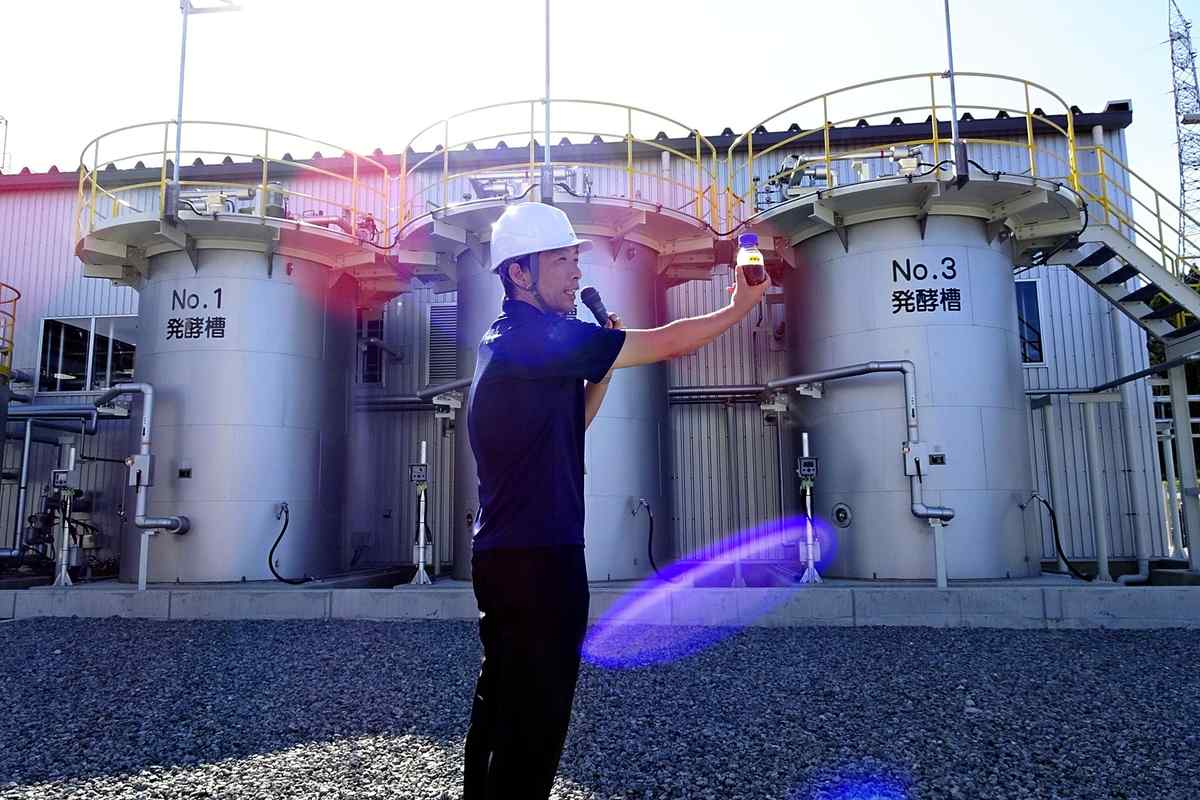
A bioethanol production facility is seen in Okuma, Fukushima Prefecture, in August.
17:22 JST, March 10, 2026
OKUMA, Fukushima — Companies including Toyota Motor Corp. are advancing the development of plant-based biofuels in Okuma, Fukushima Prefecture.
Okuma is host to the Fukushima No. 1 nuclear power plant owned by Tokyo Electric Power Company Holdings, Inc., and the town was subject to an evacuation order following the 2011 accident at the plant.
Sorghum grown in the prefecture is used to make a biofuel that is expected to be used in automobile racing starting in April. There are hopes that the biofuel will be commercialized as a fuel of the future that reduces carbon dioxide emissions.
Toyota has a sorghum farm located in a corner of a field of rice paddies in the town. The farm is about 0.5 hectares in size, and around 30,000 sorghum plants are planted there in the summer.
Sorghum is a plant native to Africa, although its grain is not widely used for food in Japan. Thanks to improvements in varieties, 88 kinds of sorghum are cultivated in the town, including some that grow to a height of about 6 meters tall and others that grow immediately after harvest.
You may also like to read
Kesennuma, Miyagi Pref., Locals Raise Carp Streamers as Symbol of Courage; City Hopes to Demonstrate Recovery on 15th Anniversary of TsunamiOkuma is home to a research facility for trial production of bioethanol, and it is run by the Research Association of Biomass Innovation for Next Generation Automobile Fuels (raBit), an entity formed by Toyota, ENEOS Corp. and others. About 270 liters of bioethanol can be produced from one ton of dried sorghum in a seven-day process there, according to raBit.
Fuel to be used in auto race
Bioethanol can be used as a fuel by mixing it with gasoline and other components, and it is expected to be used as automobile fuel in the future. Because the sorghum plant absorbs CO2 during cultivation, CO2 emissions do not increase in the atmosphere when it is burned as a fuel, contributing to decarbonization.
Fuel blended with 10% Fukushima-produced bioethanol is scheduled to be used in the All Japan Super Formula Championship, an automobile race, from April to the end of the season in November. The research association will supply about 10,000 liters of its bioethanol to the event in the hope of putting the fuel into practical use.
“It is significant that decarbonization is being pursued in a disaster-affected area after the accident,” said raBit Director General Koichi Nakata, 59.
Evacuation orders in the town have been gradually lifted, but farming has begun at only 6.7% of farmland as of the end of March 2025, compared to the farming acreage before the disaster. Sorghum is expected to contribute to regenerating arable land and creating new industries as it grows well even in poor soil.
“The biofuel is currently in a test stage, but we hope it will lead to the practical implementation [of the fuel] and an expansion of the cultivation areas,” said Okuma Mayor Jun Yoshida.
The next challenge is reducing the manufacturing costs of the biofuel. Efforts are underway to lower costs by utilizing the residue of bioethanol production as fertilizer and other products. Research is also progressing on using plants other than sorghum for biofuels.


Related Tags
-250x155.jpg)


Most Read
Most read in the last 24 hours
-
Japan Passport Fees Going Down to ¥9,000 in July
-

26-year-old U.S. National Falls While Climbing Mt. Fuji; Accompan...
-

Japanese Side Machida Zelvia Faces Ah-Ahli in Asian Champions Lea...
-

Transfer of Defense Equipment: Increase the Number of Like-minded...
-

Charm of Meiji-Era Poet Takuboku Examined from Viewpoint of Donal...
-

CARTOON OF THE DAY (April 24)
-

Japan Eyes Trialing Dual-Use Tech Developed by Startups to Promot...
-

Cherry Blossoms in Full Bloom in Hokkaido's Hakodate; Tourists Fl...
Most read in the last 7 days
-
Earthquake Hits Japan's Tohoku Region; 3-meter Tsunami Warning Is...
-

Trump Extends the Ceasefire with Iran but Keeps the Blockade
-

China, South Korea Object to Japanese PM Takaichi's Ritual Offeri...
-

India's Arms Indigenization Quest for Self-Reliance / New Delhi S...
-
Japan to Ban Use of Portable Chargers on Airplanes from April 24,...
-

¥1,000 Coins to Be Issued to Mark Anniversary of Beginning of Jap...
-

Most Serious Cyberattacks against the UK Now from Russia, Iran an...
-
New Challenges Await as Miura-Kihara Retires; Blade Maker, Ex-Coa...
Most read in the last 30 days
-
Earthquake Hits Japan's Tohoku Region; 3-meter Tsunami Warning Is...
-
Police Find Child's Shoe During Search for Missing Boy in Nantan,...
-
Body Found in Nantan, Kyoto Prefecture, During Search for 11-Year...
-
Cherry Blossoms, Rapeseed Flowers Perform Colorful ‘Duet’ in Niig...
-
Trump Extends the Ceasefire with Iran but Keeps the Blockade
-

Olympic Gold Medal-Winning Figure Skaters Riku-Ryu Announce Retir...
-
China, South Korea Object to Japanese PM Takaichi's Ritual Offeri...
-

Japanese Prime Minister Takaichi Speaks to Pakistani Prime Minist...
Top Articles in Science & Nature
-

Govt Aims to Establish Bear Population Control by FY30, Hopes to Achieve ‘Coexistence’ with Bears
-

Punch The Monkey Getting Used to Life Without Stuffed ‘Mother’
-
Japan’s Panasonic Develops Automated System to Produce Ips Cells from Patient’s Blood
-

‘Electric Aircraft’ to Begin Test Flights from Kitakyushu Airport, Aiming for Practical Use in Cargo Transport Route
-

New Robotics Center to Conduct Experiments Around the Clock; New Facility Aims to Accelerate Research Efforts
JN ACCESS RANKING
-
Earthquake Hits Japan’s Tohoku Region; 3-meter Tsunami Warning Issued (Update 1)
-
Police Find Child’s Shoe During Search for Missing Boy in Nantan, Kyoto Prefecture
-
Body Found in Nantan, Kyoto Prefecture, During Search for 11-Year-Old Boy in Area (Update 1)
-
Cherry Blossoms, Rapeseed Flowers Perform Colorful ‘Duet’ in Niigata
-
Trump Extends the Ceasefire with Iran but Keeps the Blockade
Most read in the last 24 hours
-
Japan Passport Fees Going Down to ¥9,000 in July
-
26-year-old U.S. National Falls While Climbing Mt. Fuji; Accompan...
-
Japanese Side Machida Zelvia Faces Ah-Ahli in Asian Champions Lea...
-
Transfer of Defense Equipment: Increase the Number of Like-minded...
-
Charm of Meiji-Era Poet Takuboku Examined from Viewpoint of Donal...
Most read in the last 7 days
-
Earthquake Hits Japan's Tohoku Region; 3-meter Tsunami Warning Is...
-
Trump Extends the Ceasefire with Iran but Keeps the Blockade
-
China, South Korea Object to Japanese PM Takaichi's Ritual Offeri...
-
India's Arms Indigenization Quest for Self-Reliance / New Delhi S...
-
Japan to Ban Use of Portable Chargers on Airplanes from April 24,...
Most read in the last 30 days
-
Earthquake Hits Japan's Tohoku Region; 3-meter Tsunami Warning Is...
-
Police Find Child's Shoe During Search for Missing Boy in Nantan,...
-
Body Found in Nantan, Kyoto Prefecture, During Search for 11-Year...
-
Cherry Blossoms, Rapeseed Flowers Perform Colorful ‘Duet’ in Niig...
-
Trump Extends the Ceasefire with Iran but Keeps the Blockade