
Traditional Yuki-Tsumugi Silk Weaving Thrives in Modern Japan; Ibaraki Prefecture Museum Lets Visitors Experience Centuries-Old Production Methods
17:26 JST, August 5, 2025
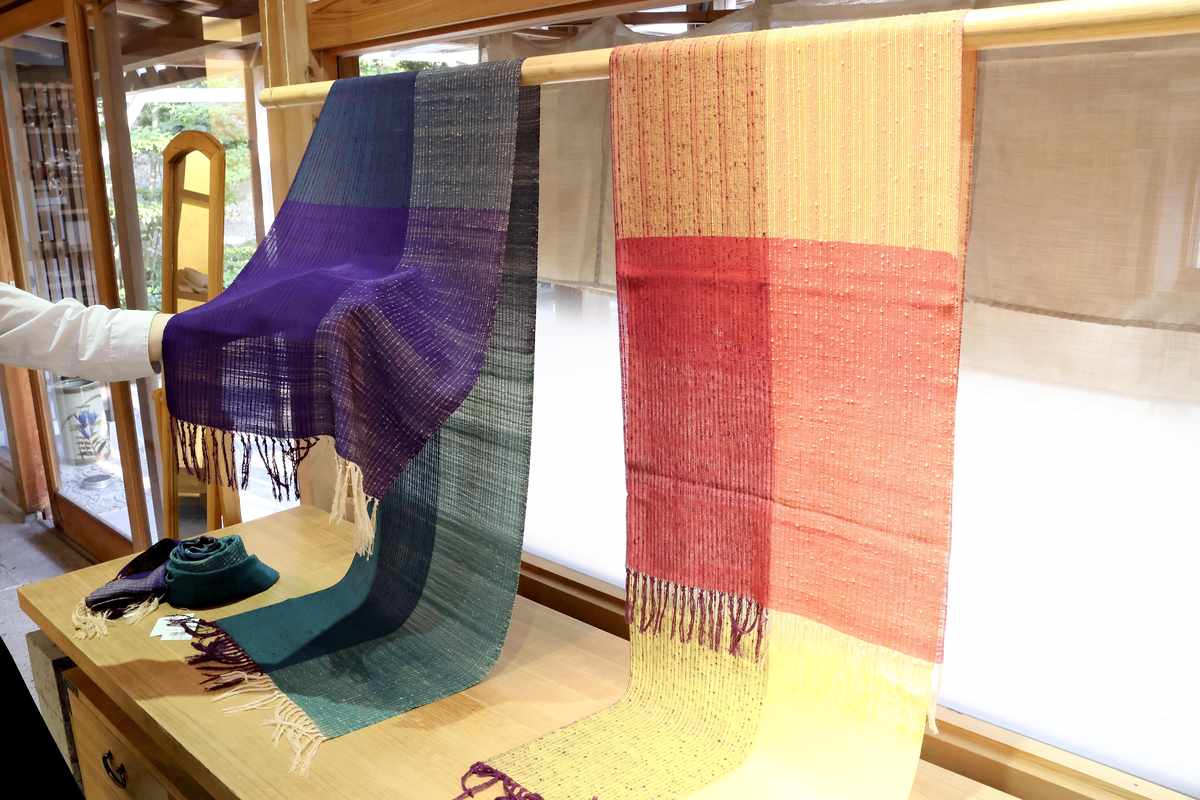
Colorful Yuki-tsumugi shawls on display
YUKI, Ibaraki — A pleasant thump-thump sound echoed throughout the Tsumugi no Yakata museum in Yuki, Ibaraki Prefecture, each time the weft was woven through the warp.
An elementary school girl on a family visit, eyes alight with excitement, tried her hand at weaving. In about 30 minutes, she created a small coaster, 10 centimeters square.
Opened roughly 20 years ago by Okujun Co. — a wholesale dealer in Yuki-tsumugi silk founded in 1907 — Tsumugi no Yakata is a facility that introduces visitors to the traditional production techniques and culture of this renowned Japanese silk variety through hands-on experiences. The surrounding area still features many old homes and storehouses from the Meiji Era (1868-1912) and the Taisho Era (1912-1926).
The region follows a roughly 20-kilometer stretch of the Kinugawa river, which flows between Tochigi and Ibaraki prefectures. It is renowned as a production center of Yuki-tsumugi, a high-grade silk fabric with a history spanning more than 1,500 years. Interestingly, the “Kinu” portion of the river’s name was once written with the kanji for “silk.”
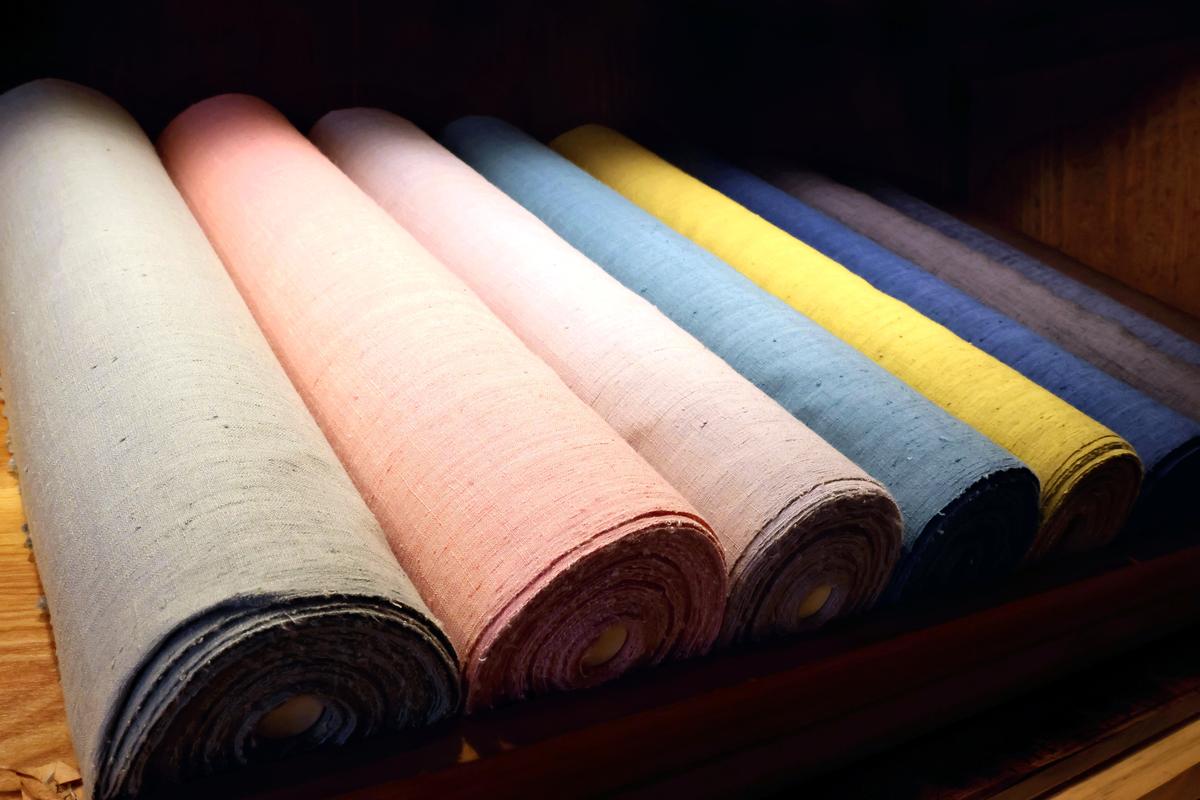
Soft-colored fabric rolls
Floss silk is made from silkworm cocoons. It is spun into thread, dyed and woven. The area is full of weaving and dyeing workshops that continue to use long-standing handcrafting methods to complete the various processes involved in silk production.
Rolls of fabric ordered by wholesalers are meticulously finished by a relay of skilled artisans. A gentle touch confirms its wonderfully soft feel. Its durability is also noteworthy. Each roll of fabric requires about 2,000 cocoons to make.
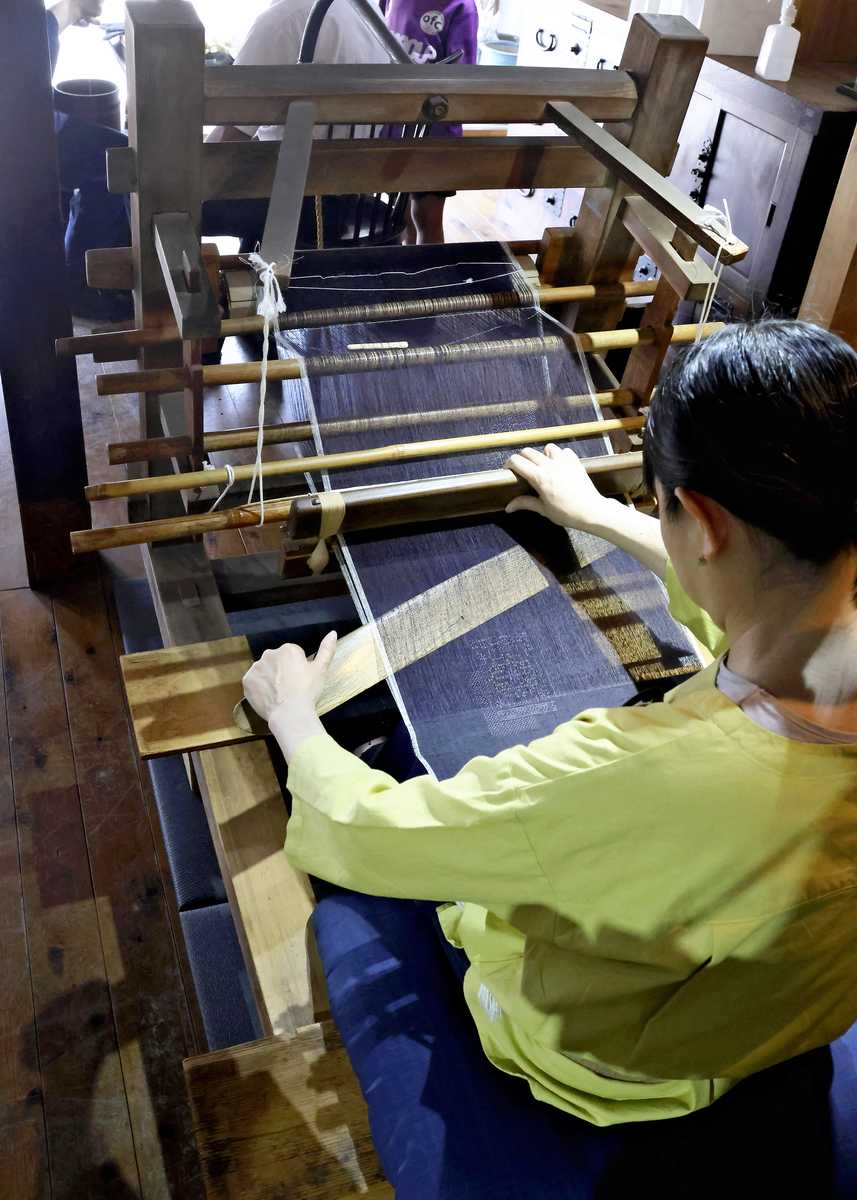
A woman demonstrates jibata-ori, a traditional Japanese weaving method.
Yuki-tsumugi silk fabric production techniques include jibata-ori, or backstrap weaving, in which the weaver adjusts the tension by connecting the thread to their waist. This technique was registered on the UNESCO Intangible Cultural Heritage list in 2010, bringing great pride to the region.
The museum has exhibits of weaving looms and spinning tools that visitors can view up close.
“We want more young people to learn [about Yuki-tsumugi]. Please come [to the museum],” said Yoko Shin, 50, the museum’s manager.
As I was on my way out, I stopped into the museum shop, where an orange shawl displayed in a window caught my attention. Clearly, Yuki-tsumugi can also work well for Western clothing. It seems that artisans who work with this fabric are going to continue to try new things even as they honor tradition.
***
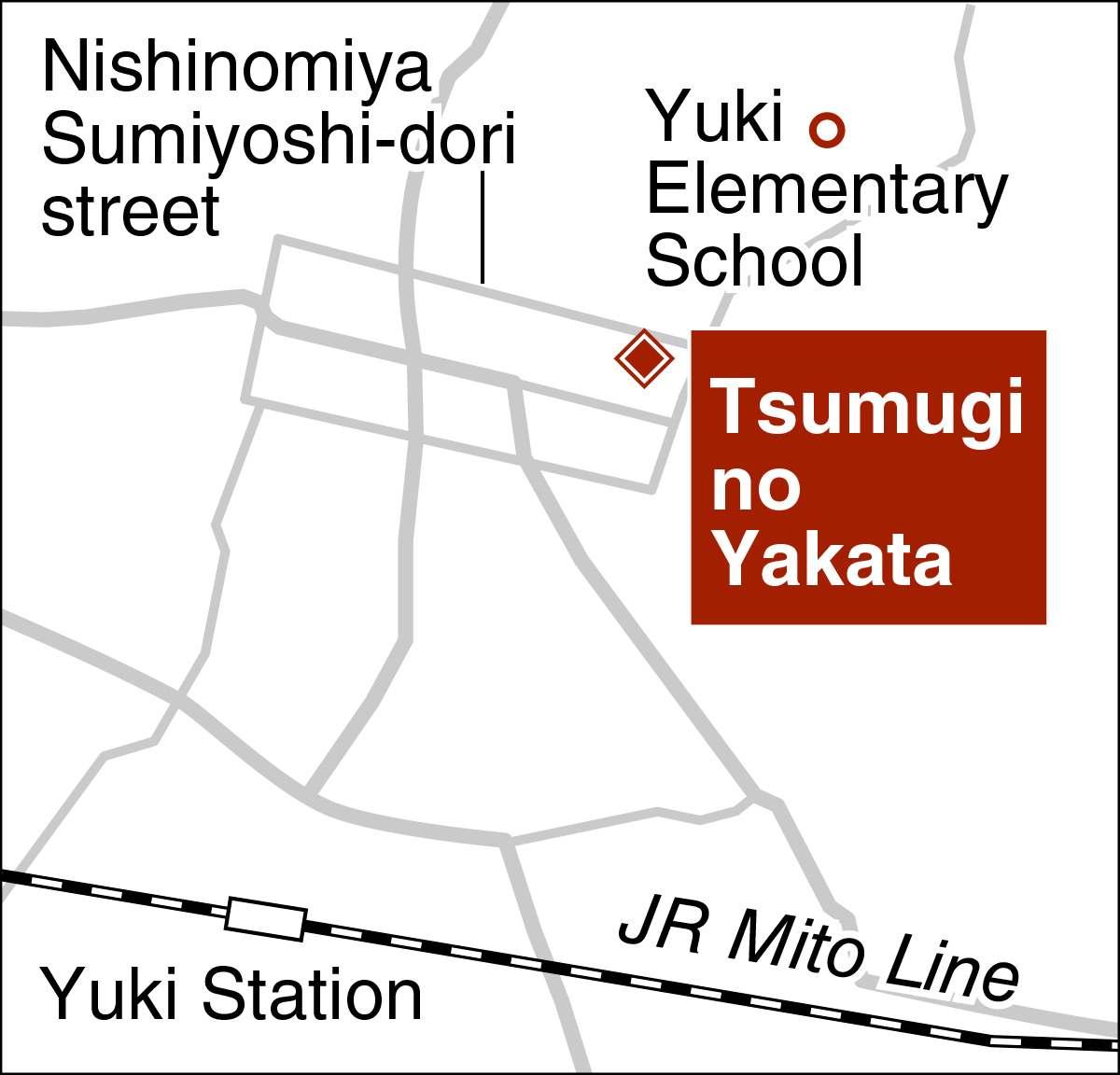
Tsumugi no Yakata
Address: 12-2, Yuki, Yuki City, Ibaraki Prefecture
Access: 10-minute walk from the north exit of Yuki Station on the JR Mito Line. Parking available.
Memo: Closed on Tuesdays and Wednesdays.


Related Tags



Most Read
Most read in the last 24 hours
-

Trump Extends the Ceasefire with Iran but Keeps the Blockade
-

China, South Korea Object to Japanese PM Takaichi's Ritual Offeri...
-

Florida Launches Criminal Probe into OpenAI and ChatGPT over Dead...
-

Trump Opposes United–American Merger, Signals Support for Spirit
-

Trump Picks a University of Minnesota Professor to Lead His Econo...
-

Japan's ANA to Introduce Fuel Surcharges to Domestic Flights from...
-

Taiwan President Cancels Africa Trip Blaming Chinese Pressure
-

Fired Former UK Official Says He Felt Political Pressure to Appro...
Most read in the last 7 days
-
Earthquake Hits Japan's Tohoku Region; 3-meter Tsunami Warning Is...
-
Trump Extends the Ceasefire with Iran but Keeps the Blockade
-

Olympic Gold Medal-Winning Figure Skaters Riku-Ryu Announce Retir...
-
China, South Korea Object to Japanese PM Takaichi's Ritual Offeri...
-
Japan to Ban Use of Portable Chargers on Airplanes from April 24,...
-
New Challenges Await as Miura-Kihara Retires; Blade Maker, Ex-Coa...
-
Florida Launches Criminal Probe into OpenAI and ChatGPT over Dead...
-
Trump Opposes United–American Merger, Signals Support for Spirit
Most read in the last 30 days
-
Earthquake Hits Japan's Tohoku Region; 3-meter Tsunami Warning Is...
-
Police Find Child's Shoe During Search for Missing Boy in Nantan,...
-
Body Found in Nantan, Kyoto Prefecture, During Search for 11-Year...
-
Cherry Blossoms, Rapeseed Flowers Perform Colorful ‘Duet’ in Niig...
-
Trump Extends the Ceasefire with Iran but Keeps the Blockade
-
Olympic Gold Medal-Winning Figure Skaters Riku-Ryu Announce Retir...
-
Nori Prices Surge in Japan Due to Poor Seaweed Production Amid Ri...
-

Japanese Prime Minister Takaichi Speaks to Pakistani Prime Minist...
Top Articles in Features
-
Cherry Blossoms in Full Bloom Draw Crowds in Sendai, Miyagi Pref.; Aquarium Creates Underwater ‘Cherry Blossom Viewing’ Show
-
Cherry Blossom Viewing Season at Peak in Japan’s Kanazawa
-
Cherry Blossoms, Tulips, Snow-Capped Peaks Create Picturesque Scene in Toyama Pref., Japan
-
Cherry Blossom Viewers Enjoy Picnic Under the Trees in Full Bloom in Famous Osaka Spot
-
Cherry Blossom View in Front of Shinkansen Bullet Trains Attracting Visitors in Nagasaki Pref.
JN ACCESS RANKING
-
Earthquake Hits Japan’s Tohoku Region; 3-meter Tsunami Warning Issued (Update 1)
-
Police Find Child’s Shoe During Search for Missing Boy in Nantan, Kyoto Prefecture
-
Body Found in Nantan, Kyoto Prefecture, During Search for 11-Year-Old Boy in Area (Update 1)
-
Cherry Blossoms, Rapeseed Flowers Perform Colorful ‘Duet’ in Niigata
-
Trump Extends the Ceasefire with Iran but Keeps the Blockade
Most read in the last 24 hours
-
Trump Extends the Ceasefire with Iran but Keeps the Blockade
-
China, South Korea Object to Japanese PM Takaichi's Ritual Offeri...
-
Florida Launches Criminal Probe into OpenAI and ChatGPT over Dead...
-
Trump Opposes United–American Merger, Signals Support for Spirit
-
Trump Picks a University of Minnesota Professor to Lead His Econo...
Most read in the last 7 days
-
Earthquake Hits Japan's Tohoku Region; 3-meter Tsunami Warning Is...
-
Trump Extends the Ceasefire with Iran but Keeps the Blockade
-
Olympic Gold Medal-Winning Figure Skaters Riku-Ryu Announce Retir...
-
China, South Korea Object to Japanese PM Takaichi's Ritual Offeri...
-
Japan to Ban Use of Portable Chargers on Airplanes from April 24,...
Most read in the last 30 days
-
Earthquake Hits Japan's Tohoku Region; 3-meter Tsunami Warning Is...
-
Police Find Child's Shoe During Search for Missing Boy in Nantan,...
-
Body Found in Nantan, Kyoto Prefecture, During Search for 11-Year...
-
Cherry Blossoms, Rapeseed Flowers Perform Colorful ‘Duet’ in Niig...
-
Trump Extends the Ceasefire with Iran but Keeps the Blockade