
Geigi Tradition Regains Glamor in Shizuoka Pref. Spa Town; Support Organization Helps Performers Recover from Pandemic Crisis
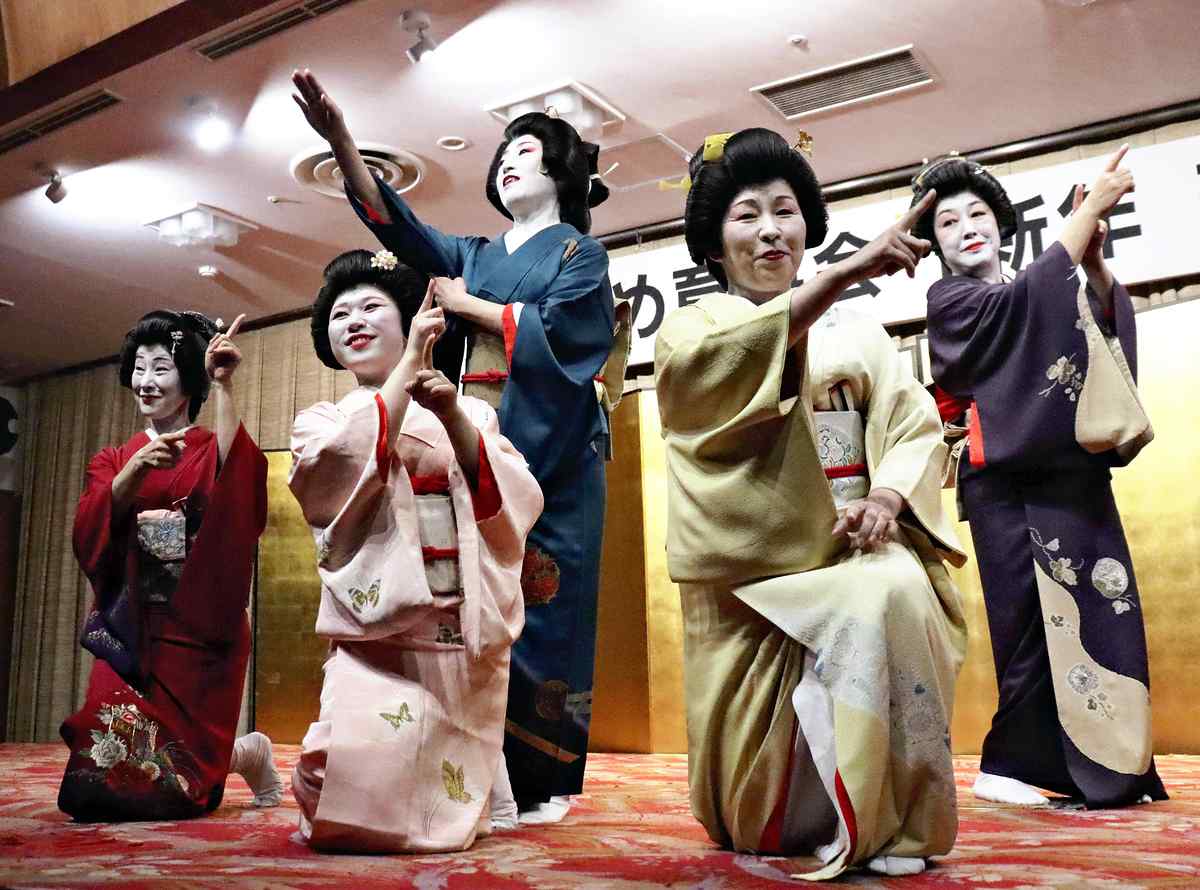
Geigi women dance at an ozashiki party.
17:23 JST, April 21, 2025
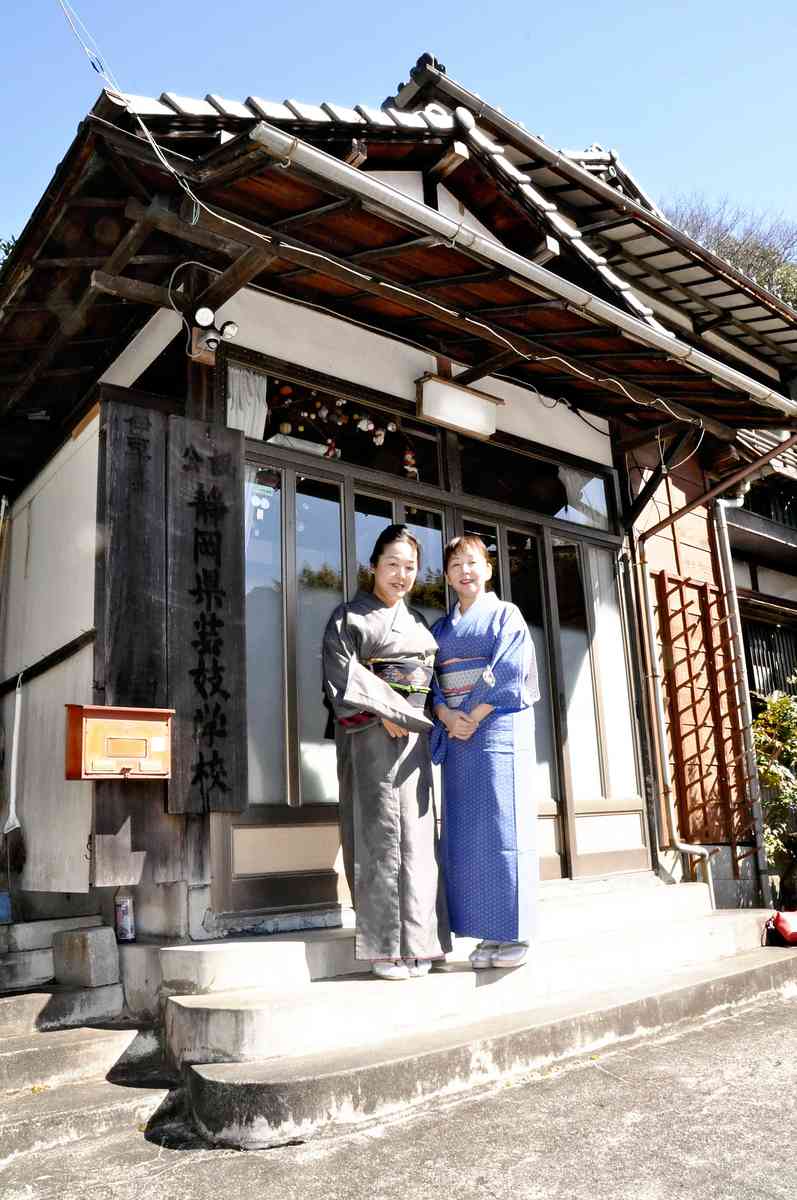
Kumi, right, stands with another geigi in front of Izunagaoka Kenban.
IZUNOKUNI, Shizuoka — As I walked down a narrow path on the edge of an onsen spa town in Izunokuni, Shizuoka Prefecture, the sound of a shamisen floated from an old two-story house. I could faintly hear Nagauta traditional chanting, too. I opened the house’s aged glass door and was greeted by a beaming woman in a kimono. “Irasshai,” (Welcome) she said. Her name was Kumi, and she was a geigi, another word for a geisha.
The Izunagaoka onsen hot spring resort area comprises two hot springs: Kona onsen, which is believed to have been used from about 1,300 years ago, and the adjacent Nagaoka onsen, which came into use toward the end of the Meiji era (1867-1912). According to the Izunokuni municipal government’s tourism and culture department, the city is home to 39 hotels and ryokan inns, which received about 600,000 guests in fiscal 2023.
Banquets and events in the spa town are livened up by geigi women, who all belong to Izunagaoka Kenban, a cooperative organization of geisha workers. It arranges the women’s party appearance schedules and provides them with a place to practice their art. It also once operated the only geigi school in Japan outside of Kyoto. The school’s nameboard still hangs in the cooperative’s entryway.
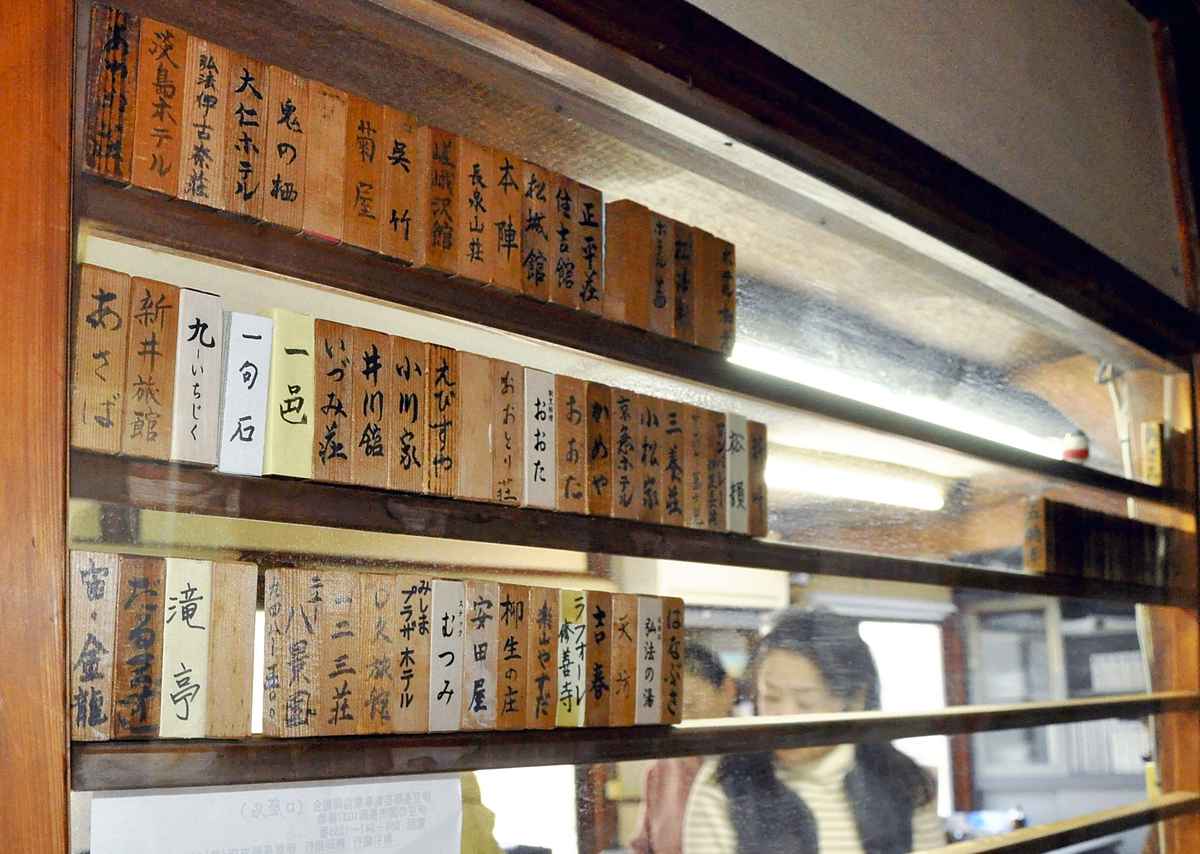
Wooden nameplates show the names of past and present geigi women and the ryokan inns where they have performed.
According to Kumi, who is also an executive of the cooperative, there were more than 400 geigi women active in the 1960s and 1970s. With changing times, such as the bursting of the bubble economy, they have retired one after another. But their name plates still remain in the rehearsal room at the cooperative, a reminder of the bustling good old days.
As the geigi grew older, their number dwindled, and they had fallen to just 10 in 2019. The COVID-19 pandemic further reduced the number of party opportunities, creating what Kumi described as an “existential threat.” But then, the flame of spa resort culture was rekindled by Ayame Ikueikai, a geigi support group founded in 2018. Local companies and individuals can become members of the group by paying annual dues of ¥50,000 per corporate member and ¥10,000 per individual member.
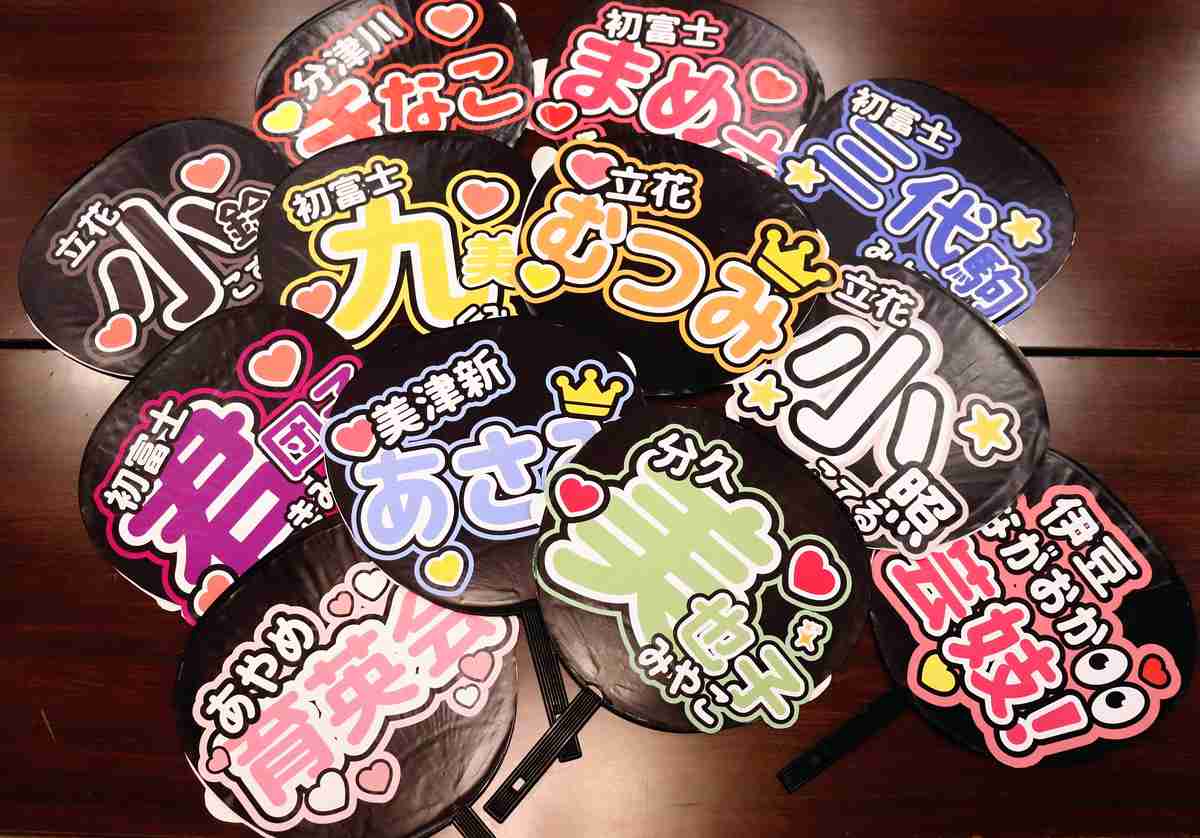
These uchiwa fans are used to show support for geigi at ozashiki parties.
Kumi is grateful to the group. “If it weren’t for those membership fees, we wouldn’t have been able to cover the costs to keep the cooperative running,” she said.
Thanks to the support from “danna-shu” (patrons), they managed to overcome the crisis without losing a single woman. In November last year, they resumed the stage performance “Izu Ayame-za,” which showcases their honed performing skills, for the first time in five years.
“Things are finally coming back to the pre-pandemic normal. This is going to be a make-or-break time for us,” Kumi said, with a smile of powerful determination.
Izunagaoka Kenban

Address: 1037 Nagaoka, Izunokuni, Shizuoka Prefecture
Access: Take the Izuhakone Railway to Izunagaoka Station. From there, ride a bus to the Onsen-Eki bus stop, then get off and walk for about seven minutes.
Note: Visitors can try on the type of kimono that geigi wear for ¥27,500.


Related Tags




Most Read
Most read in the last 24 hours
-

Govt May Revise Law to Allow Export of Defense Equipment for Free
-
Number of Immigration Officer-Escorted Forced Deportations in Jap...
-

Undrafted Japanese Kicker Signs with Raiders; ‘My Appeal Is My Ac...
-
Dutch Man Injured on Closed Mt. Fuji Route, Having Fallen While D...
-
Spring Bear Hunting Gets Fully Underway As Prefectures Deal With ...
-

Tokyo Vice Governor: Sushi Tech Tokyo Garners Tangible Business O...
-

Mother Supports My Sister Too Much, Gives Her Kids Much More Than...
-

Japan to Host Leaders from Major Cities from Around the World for...
Most read in the last 7 days
-
Earthquake Hits Japan's Tohoku Region; 3-meter Tsunami Warning Is...
-

China, South Korea Object to Japanese PM Takaichi's Ritual Offeri...
-

Trump Extends the Ceasefire with Iran but Keeps the Blockade
-

India's Arms Indigenization Quest for Self-Reliance / New Delhi S...
-

¥1,000 Coins to Be Issued to Mark Anniversary of Beginning of Jap...
-

Most Serious Cyberattacks against the UK Now from Russia, Iran an...
-

Trump Opposes United–American Merger, Signals Support for Spirit
-
System Malfunction in Haneda Airport Causes 83 Flight Cancelation...
Most read in the last 30 days
-
Earthquake Hits Japan's Tohoku Region; 3-meter Tsunami Warning Is...
-
Police Find Child's Shoe During Search for Missing Boy in Nantan,...
-
Body Found in Nantan, Kyoto Prefecture, During Search for 11-Year...
-
China, South Korea Object to Japanese PM Takaichi's Ritual Offeri...
-
Cherry Blossoms, Rapeseed Flowers Perform Colorful ‘Duet’ in Niig...
-
Trump Extends the Ceasefire with Iran but Keeps the Blockade
-

Olympic Gold Medal-Winning Figure Skaters Riku-Ryu Announce Retir...
-

Japanese Prime Minister Takaichi Speaks to Pakistani Prime Minist...
Top Articles in Features
-
Cherry Blossoms in Full Bloom Draw Crowds in Sendai, Miyagi Pref.; Aquarium Creates Underwater ‘Cherry Blossom Viewing’ Show
-
Cherry Blossom Viewing Season at Peak in Japan’s Kanazawa
-
Cherry Blossoms, Tulips, Snow-Capped Peaks Create Picturesque Scene in Toyama Pref., Japan
-
Cherry Blossoms Reach Peak in Fukushima Pref., Including Trees Planted to Commemorate Birth of Princess Aiko
-
Cherry Blossom Viewers Enjoy Picnic Under the Trees in Full Bloom in Famous Osaka Spot
JN ACCESS RANKING
-
Earthquake Hits Japan’s Tohoku Region; 3-meter Tsunami Warning Issued (Update 1)
-
Police Find Child’s Shoe During Search for Missing Boy in Nantan, Kyoto Prefecture
-
Body Found in Nantan, Kyoto Prefecture, During Search for 11-Year-Old Boy in Area (Update 1)
-
China, South Korea Object to Japanese PM Takaichi’s Ritual Offering to Yasukuni Shrine
-
Cherry Blossoms, Rapeseed Flowers Perform Colorful ‘Duet’ in Niigata
Most read in the last 24 hours
-
Govt May Revise Law to Allow Export of Defense Equipment for Free
-
Number of Immigration Officer-Escorted Forced Deportations in Jap...
-
Undrafted Japanese Kicker Signs with Raiders; ‘My Appeal Is My Ac...
-
Dutch Man Injured on Closed Mt. Fuji Route, Having Fallen While D...
-
Spring Bear Hunting Gets Fully Underway As Prefectures Deal With ...
Most read in the last 7 days
-
Earthquake Hits Japan's Tohoku Region; 3-meter Tsunami Warning Is...
-
China, South Korea Object to Japanese PM Takaichi's Ritual Offeri...
-
Trump Extends the Ceasefire with Iran but Keeps the Blockade
-
India's Arms Indigenization Quest for Self-Reliance / New Delhi S...
-
¥1,000 Coins to Be Issued to Mark Anniversary of Beginning of Jap...
Most read in the last 30 days
-
Earthquake Hits Japan's Tohoku Region; 3-meter Tsunami Warning Is...
-
Police Find Child's Shoe During Search for Missing Boy in Nantan,...
-
Body Found in Nantan, Kyoto Prefecture, During Search for 11-Year...
-
China, South Korea Object to Japanese PM Takaichi's Ritual Offeri...
-
Cherry Blossoms, Rapeseed Flowers Perform Colorful ‘Duet’ in Niig...