
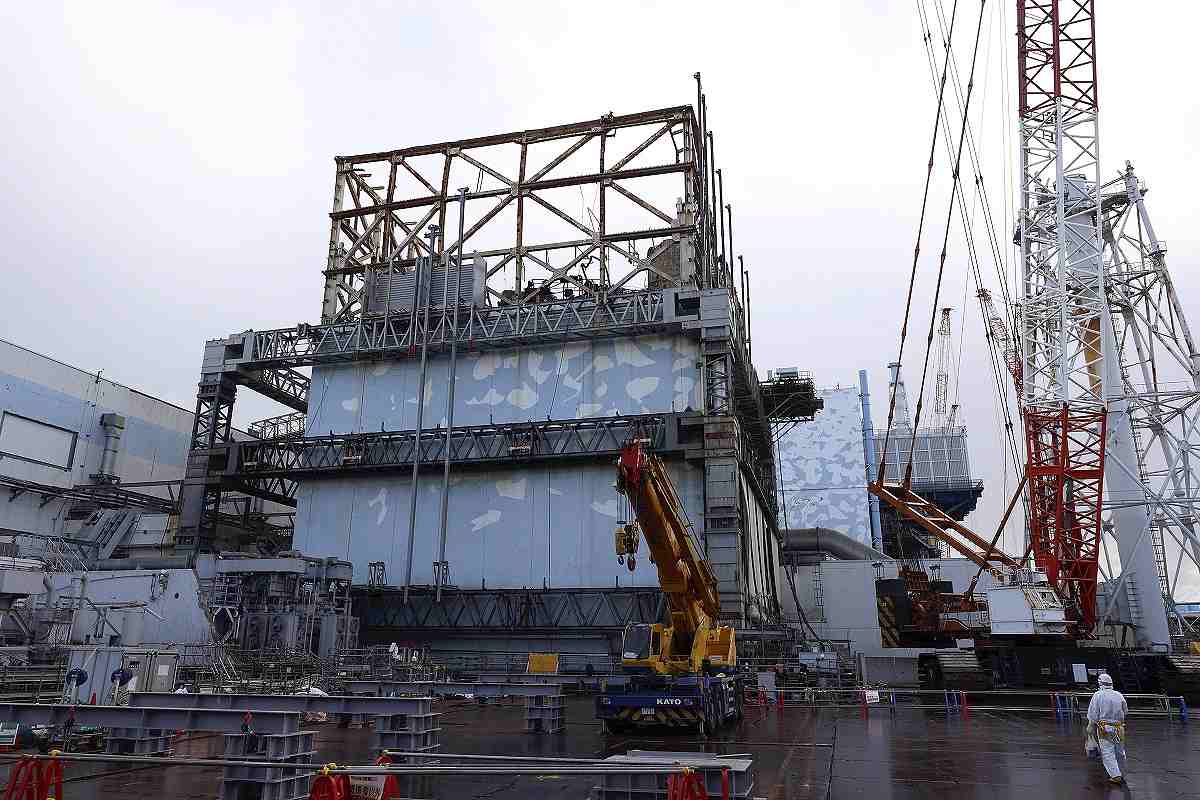
Work to remove spent nuclear fuel continues at the Fukushima No. 1 nuclear power plant’s No. 1 reactor building in Okuma, Fukushima Prefecture, on Thursday.
16:55 JST, February 5, 2021
OKUMA, Fukushima — Wreckage still litters parts of the Fukushima No. 1 nuclear power plant and reactor building girders remain exposed almost a decade after the March 2011 accident, serving as concrete illustrations that decommissioning the reactors still has a very long way to go.
The Yomiuri Shimbun was granted access to the plant Thursday, ahead of the 10th anniversary of the nuclear accident triggered by the Great East Japan Earthquake and tsunami. A hydrogen explosion damaged the plant’s No. 1 reactor building a day after the quake. From elevated ground about 100 meters west of the reactor building, the framework of the building’s uppermost floor, which was left exposed by the explosion, and piles of wreckage from the accident were clearly visible.
In the autumn of 2011, the plant’s operator, Tokyo Electric Power Company Holdings Inc. (TEPCO), constructed a temporary structure to enclose this damaged reactor building to prevent radioactive materials from being released into the air. The structure, dubbed a “cover,” was removed in the autumn of 2016 because it would hinder the work of removing 392 nuclear fuel rods from the spent fuel pool inside the building. TEPCO will install an even larger purpose-built replacement cover that can accommodate the work of extracting the nuclear fuel and a crane for lifting this fuel.
Fuel removal has been completed from reactor No. 4. TEPCO expects that removing fuel from pools inside the five other reactor buildings could take until 2031. Nearly a decade has passed since the nuclear accident occurred, but decommissioning the reactors remains an extremely complex operation.
About 1.2 million tons of water treated to remove most radioactive substances after being used for purposes such as cooling melted nuclear fuel is stored in about 1,000 huge tanks at the plant. The final disposal method for this treated water remains undecided, and there are concerns this could slow the decommissioning work.
After entering the plant premises by bus, we first got off at a spot about 35 meters above sea level that overlooks the Nos. 1 to 4 reactor buildings. Paving and other measures reduced radiation levels to such an extent that since 2018 it has not been necessary to wear protective clothing on 96% of the plant’s premises. We did not require such gear on this elevated area, which was no more than 100 meters from the reactor buildings.
But this year, the many workers involved in decommissioning the nuclear plant have been wearing masks and taking other measures to prevent the spread of coronavirus. The Yomiuri reporting team underwent PCR tests before going inside the nuclear plant.
Rows of water storage tanks fill much of the southern half of the plant site. Last autumn, the government strongly indicated a desire to resolve this problem with consideration being given to releasing treated water into the Pacific Ocean. However, fisheries groups and others opposed this option, so the plan remains undecided. “We must make sure this huge volume of treated water does not interfere with the smooth decommissioning of the nuclear plant,” was the only comment a company spokesperson would provide.
For the final stop of our visit, we put on protective gear and climbed up to a work area beside the top floor of the No. 3 reactor building. Looking south, we could see broken pipes, wall materials and other wreckage from the accident still on the ground between the Nos. 3 and 4 reactor buildings. My dosimeter showed a reading here of about 235 microsieverts per hour — the highest level of the trip. Spending a little more than four hours here would reach the legal annual radiation exposure limit for ordinary citizens of 1 millisievert.
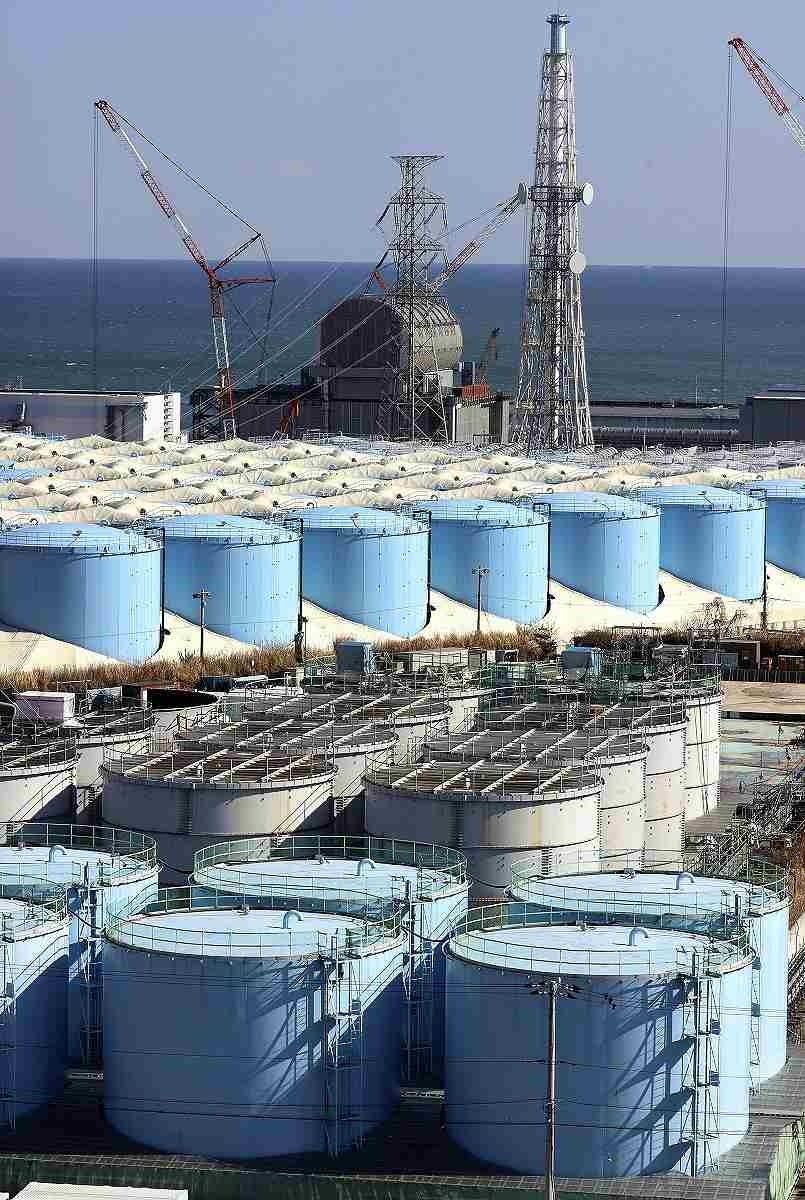
Rows of storage tanks holding treated but still contaminated water stand near the plant’s No. 3 reactor building on Thursday.






Most Read
Most read in the last 24 hours
-

Milano Cortina 2026: Miura, Kihara Among Participants at Tokyo Pa...
-
Japan to Release Additional Oil Reserves from May 1
-
Iwate Pref. Forest Fires Continue into 4th Day, with 30% of Town'...
-

Mazda to End Domestic Production of Mazda2 Compact Car
-

Exhibition on Eric Carle's ‘The Very Hungry Caterpillar’ Picture ...
-

Former Staff Members at Japan's Osaka-Kansai Expo Use Skills from...
-

Ehime: Elderly Polar Bear Peace Makes Speedy Health Recovery, Bac...
-
Japanese Govt to Set Up Panel on Widening Access to Sports Broadc...
Most read in the last 7 days
-
Earthquake Hits Japan's Tohoku Region; 3-meter Tsunami Warning Is...
-

China, South Korea Object to Japanese PM Takaichi's Ritual Offeri...
-

Trump Extends the Ceasefire with Iran but Keeps the Blockade
-

India's Arms Indigenization Quest for Self-Reliance / New Delhi S...
-

¥1,000 Coins to Be Issued to Mark Anniversary of Beginning of Jap...
-

Most Serious Cyberattacks against the UK Now from Russia, Iran an...
-

Trump Opposes United–American Merger, Signals Support for Spirit
-
System Malfunction in Haneda Airport Causes 83 Flight Cancelation...
Most read in the last 30 days
-
Earthquake Hits Japan's Tohoku Region; 3-meter Tsunami Warning Is...
-
Police Find Child's Shoe During Search for Missing Boy in Nantan,...
-
Body Found in Nantan, Kyoto Prefecture, During Search for 11-Year...
-
Cherry Blossoms, Rapeseed Flowers Perform Colorful ‘Duet’ in Niig...
-
China, South Korea Object to Japanese PM Takaichi's Ritual Offeri...
-
Trump Extends the Ceasefire with Iran but Keeps the Blockade
-

Olympic Gold Medal-Winning Figure Skaters Riku-Ryu Announce Retir...
-
Japanese Prime Minister Takaichi Speaks to Pakistani Prime Minist...
Top Articles in Society
-
Earthquake Hits Japan’s Tohoku Region; 3-meter Tsunami Warning Issued (Update 1)
-
Police Find Child’s Shoe During Search for Missing Boy in Nantan, Kyoto Prefecture
-
Body Found in Nantan, Kyoto Prefecture, During Search for 11-Year-Old Boy in Area (Update 1)
-
Cherry Blossoms, Rapeseed Flowers Perform Colorful ‘Duet’ in Niigata
-
Japan to Ban Use of Portable Chargers on Airplanes from April 24, Number of Regular Chargers To Be Limited to 2
JN ACCESS RANKING
-
Earthquake Hits Japan’s Tohoku Region; 3-meter Tsunami Warning Issued (Update 1)
-
Police Find Child’s Shoe During Search for Missing Boy in Nantan, Kyoto Prefecture
-
Body Found in Nantan, Kyoto Prefecture, During Search for 11-Year-Old Boy in Area (Update 1)
-
Cherry Blossoms, Rapeseed Flowers Perform Colorful ‘Duet’ in Niigata
-
China, South Korea Object to Japanese PM Takaichi’s Ritual Offering to Yasukuni Shrine
Most read in the last 24 hours
-
Milano Cortina 2026: Miura, Kihara Among Participants at Tokyo Pa...
-
Japan to Release Additional Oil Reserves from May 1
-
Iwate Pref. Forest Fires Continue into 4th Day, with 30% of Town'...
-
Mazda to End Domestic Production of Mazda2 Compact Car
-
Exhibition on Eric Carle's ‘The Very Hungry Caterpillar’ Picture ...
Most read in the last 7 days
-
Earthquake Hits Japan's Tohoku Region; 3-meter Tsunami Warning Is...
-
China, South Korea Object to Japanese PM Takaichi's Ritual Offeri...
-
Trump Extends the Ceasefire with Iran but Keeps the Blockade
-
India's Arms Indigenization Quest for Self-Reliance / New Delhi S...
-
¥1,000 Coins to Be Issued to Mark Anniversary of Beginning of Jap...
Most read in the last 30 days
-
Earthquake Hits Japan's Tohoku Region; 3-meter Tsunami Warning Is...
-
Police Find Child's Shoe During Search for Missing Boy in Nantan,...
-
Body Found in Nantan, Kyoto Prefecture, During Search for 11-Year...
-
Cherry Blossoms, Rapeseed Flowers Perform Colorful ‘Duet’ in Niig...
-
China, South Korea Object to Japanese PM Takaichi's Ritual Offeri...